More than 60 percent of American teams say poor collaboration holds back their performance. In a fast-paced work environment, small communication gaps and unclear roles can quietly hurt progress. If you want your team to reach its true potential, understanding and refining collaboration practices becomes critical. This guide provides practical steps that help any American workplace identify hidden issues and build stronger teamwork from the inside out.
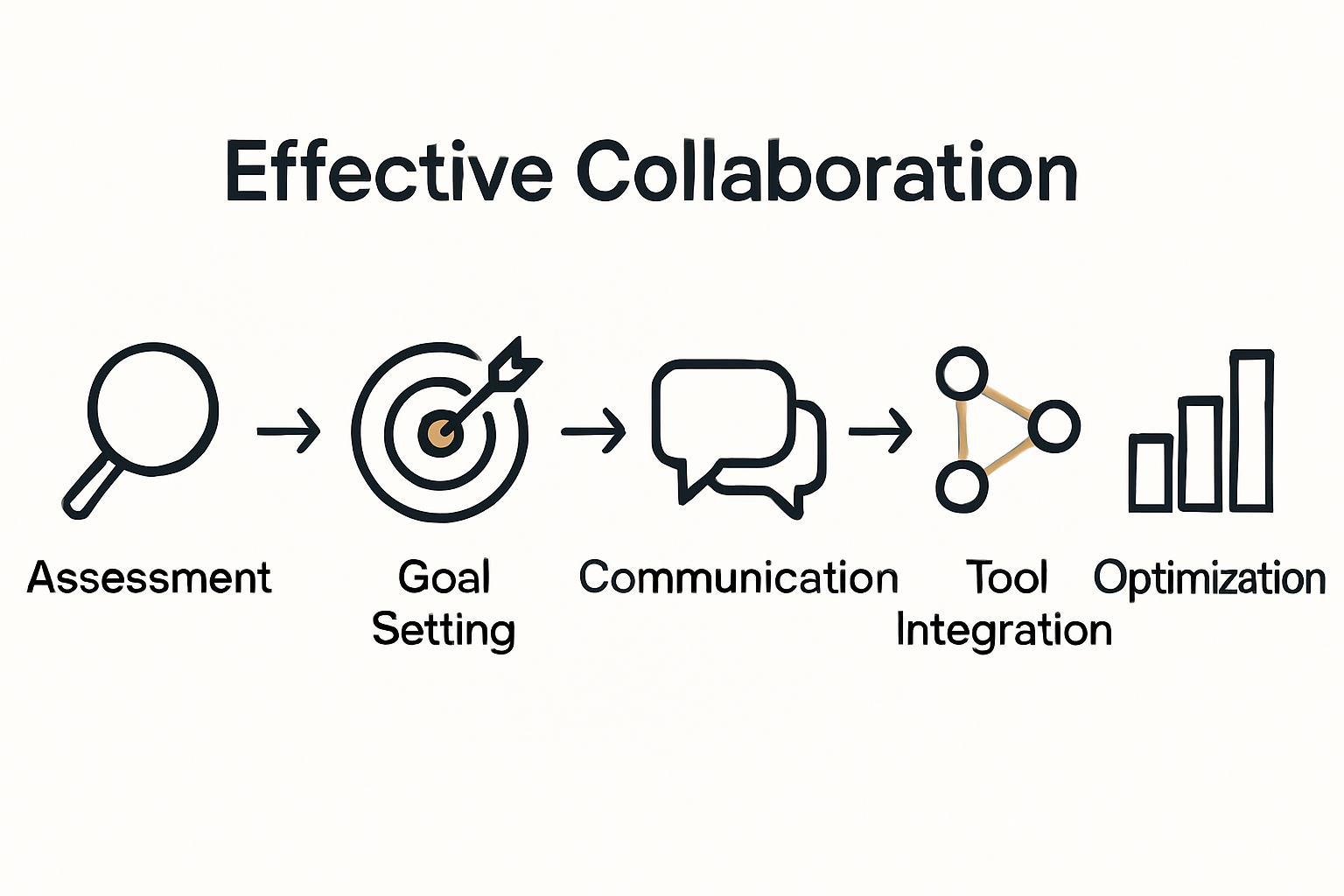
Evaluate existing workflows and communication patterns to identify inefficiencies and improve team dynamics.
2. Define clear team goals and roles
Establish a team charter that outlines objectives and responsibilities to align everyone toward success.
3. Implement effective communication channels
Create a structured communication ecosystem to facilitate smooth information exchange among team members.
4. Integrate collaborative tools strategically
Select and integrate tools that enhance teamwork while minimizing complexity and improving workflow efficiency.
5. Monitor progress regularly
Develop a feedback system to assess performance continuously and adapt strategies for ongoing improvement.
Step 1: Assess Current Collaboration Practices
Effective team collaboration starts with a comprehensive assessment of existing workflows and communication patterns. Our goal is to uncover hidden inefficiencies and create a strategic roadmap for improvement.
To begin, conduct a systematic evaluation of your team’s current collaboration practices by gathering multifaceted insights. Research demonstrates that observable behaviours are far more revealing than subjective assessments when examining team dynamics. Start by mapping your team’s communication channels and documenting how information flows between team members and across departments. Pay special attention to both internal interactions and cross-team collaboration challenges that might create communication bottlenecks.
A practical approach involves creating a detailed workflow audit that tracks communication touchpoints. Document the following key elements:
Current communication tools and platforms
Frequency of team meetings
Information sharing protocols
Decision-making processes
Collaborative project management techniques
Pro tip: Be brutally honest during this assessment. The most valuable insights often emerge when teams acknowledge their genuine collaboration weaknesses. This isn’t about criticism, it’s about strategic improvement.
In our next step, we’ll turn these insights into actionable strategies to enhance team collaboration and performance.
Step 2: Clarify Team Goals and Roles
Transforming team potential starts with crystal clear goal setting and role definition. Your mission is to create a shared understanding that aligns every team member toward collective success. Successful teams leverage strategic tools such as team charters and responsibility matrices to set clear expectations and minimize confusion. Begin by developing a comprehensive team charter that articulates your collective objectives, individual responsibilities, and key performance indicators. This document serves as a roadmap for collaboration and accountability.
Consider creating a detailed responsibility breakdown that answers critical questions:
Who makes final decisions?
What specific contributions will each team member provide?
How will progress be measured?
What are the expected outcomes?
Pro tip: Transparency is key. Discuss these roles openly and ensure every team member understands not just their responsibilities but how their work connects to the broader team objectives.
In the next step, we will explore strategies for establishing effective communication channels that support these clearly defined goals and roles.
Step 3: Implement Effective Communication Channels
Establishing robust communication channels is the backbone of seamless team collaboration. Your objective is to create an integrated communication ecosystem that enables smooth information exchange and keeps everyone connected. Effective team communication strategies require a thoughtful approach to selecting and implementing communication tools. Start by evaluating your team’s unique needs and workflow. Consider a multi-channel communication strategy that includes:
Real-time messaging platforms
Video conferencing tools
Shared document collaboration systems
Project management software
Regular team meeting schedules
Each communication channel should have a clear purpose. Instant messaging might work best for quick questions. Video calls are ideal for complex discussions and team building. Email could handle formal communications and documentation.
Pro tip: Avoid communication overload. Establish clear guidelines about which channels are appropriate for different types of communication to prevent information fatigue and ensure critical messages don’t get lost.
In the next step, we will explore strategies to maintain consistent, meaningful team interactions through these newly established communication channels.
Step 4: Integrate Collaborative Tools and Techniques
Successful team collaboration requires strategic integration of tools and techniques that amplify collective performance. Your mission is to build a seamless technological ecosystem that supports efficient teamwork and innovation. Large-scale development programs demonstrate the critical importance of tailored coordination practices when integrating collaborative tools. Start by conducting a comprehensive audit of your current technological landscape. Evaluate each tool based on its ability to support specific team workflows and communication needs. Look for platforms that offer:
Seamless information sharing
Real-time collaboration features
Intuitive user interfaces
Robust integration capabilities
Scalability for future growth
Advanced collaborative networks utilize sophisticated models for team recognition and integration, which can inspire your approach. Choose tools that not only facilitate communication but also enhance team dynamics and knowledge sharing. Pro tip: Avoid tool overload. Select a lean set of integrated tools that complement each other rather than creating complexity. Prioritize platforms that can communicate with one another and reduce friction in your team’s workflow.
In the next step, we will focus on establishing clear protocols for effectively using these integrated collaborative tools.
Step 5: Monitor Progress and Optimize Workflow
Sustained team success requires continuous assessment and strategic adaptation. Your mission is to create a dynamic feedback system that enables ongoing performance improvement and workflow optimization. Science teams must consistently assess and adapt their collaborative strategies by implementing robust monitoring mechanisms. Develop a comprehensive tracking framework that captures both quantitative and qualitative performance metrics. This should include:
Project milestone tracking
Individual and team performance indicators
Collaboration efficiency measurements
Skill development progression
Innovation and problem-solving metrics
Specialized self-assessment tools can provide structured insights into collaborative practices, revealing hidden workflow opportunities. Conduct regular team reviews where members can openly discuss challenges, share perspectives, and collectively identify areas for improvement.
Pro tip: Embrace transparency. Create a safe environment where team members feel comfortable providing candid feedback without fear of criticism. Treat every observation as a potential pathway to enhanced performance.
In the final step, we will explore strategies to sustain and evolve your team’s collaborative momentum.
Unlock Your Team’s True Potential with Proven Collaboration Solutions
The challenges outlined in “Enhancing Collaboration Workflow for Effective Team Results” highlight the struggle many organizations face in building seamless communication, clarifying roles, and sustaining progress. If your team experiences bottlenecks in communication channels or uncertainty around responsibilities, these pain points can stall not only projects but also team morale and growth. You deserve a tailored approach that addresses these issues head-on, fostering transparent collaboration and adaptive leadership that drives impactful results.
Discover how Berriault & Associates helps leaders transform these challenges into strengths through people-centred frameworks and proven tools such as Five Behaviors™ and Everything DiSC™. Our customized programs emphasize behavioural change and agile transformation designed for remote, onsite, or hybrid teams seeking sustainable growth and improved performance.
Take the next important step in overcoming collaboration bottlenecks by exploring our leadership development and team performance solutions. Don’t let fragmented workflows or unclear roles hold you back. Connect with us today to book a discovery call and experience strategic insights that translate directly into better team dynamics and organizational agility.
Frequently Asked Questions
How can I assess my team’s current collaboration practices?
Start by mapping out your team’s communication channels and workflows. Document the tools used, meeting frequencies, and information sharing methods to identify inefficiencies. A thorough evaluation can uncover areas for improvement within 30 days.
What steps should I take to clarify team goals and roles?
Begin by creating a team charter that outlines collective objectives and individual responsibilities. Ensuring everyone understands their roles and how they contribute to team goals can enhance accountability and focus.
What communication channels are most effective for teamwork?
Implement a multi-channel strategy that includes instant messaging for quick questions, video conferencing for discussions, and project management software for tracking tasks. Set clear guidelines for what type of communication to use in different situations to avoid confusion.
How do I integrate collaborative tools effectively in my team?
Conduct an audit of your current tools to find those that best support your team’s needs. Select a few integrated tools that enable seamless communication and collaboration, reducing frustration and complexity by around 20% over time.
What metrics should I monitor to optimize our collaboration workflow?
Track both qualitative and quantitative metrics, such as project milestones and team performance indicators. Regularly review this data as a team to identify areas for improvement and adapt strategies accordingly.


 Successful teams leverage strategic tools such as team charters and responsibility matrices to set clear expectations and minimize confusion. Begin by developing a comprehensive team charter that articulates your collective objectives, individual responsibilities, and key performance indicators. This document serves as a roadmap for collaboration and accountability.
Consider creating a detailed responsibility breakdown that answers critical questions:
 Pro tip: Avoid tool overload. Select a lean set of integrated tools that complement each other rather than creating complexity. Prioritize platforms that can communicate with one another and reduce friction in your team’s workflow.
In the next step, we will focus on establishing clear protocols for effectively using these integrated collaborative tools.