Leadership quality can make or break an organization’s future. Research shows that teams led by effective leaders are up to 25 percent more productive and engaged. Recognizing where your managers and executives stand is more than just a checklist; it’s the foundation for lasting growth and adaptability. This article guides you through a practical process to assess leadership capabilities, define clear objectives, and build a strong pipeline for ongoing development.
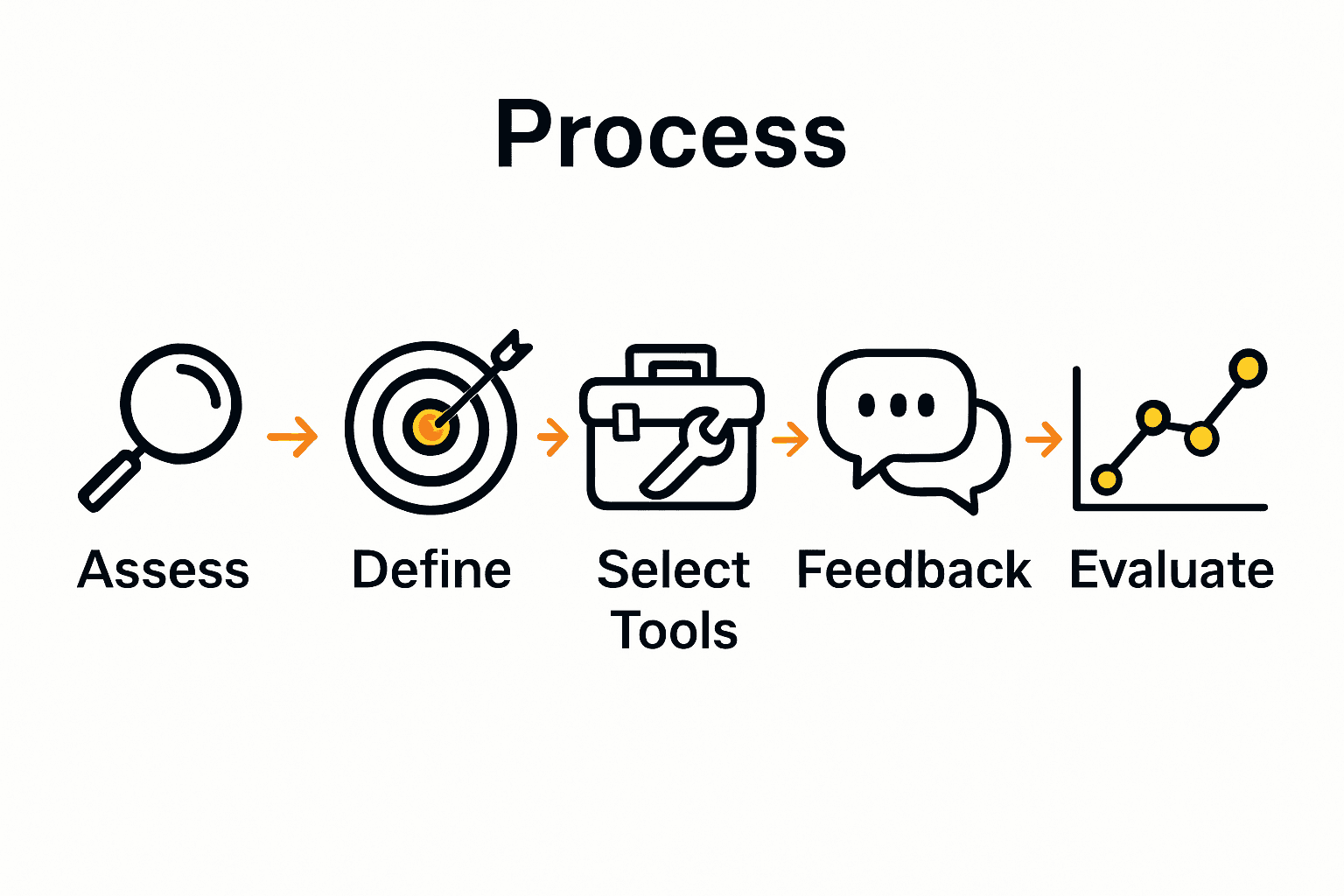
Evaluate leadership through multi-faceted assessments like 360-degree feedback and emotional intelligence metrics.
2. Define Strategic Objectives
Set specific, measurable goals that align with organizational strategy to drive leadership effectiveness.
3. Select Development Tools
Select tools that offer comprehensive assessments and actionable insights for leadership development and improvement.
4. Foster Continuous Feedback
Foster a culture of feedback that promotes open communication and personal accountability among team members.
5. Evaluate and Adjust Initiatives
Continuously assess leadership development efforts using quantitative and qualitative measures.
Step 1: Assess Current Leadership Capabilities
Understanding your organization’s current leadership capabilities is the first critical step in driving meaningful organizational growth. In this section, we’ll explore a strategic approach to evaluating leadership strengths and identifying areas for development through a comprehensive assessment process.
Research from arxiv.org highlights the fundamental importance of emotional intelligence (EI) in leadership effectiveness. By examining specific competencies, such as self-awareness, empathy, and social skills, you can gain deep insights into your leadership team’s current performance. Start by implementing a multi-faceted assessment strategy that includes:
360-degree feedback surveys that capture perspectives from peers, direct reports, and supervisors
Standardized emotional intelligence assessments to evaluate interpersonal and self-management skills
Individual leadership style diagnostics that reveal adaptive capabilities and behavioural patterns
According to research examining leadership styles from arxiv.org, understanding how different leadership behaviours impact project performance can provide crucial insights. Look beyond traditional metrics and explore how your leaders collaborate, communicate, and drive team motivation. This comprehensive approach enables you to map not only individual capabilities but also the collective leadership ecosystem within your organization.
Pro Tip: Approach leadership assessment as a developmental opportunity, not a punitive exercise. Frame evaluations as a pathway to growth and support.
In the next step, we’ll dive into interpreting these assessment results and creating targeted development strategies that align with your organizational goals.
Step 2: Define Strategic Leadership Objectives
Defining clear strategic leadership objectives is the roadmap that transforms organizational potential into tangible performance. This critical step bridges the gap between your current leadership capabilities and the future vision you want to create.
According to research from Academic Press, strategic leadership involves more than setting goals it requires a comprehensive approach that engages top management teams in shaping organizational direction. Begin by crafting objectives that are specific, measurable, and aligned with your broader organizational strategy:
Identify key performance indicators that reflect leadership impact
Develop metrics that measure both individual and collective leadership effectiveness
Create objectives that promote adaptability and continuous learning
Building on insights from Brookings, strategic leadership objectives must be flexible enough to navigate rapidly changing environments. Focus on creating objectives that encourage:
Proactive problem solving
Cross-functional collaboration
Adaptive decision-making skills
Innovative thinking and resilience
Pro Tip: Objectives should challenge your leadership team while remaining achievable. Stretch goals motivate growth without creating unrealistic expectations.
In the next step, we will explore how to translate these strategic objectives into actionable development plans that drive meaningful organizational transformation.
Step 3: Select and Implement Tailored Development Tools
Selecting and implementing the right leadership development tools is crucial for transforming strategic objectives into meaningful organizational growth. This step involves carefully choosing instruments that will provide meaningful insights and drive targeted leadership improvement.
Research from Wikipedia highlights the Multifactor Leadership Questionnaire (MLQ) as a comprehensive psychological inventory designed to assess leadership styles. When selecting development tools, consider instruments that offer:
Comprehensive assessment of leadership behaviours
Measurable outcomes across multiple dimensions
Ability to track individual and team leadership progression
Flexibility to adapt to different organizational contexts
Additionally, insights from Wikipedia suggest using strategy maps as a visual tool to document and connect strategic goals. These diagrams help leaders understand cause-and-effect relationships between different leadership objectives, allowing for more integrated and holistic development approaches.
Map out leadership development pathways
Identify interconnections between skills and organizational performance
Create visual representations of growth strategies
Facilitate more transparent communication of development goals
Pro Tip: Choose tools that not only measure current capabilities but also provide actionable recommendations for improvement.
In the next step, we will explore how to create personalized development plans that leverage these assessment tools and drive meaningful leadership transformation.
Step 4: Foster Continuous Feedback and Behavioural Change
Continuous feedback is the lifeblood of organizational growth and leadership development. This step focuses on creating a dynamic feedback ecosystem that promotes transparent communication, personal development, and meaningful behavioural transformation.
Research from arxiv.org emphasizes the critical role of ethical leadership and social competence in engaging and aligning teams. To foster continuous feedback and behavioural change, implement strategies that:
Create safe psychological spaces for open dialogue
Establish regular feedback mechanisms
Integrate emotional intelligence training
Develop coaching and assessment frameworks
Building on insights from arxiv.org, effective feedback approaches should address key areas such as time management, conflict resolution, and collaborative decision making. Focus on creating feedback processes that:
Involve team members directly in the assessment
Provide specific behavioural recommendations
Track progress and growth over time
Encourage self-reflection and personal accountability
Pro Tip: Feedback should be a two way street. Encourage leaders to not only give feedback but also actively seek input from their teams.
In the next step, we will explore how to sustain and scale these leadership development initiatives across your organization.
Step 5: Evaluate Success and Adjust Initiatives
Evaluating and adjusting leadership development initiatives is not a one-time event but a continuous process of strategic refinement. This step focuses on creating a robust framework for measuring impact, identifying growth opportunities, and maintaining organizational agility.
Research from arxiv.org provides critical insights into how leadership styles directly influence project efficiency across diverse organizational contexts. When evaluating your leadership development initiatives, implement a comprehensive assessment approach that includes:
Quantitative performance metrics
Qualitative team feedback
Individual leadership progression tracking
Comparative analysis against initial objectives
Building on insights from arxiv.org, it is recognized that emotional intelligence serves as a central driver of interpersonal effectiveness. Your evaluation process should focus on measuring not just technical performance but also:
Emotional intelligence growth
Team engagement levels
Communication effectiveness
Adaptability and resilience
Pro Tip: Treat evaluation as a collaborative process. Involve leaders at all levels in interpreting results and designing improvement strategies.
In the final step, we will explore how to create a sustainable leadership development ecosystem that continually evolves in response to your organization's needs.
Unlock Agile Leadership Growth with Tailored Development Solutions
Leaders often face the challenge of aligning emotional intelligence, strategic objectives, and continuous feedback to foster agile organizational growth. This article highlights common pain points such as assessing leadership capabilities, driving behavioural change, and sustaining development initiatives. Suppose you are seeking proven tools like Five Behaviors™ and Everything DiSC™, which empower adaptive leadership and enhance team performance. In that case, you are on the right path to transforming those challenges into opportunities.
At Berriault & Associates, our people-centred approach focuses on sustainable results by blending customized coaching, assessments, and training with flexible delivery options suited for remote, hybrid, or onsite environments. We help organizations build a leadership ecosystem where continuous feedback catalyzes growth, rather than a hurdle.
Discover how we can assist you in establishing an agile leadership culture that fosters meaningful organizational transformation today.
Transform your leadership strategy now with expert guidance from Berriault & Associates.
Ready to move beyond theory to measurable results? Book your discovery call with Berriault & Associates and start creating leadership development plans tailored to your organization’s specific goals. Discover our tailored programs and solutions that transform leadership potential into lasting success.
Frequently Asked Questions
How can I evaluate the current leadership capabilities within my organization?
Start by implementing a multi-faceted assessment strategy that includes 360-degree feedback surveys, emotional intelligence evaluations, and individual leadership style diagnostics. This comprehensive approach will help you gain insights into both individual strengths and the overall leadership ecosystem.
What should I consider when defining leadership objectives for agile growth?
Craft objectives that are specific, measurable, and aligned with your organizational strategy. Focus on promoting adaptability and continuous learning, and include key performance indicators to measure the impact of leadership.
Which tools are most effective for leadership development?
Select leadership development tools that provide comprehensive assessments of behaviours and measurable outcomes across multiple dimensions. Consider using frameworks like strategy maps to effectively visualize and connect strategic goals.
How can I create a culture of continuous feedback in my organization?
Establish regular feedback mechanisms that create safe spaces for open dialogue and integrate emotional intelligence training. Encourage leaders to seek input from their teams, promoting a two-way feedback system that enhances personal accountability.
What metrics should I use to evaluate the success of leadership development initiatives?
Utilize both quantitative performance metrics and qualitative feedback from team members to assess the impact of your initiatives. Focus on emotional intelligence growth, team engagement levels, and adaptability to gauge overall effectiveness.
How can I ensure that leadership development initiatives remain sustainable in the long term?
Create a robust framework for regularly evaluating and adjusting your leadership development initiatives. Involve leaders at all levels in interpreting results and designing improvement strategies to maintain organizational agility and responsiveness.


 In the next step, we’ll dive into interpreting these assessment results and creating targeted development strategies that align with your organizational goals.