Almost 80 percent of organizations say that strong leadership directly shapes their long-term success. Yet identifying true leadership potential within a team is rarely straightforward. Leadership assessment offers a way to reveal the strengths, emotional intelligence, and hidden skills that set great leaders apart. Understanding how these evaluations work brings clarity and confidence to critical decisions about hiring, promotion, and professional development.
Leadership assessments are vital for understanding individual competencies, driving organizational success, and developing personalized growth strategies.
Diverse Assessment Tools
Utilizing a variety of leadership assessment tools enhances insights into leaders’ capabilities and aids in effective talent development and succession planning.
Integration into Development Programs
A holistic approach to integrating assessments into leadership programs fosters continuous learning and personal growth aligned with organizational goals.
Avoiding Common Pitfalls
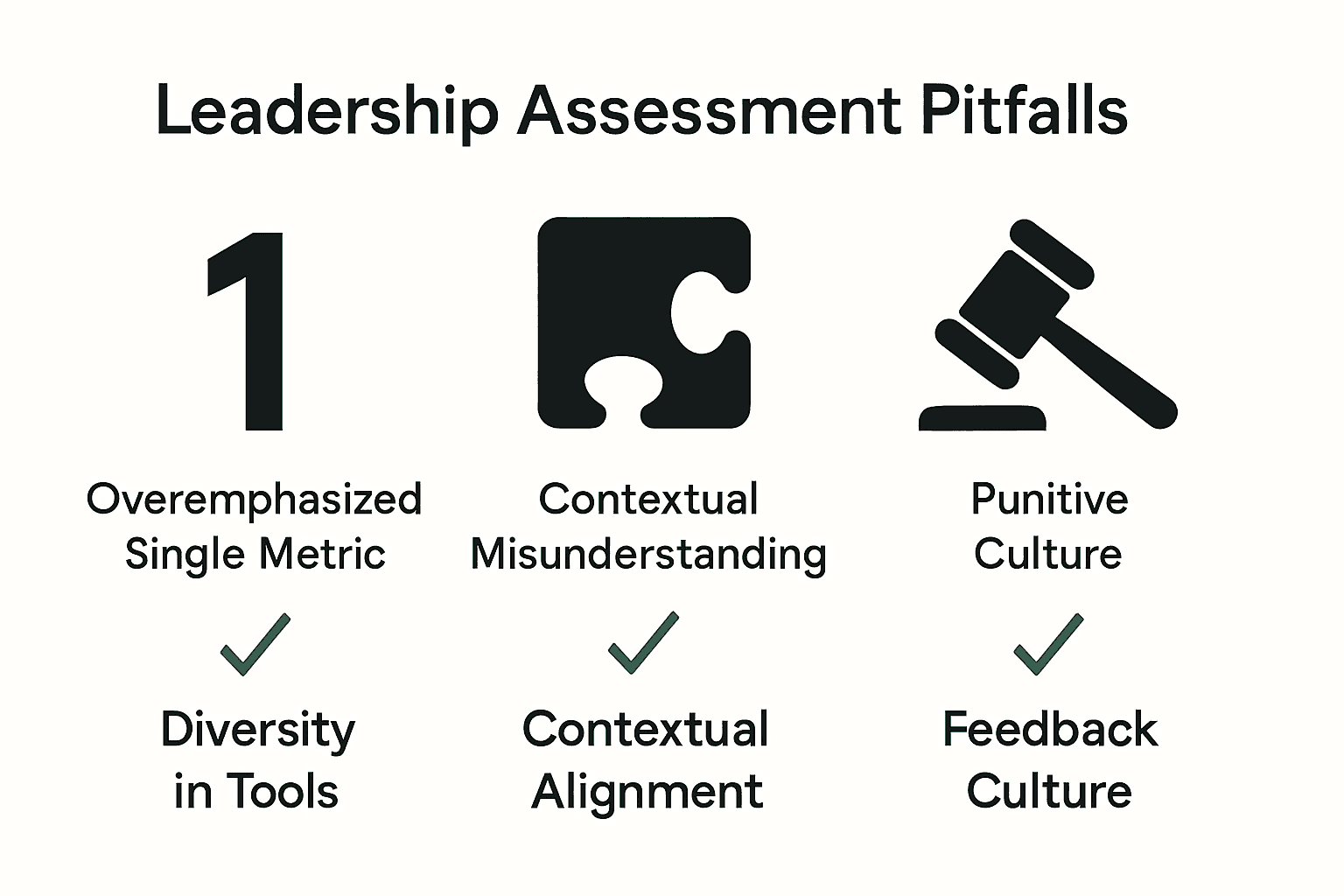
Organizations should avoid common pitfalls by diversifying assessment methods and ensuring assessments feel constructive rather than punitive to realize their full potential.
Defining Leadership Assessment And Its Importance
Leadership assessment represents a systematic approach to evaluating and understanding an individual’s leadership capabilities, potential, and performance within organizational contexts. At its core, it involves comprehensive methodologies for measuring critical leadership competencies, behavioural patterns, emotional intelligence, and is likely to drive organizational success.
According to research from arxiv, emotional intelligence emerges as a fundamental component of effective leadership. The study highlights how leadership assessments can uncover key competencies like self-awareness, empathy, and social skills that directly shape team collaboration, motivation, and overall workplace performance. By providing deep insights into a leader’s psychological and behavioural landscape, these assessments enable targeted developmental strategies.
Leadership assessments serve multiple critical purposes for organizations:
Identify leadership strengths and developmental opportunities
Predict potential leadership performance and adaptability
Support strategic succession planning
Enhance team dynamics and organizational effectiveness
Create personalized leadership development roadmaps
Drawing from the Michigan Studies of Leadership, these assessments help organizations understand different leadership approaches. The studies revealed that employee-oriented leadership styles that emphasize task behaviours, relationship building, and participative decision-making consistently produce superior outcomes. Modern leadership assessments leverage these historical insights to create nuanced evaluation frameworks that go beyond simplistic performance metrics.
Ultimately, leadership assessment represents more than a measurement tool. It’s a strategic intervention designed to unlock human potential, align individual capabilities with organizational goals, and create sustainable pathways for leadership growth. Learn more about leadership development strategies in our comprehensive guide.
Types Of Leadership Assessment Tools Explained
Leadership assessment tools have evolved dramatically, offering organizations sophisticated methods to evaluate leadership potential and performance. These tools provide comprehensive insights into an individual’s leadership capabilities, helping organizations make strategic talent development and succession planning decisions.
According to imocha, the top leadership evaluation tools of 2025 encompass six primary categories:
Personality-Based Assessments: Explore intrinsic behavioural characteristics and leadership tendencies
Behavioural Assessments: Analyze specific leadership actions and response patterns
360-Degree Feedback Assessments: Gather multi-perspective evaluations from peers, subordinates, and supervisors
Cognitive Ability Assessments: Measure decision-making skills and strategic thinking capabilities
Skills-Based Leadership Assessments: Evaluate specific competencies and technical leadership capabilities
Emotional Intelligence Assessments: Analyze interpersonal skills, self-awareness, and emotional regulation
Each assessment type offers unique insights into leadership potential. Personality-based tools like Everything DiSC™ Work of Leaders Profile help organizations understand individual leadership styles, while 360-degree feedback provides a holistic view of a leader’s performance and impact.
The most effective leadership assessment strategies combine multiple tools to create a comprehensive understanding. By leveraging these diverse evaluation methods, organizations can develop targeted leadership development programs, identify high-potential talent, and create personalized growth pathways that align individual strengths with organizational objectives. These tools are not just measurement instruments but strategic interventions designed to unlock human potential and drive organizational excellence.
How Leadership Assessments Drive Organizational Success
Leadership assessments are powerful strategic tools that transform organizational performance by providing deep insights into leadership potential, capabilities, and developmental opportunities. They serve as critical mechanisms for identifying, nurturing, and optimizing leadership talent across all organizational levels.
Recent research from arxiv highlights the emerging potential of AI technologies in personalized leadership development. The study demonstrates how advanced machine learning modelling can predict leadership success by analyzing personality traits, enabling organizations to create targeted development strategies that align individual strengths with organizational objectives.
The key ways leadership assessments drive organizational success include:
Talent Identification: Pinpoint high-potential leaders early in their career trajectory
Strategic Succession Planning: Create robust pipelines of future leadership talent
Performance Optimization: Develop personalized growth strategies for individual leaders
Cultural Alignment: Ensure leadership approaches match organizational values and goals
Risk Mitigation: Identify potential leadership gaps before they impact organizational performance
Additionally, innovative approaches like the LORI (LOR Insights) system explored in another arxiv research demonstrate how advanced natural language processing can evaluate leadership attributes such as teamwork, communication, and innovation. These technological advancements are transforming leadership assessments from subjective evaluations to data-driven, precise development tools. Explore our guide on developing leadership skills for lasting team impact to understand how these insights translate into practical leadership growth strategies.
Ultimately, leadership assessments are more than measurement tools—they are strategic interventions that unlock human potential, drive organizational agility, and create sustainable pathways for continuous leadership development. By providing a comprehensive understanding of leadership capabilities, these assessments empower organizations to build resilient, adaptive leadership cultures that can navigate complex business landscapes.
Integrating Assessments Into Leadership Development Programs
Successful leadership development programs require a strategic, holistic approach that seamlessly integrates comprehensive assessment methodologies. This integration transforms traditional training models from generic interventions into personalized, targeted growth experiences that address individual leadership capabilities and organizational needs.
According to clm, the Leadership Effectiveness Inventory (LEI) provides a sophisticated 360-degree assessment framework that supports multiple organizational objectives. This comprehensive tool assists individuals in planning their leadership development, helps organizations design strategic succession-planning efforts, and enables trainers to identify precise curriculum needs for leadership development.
Key strategies for effectively integrating leadership assessments into development programs include:
Personalized Development Planning: Create individualized roadmaps based on assessment insights
Continuous Feedback Mechanisms: Implement regular evaluation and coaching cycles
Multi-Dimensional Assessment: Utilize diverse evaluation tools beyond traditional metrics
Skill Gap Analysis: Identify and address specific leadership competency limitations
Contextual Learning Design: Align assessment findings with organizational culture and goals
The integration process requires a nuanced approach that goes beyond simple measurement. Effective leadership development programs transform assessment data into actionable learning experiences, creating adaptive pathways that respond dynamically to individual and organizational evolution. Explore our comprehensive leadership development best practices for agile teams to understand how sophisticated assessment integration can drive meaningful organizational change.
Ultimately, integrating assessments into leadership development is not about creating rigid frameworks, but about fostering a culture of continuous learning, self-reflection, and strategic personal growth. By treating assessments as collaborative tools rather than judgmental instruments, organizations can unlock unprecedented potential in their leadership talent.
Common Pitfalls And How To Avoid Them
Leadership assessments are powerful tools, but they can quickly become counterproductive when organizations fail to approach them strategically and holistically. Understanding the most common pitfalls is crucial for ensuring these evaluation processes genuinely contribute to leadership development rather than becoming bureaucratic exercises.
According to positivepsychology, organizations should seek diversity in assessment approaches. Relying on a single evaluation method or a narrow set of metrics can create significant blind spots in understanding leadership potential. The research emphasizes that combining different assessments and emotional intelligence scales provides a more comprehensive picture of leaders’ skills and developmental needs.
Common leadership assessment pitfalls to watch out for include:
Over-Reliance on Single Metrics: Avoiding narrow, quantitative-only evaluation approaches
Lack of Contextual Understanding: Failing to consider organizational culture and unique leadership challenges
Infrequent Assessment Updates: Not regularly refreshing evaluation frameworks
Punitive Assessment Cultures: Creating environments where assessments feel like judgments instead of growth opportunities
Insufficient Developmental Follow-Through: Conducting assessments without actionable improvement plans
Addressing these challenges requires a nuanced, empathetic approach to leadership evaluation. Organizations must transform assessments from passive measurement tools into active developmental conversations that support individual growth and organizational objectives. Explore our guide on leadership development best practices for agile teams to understand how to create more effective, human-centred assessment strategies.
Ultimately, successful leadership assessments are not about finding flaws but uncovering potential. They should feel like collaborative explorations of growth, not punitive exercises. By creating transparent, supportive assessment processes that prioritize individual development, organizations can turn these evaluations into powerful catalysts for leadership transformation.
Unlock Leadership Potential With Tailored Assessment Solutions
The challenge of accurately measuring leadership capabilities and driving meaningful growth is real and pressing. This expert guide highlights key issues, such as avoiding over-reliance on single metrics and ensuring assessments lead to actionable development rather than judgment. If you want to move beyond generic evaluations and create a culture where leadership skills are nurtured strategically and empathetically, personalized and comprehensive approaches are essential. Understanding emotional intelligence and integrating 360-degree feedback are critical steps toward achieving lasting organizational impact.
Take the next step toward elevating your leadership development by partnering with experts who bring proven frameworks like Everything DiSC™ and Five Behaviors™ into flexible, people-centred programs. Visit Berriault & Associates to explore how our customized training, coaching, and assessment services can help you build adaptive leaders and high-performing teams. Don’t wait to start transforming your leadership culture. Start your discovery call today and unlock your organization's full potential.
Frequently Asked Questions
What is the purpose of leadership assessment?
Leadership assessment is designed to evaluate and understand an individual’s leadership capabilities, potential, and performance, enabling organizations to identify strengths, support succession planning, and enhance team dynamics.
What types of tools are used for leadership assessments?
Leadership assessment tools include personality-based assessments, behavioural assessments, 360-degree feedback, cognitive ability assessments, skills-based assessments, and emotional intelligence assessments, each providing unique insights into leadership potential.
How do leadership assessments drive organizational success?
Leadership assessments help identify high-potential leaders, optimize performance, build robust succession plans, and align leadership approaches with organizational values, thereby driving overall success.
What are common pitfalls to avoid in leadership assessments?
Common pitfalls include over-reliance on single metrics, lack of contextual understanding, infrequent assessment updates, punitive assessment cultures, and insufficient developmental follow-through. Addressing these helps transform assessments into effective growth opportunities.