Most change initiatives fail to reach their full potential because leadership too often overlooks the complex human side of transformation. When nearly 70 percent of change efforts struggle or stall, the influence of strong, adaptive leaders becomes clear. Understanding the true role of leadership means recognizing that sustainable results only come when leaders foster trust, address resistance, and spark collective commitment. This article offers practical insights into the behaviours and strategies that make leaders successful architects of lasting change.
Effective leadership is crucial for navigating change, requiring a focus on emotional intelligence and psychological safety to foster team adaptability.
Dynamic Leadership Styles
Leaders should flexibly apply different leadership styles, such as transformational and transactional, to suit specific organizational contexts during change initiatives.
Behavior-Driven Success
Key leadership behaviours, such as clear goal communication and constructive feedback, significantly influence the success of organizational change.
Embracing Challenges
Leaders must view challenges during change not as obstacles, but as opportunities for learning and growth, blending strategic insight with emotional intelligence.
Defining Leadership’s Role in Change Initiatives
Change doesn’t just happen. It requires deliberate, strategic guidance from leaders who understand the complex human dynamics driving organizational transformation. Leadership’s role in change initiatives is fundamentally about creating a bridge between current operational realities and future strategic vision.
At its core, leadership in change means more than issuing directives or implementing new processes; it involves fostering a culture of innovation and adaptability. It involves cultivating an environment of psychological safety where team members feel empowered to adapt, experiment, and evolve. Effective leaders recognize that sustainable change isn’t about bulldozing through resistance but creating meaningful dialogue, understanding individual perspectives, and building collective commitment. Successful change leadership requires several critical capabilities. These include:
Emotional Intelligence: Reading and responding to team emotional states
Communication Clarity: Articulating the “why” behind changes transparently
Strategic Adaptability: Adjusting approaches based on ongoing feedback
Cultural Sensitivity: Understanding how organizational culture influences change readiness
Leaders who excel at driving change also understand that it’s not a linear process. They view change as a dynamic, iterative journey that demands continuous learning and recalibration. By embracing collaborative leadership principles, organizations can transform potential disruption into meaningful growth opportunities.
Ultimately, leadership’s role in change isn’t about perfect execution—it’s about creating an adaptive ecosystem where innovation, resilience, and human potential can flourish. The most successful change leaders don’t just manage transitions; they inspire and empower their teams to see change as an exciting pathway to collective achievement.
Types of Change and Leadership Approaches
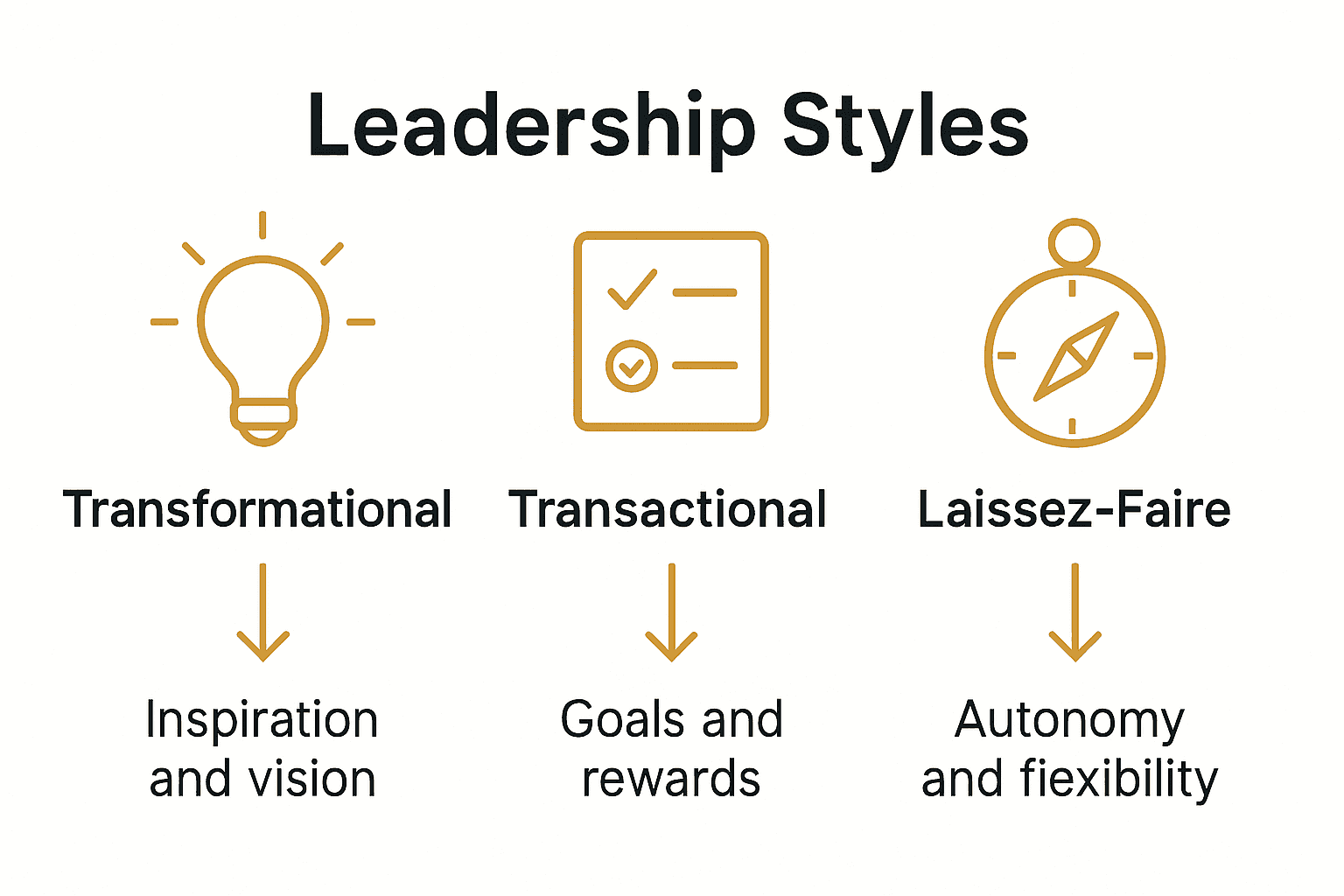
Organizational change isn’t a one-size-fits-all process. According to Oxford Academic, scholars consistently struggle to define a universal leadership approach that guarantees successful change initiatives. This complexity underscores the need for leaders to understand and apply different leadership styles flexibly, tailored to specific organizational contexts. Leadership approaches fundamentally shape how change is perceived and implemented. Wikipedia’s Full Range Leadership Model highlights three primary leadership styles that organizations typically leverage during transformational periods:
Transformational Leadership: Inspiring and motivating teams toward a compelling vision
Transactional Leadership: Focusing on clear structures, expectations, and performance rewards
Laissez-Faire Leadership: Providing minimal direct supervision, allowing teams significant autonomy
Each leadership style offers unique advantages and potential limitations.
Transformational leaders excel at creating emotional engagement and driving innovation, while transactional leaders ensure operational consistency and clear accountability. Laissez-faire approaches are most effective with highly skilled and self-motivated teams that require minimal direct intervention. By embracing the changing landscape of agile leadership, organizations can develop more adaptive change management strategies. The most effective leaders understand that change is not about rigidly applying a single approach, but dynamically shifting between styles to match evolving organizational needs and team capabilities.
Key Behaviours Driving Successful Change
Successful organizational change hinges on specific leadership behaviours that go beyond traditional management approaches. ArXiv Research highlights several critical behaviours that dramatically influence project efficiency and team performance during transformational periods. Key leadership behaviours that drive meaningful change include:
Constructive Feedback: Providing targeted, actionable insights that help teams improve
Clear Goal Communication: Articulating organizational objectives with precision and transparency
Role Clarity: Ensuring every team member understands their specific responsibilities
Team Initiative Encouragement: Creating psychological safety for innovation and proactive problem-solving
Creative leadership emerges as a powerful catalyst for organizational transformation. According to ArXiv’s innovative leadership study, leaders who demonstrate high invention-to-imitation ratios can significantly increase the overall fitness and adaptability of organizational ideas. This means moving beyond replication and actively generating novel approaches to challenges.
By embracing servant and transformational leadership principles, organizations can create an environment where change is not just managed but truly embraced. Successful change leaders understand that their primary role is to inspire, support, and empower their teams to navigate complexity with confidence and creativity.
Challenges Leaders Face During Change
Navigating organizational change is akin to traversing a complex minefield, where every step requires strategic insight and emotional intelligence. Springer Research reveals that leaders consistently face multifaceted challenges related to decision-making, power dynamics, and performance expectations during transformational periods. Primary leadership challenges during change initiatives typically manifest in several critical areas:
Resistance Management: Addressing individual and systemic pushback against new strategies
Communication Complexity: Maintaining transparent, consistent messaging across diverse organizational levels
Emotional Terrain: Managing team anxiety, uncertainty, and potential psychological barriers
Performance Continuity: Ensuring operational effectiveness while implementing significant transitions
The psychological and strategic demands on leaders during change are profound. Leaders must simultaneously act as architects of transformation, emotional support systems, and pragmatic performance managers. This requires an extraordinary blend of analytical thinking, empathetic communication, and adaptive leadership techniques.
Understanding these challenges is just the beginning. Rethinking leadership challenges demands a holistic approach that recognizes change as a nuanced, human-centred process. Successful leaders view these challenges not as obstacles, but as opportunities for organizational learning, growth, and collective resilience.
Strategies for Effective Change Leadership
Leadership transformation is a dynamic journey of strategic adaptation and evolution. MDPI Research emphasizes that effective change leadership necessitates a nuanced approach that extends beyond traditional management techniques, particularly in complex organizational settings. Core strategies for driving successful change include:
Adaptive Communication: Tailoring messaging to different organizational levels
Stakeholder Engagement: Creating inclusive dialogue and participatory change processes
Continuous Learning: Developing organizational agility through ongoing skill development
Psychological Safety: Fostering an environment where teams feel empowered to experiment and share insights
According to Frontiers in Psychology, successful change leadership demands a multifaceted approach that integrates diverse leadership styles and responds dynamically to emerging organizational needs. Leaders must become versatile architects of transformation, capable of balancing strategic vision with empathetic execution.
By implementing a strategic approach to leadership challenges, organizations can create sustainable change mechanisms. The most effective leaders understand that transformation is less about imposing new systems and more about inspiring collective reimagination of what’s possible.
Empower Your Leadership to Drive Lasting Change
Effective leadership demands more than vision; it requires emotional intelligence, clear communication, and the ability to navigate resistance with confidence. If you are facing challenges like managing team anxiety or fostering psychological safety during transformation, you are not alone. The complex human dynamics discussed in the article highlight the critical need for leaders who can adapt their style and engage their teams creatively.
At Berriault & Associates, we specialize in empowering leaders to become the architects of organizational agility and innovative change. Our tailored programs utilize proven tools such as Five Behaviors™ and Everything DiSC™ to develop the adaptive skills necessary for sustainable growth. Discover how you can transform obstacles into opportunities by visiting our website and exploring insights on strategic leadership challenges and agile leadership principles.
Are you ready to lead change with confidence and creativity that inspires your entire organization?
Take the first step toward effective change leadership today. Connect with us at Berriault & Associates to book a discovery call and start transforming your leadership approach for the future.
Frequently Asked Questions
What is the role of leadership in change initiatives?
Leadership’s role in change initiatives involves guiding organizations through transformation by fostering an environment of psychological safety, facilitating meaningful dialogue, and cultivating collective commitment among team members.
How do different leadership styles impact organizational change?
Different leadership styles, such as transformational, transactional, and laissez-faire, influence how change is perceived and implemented. Transformational leaders inspire innovation, transactional leaders ensure structure, and laissez-faire leaders grant autonomy based on team capabilities.
What are some key behaviours effective leaders should exhibit during change?
Effective leaders should exhibit behaviours such as providing constructive feedback, ensuring role clarity, communicating goals transparently, and encouraging team initiative to drive successful change.
What challenges do leaders face during organizational change initiatives?
Leaders face challenges such as managing resistance, ensuring clear communication, navigating emotional dynamics within teams, and maintaining performance continuity while implementing significant transitions.


 Successful change leadership requires several critical capabilities. These include:
 By embracing the changing landscape of agile leadership, organizations can develop more adaptive change management strategies. The most effective leaders understand that change is not about rigidly applying a single approach, but dynamically shifting between styles to match evolving organizational needs and team capabilities.