Did you know that 70 percent of organizational innovations succeed or fail because of leadership? The way leaders behave and the environments they build shape how teams experiment, take risks, and spark new ideas. Understanding what sets apart leaders who foster innovation from those who hold it back reveals clear strategies that help turn creative plans into real breakthroughs.
Effective leaders create environments that encourage creativity, experimentation, and strategic risk-taking, positioning innovation as a core organizational strategy.
Embrace Adaptive Leadership Styles
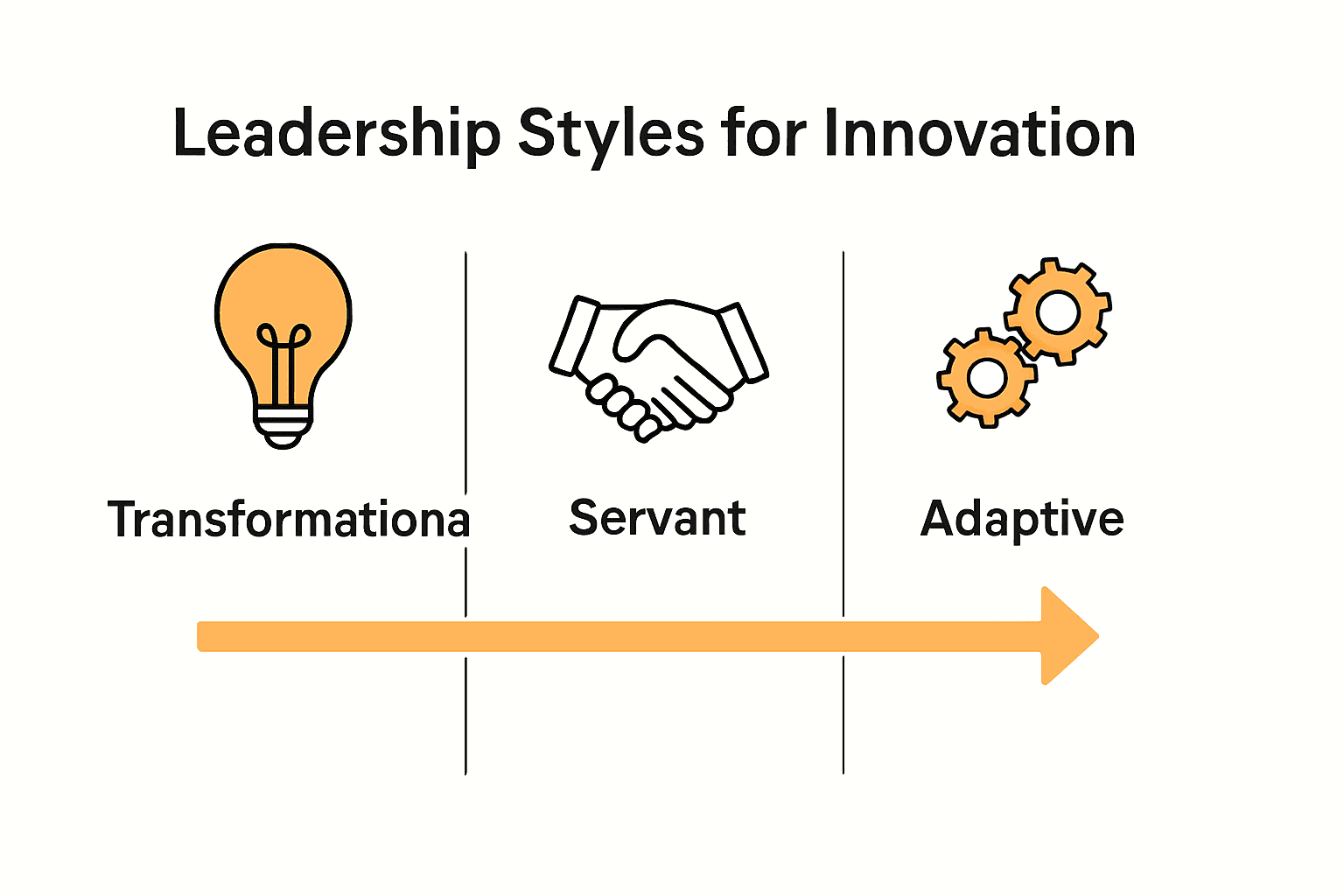
Dynamic leadership approaches, such as transformational and servant leadership, foster trust and collaboration, vital for driving innovation and team agility.
Encourage a Culture of Psychological Safety
Innovative leaders must cultivate a space where team members can propose unconventional ideas without fear of punishment or dismissal.
Avoid Common Pitfalls
Leaders should refrain from micromanaging and creating punitive environments, instead focusing on empowering teams and facilitating open communication to foster creative growth.
Defining Leadership’s Role in Innovation
Innovation isn’t a magical process that happens by accident - it’s a deliberate strategy driven by purposeful leadership. Leaders aren’t just managers who oversee processes; they’re architects of organizational transformation who create environments where creativity can flourish. Their role goes far beyond traditional supervision, encompassing complex responsibilities that stimulate breakthrough thinking and adaptive strategies.
At its core, leadership’s role in innovation involves three critical dimensions: cultivating a culture of psychological safety, promoting strategic risk-taking, and systematically breaking down organizational barriers. Exceptional leaders understand that innovation demands an ecosystem where team members feel empowered to challenge assumptions, experiment without fear of punishment, and propose unconventional solutions. Is your organization set up for innovation? This fundamental question separates truly innovative organizations from those stuck in traditional thinking patterns.
The most effective innovation-oriented leaders share distinct characteristics that transcend traditional management approaches. They demonstrate:
Intellectual curiosity and openness to new perspectives
Willingness to challenge existing organizational paradigms
Ability to create safe spaces for experimental thinking
Strategic vision that connects innovative efforts to broader organizational goals
Successful innovation leadership isn’t about micromanaging every detail, but about creating a strategic framework that allows creativity to emerge organically. Collaborative Leadership becomes the cornerstone of this approach, enabling leaders to transform potential energy within their teams into kinetic breakthrough innovations. By fostering an environment of trust, encouraging calculated risk-taking, and maintaining a clear strategic vision, leaders can unlock their organization’s most powerful competitive advantage: human creativity.
Types of Leadership That Drive Innovation
Not all leadership styles are created equal when it comes to fostering innovation. Some approaches naturally create environments where creativity thrives, while others can inadvertently suppress the very spark of ingenuity organizations seek to cultivate. 5 Reasons Why Servant and Transformational Leadership Styles Are Essential Today highlights the critical nuances between different leadership approaches.
According to IMSA, democratic leadership involves team members in decision-making, which fundamentally fosters collaboration and innovation. In contrast, autocratic leadership provides clear directives but can potentially stifle creative thinking. The most innovative organizations recognize that leadership isn’t a one-size-fits-all model, but a dynamic approach that adapts to specific organizational needs and challenges.
The most innovation-conducive leadership styles typically share these characteristics:
Here’s a comparison of leadership styles that drive innovation:
Transformational Leadership: Inspires and motivates teams to exceed expected performance
Servant Leadership: Prioritizes team members’ growth and empowerment
Adaptive Leadership: A Flexible approach that responds quickly to changing environments
Collaborative Leadership: Breaks down silos and encourages cross-functional creativity
Transforming Leadership to Support Self-Organized Teams reveals that truly innovative leaders understand their primary role isn’t to control, but to create conditions where talented individuals can solve complex problems autonomously. By embracing these progressive leadership models, organizations can transform potential into breakthrough innovations, turning creative potential into tangible organizational success.
Key Behaviours and Practices for Leaders
Innovation doesn’t happen by accident - it requires intentional leadership behaviours that systematically create environments where creativity can flourish. How to Develop Leadership Skills for Lasting Team Impact illuminates the critical practices that separate transformative leaders from ordinary managers.
According to the Leadership Science Institute, innovative leaders consistently embrace risk-taking and experimentation, communicate effectively, and foster collaboration to create an environment where new ideas can thrive. Research from PMC further highlights that individualized consideration and intellectual stimulation are paramount. This means leaders must not only manage tasks but also actively attend to team members’ individual needs while simultaneously challenging their assumptions and promoting creative thinking.
Key behaviours that drive innovation include:
Creating psychological safety where team members feel comfortable sharing unconventional ideas
Encouraging calculated risk-taking without punitive consequences
Providing resources and time for exploratory projects
Actively listening and validating diverse perspectives
Modelling curiosity and continuous learning
Successful innovation leaders understand that their role transcends traditional management. They are architects of possibility, crafting organizational cultures where creativity isn’t just welcomed, it’s expected. By consistently demonstrating these behaviours, leaders transform potential energy into breakthrough innovations, turning organizational dreams into tangible realities.
Impact of Leadership on Team Agility
Team agility isn’t a switch that gets flipped overnight—it’s a complex interplay of leadership strategies, organizational culture, and individual team dynamics. The Role of Leaders in Agile Teams offers critical insights into how leadership fundamentally shapes an organization’s ability to adapt and innovate.
According to Wikipedia, ambidextrous leadership plays a pivotal role in enhancing team agility by creating a delicate balance between exploration and exploitation. This means leaders must simultaneously manage current operational needs while also creating space for innovative thinking and experimental approaches. Research by Mark S. Elliott reinforces this perspective, highlighting that transformational and empowering leadership styles enhance team agility by fostering trust, collaboration, and a culture of continuous improvement.
Key mechanisms through which leadership impacts team agility include:
Creating psychological safety for risk-taking and experimentation
Establishing transparent yet flexible communication channels
Removing bureaucratic barriers that slow decision-making
Encouraging cross-functional collaboration
Providing continuous learning and development opportunities
The most agile teams aren’t just led - they’re inspired. Effective leaders understand that agility is more than a methodology; it’s a mindset that requires constant nurturing, trust-building, and a willingness to embrace uncertainty. By consistently demonstrating adaptability and supporting their teams’ growth, leaders transform rigid organizational structures into dynamic, responsive ecosystems that can thrive in unpredictable environments.
Common Leadership Pitfalls in Innovation
Innovation can be derailed by seemingly subtle leadership missteps that create invisible barriers to creativity and organizational growth. Traditional Leadership Behaviours Hinder Self-Organized Teams reveals the nuanced ways leadership approaches can unintentionally suppress innovative potential.
According to IMSA, over-reliance on autocratic leadership can dramatically demotivate employees and stifle creativity. Research from the Leadership Science Institute further highlights that failure to encourage risk-taking and experimentation leads directly to organizational stagnation, as leaders who avoid uncertainty effectively prevent the development of innovative solutions.
Common innovation-killing leadership behaviours include:
Micromanaging every detail of team projects
Punishing failures instead of treating them as learning opportunities
Maintaining rigid hierarchical structures that block communication
Dismissing ideas that don’t immediately seem practical
Creating environments of fear and excessive performance pressure
The most dangerous pitfall is believing that innovation can be controlled or mandated. Truly transformative leaders understand that their role is to create psychological safety, provide resources, and then step back. They cultivate environments where creativity can emerge organically, recognizing that breakthrough ideas often come from unexpected places and require breathing room to develop.
Unlock the Power of Leadership to Ignite Innovation
Leadership plays a vital role in shaping an environment where creativity and agility thrive. If you recognize that your organization struggles with fostering psychological safety, promoting strategic risk-taking, or breaking down barriers to innovation, you are not alone. The challenge lies in transforming traditional leadership habits into adaptive, collaborative behaviours that empower teams to deliver breakthrough ideas and sustainable growth.
At Berriault & Associates, we specialize in helping leaders develop the skills and mindset needed to become architects of organizational transformation. Our tailored programs leverage proven tools, such as Five Behaviors™ and Everything DiSC™, to enhance leadership capacity and team dynamics across remote, on-site, or hybrid settings. Discover how collaborative leadership and transformative leadership for self-organized teams can be your gateway to cultivating a lasting culture of innovation. Don’t wait for innovation to happen by chance. Take the first step toward building an agile, empowered workforce that thrives on creativity and trust by booking a discovery call today. Visit Berriault & Associates and unlock the leadership potential your organization needs now.
Frequently Asked Questions
What is the role of leadership in fostering innovation?
Leadership plays a crucial role in innovation by creating an environment that fosters creativity, promotes psychological safety, encourages strategic risk-taking, and breaks down organizational barriers.
What are the key behaviours that leadership should demonstrate to drive innovation?
Leaders should foster psychological safety, encourage calculated risk-taking, provide resources for exploratory projects, actively listen to diverse perspectives, and model curiosity and a commitment to continuous learning.
How can different leadership styles impact innovation within an organization?
Certain leadership styles, such as transformational and servant leadership, naturally foster collaboration and creativity, while autocratic leadership may stifle innovative thinking by limiting team members’ involvement in decision-making.
Why is psychological safety important for innovation?
Psychological safety enables team members to share unconventional ideas without fear of retribution, which is crucial for cultivating a culture of experimentation and creativity essential for innovation.



 Don’t wait for innovation to happen by chance. Take the first step toward building an agile, empowered workforce that thrives on creativity and trust by booking a discovery call today. Visit Berriault & Associates and unlock the leadership potential your organization needs now.