Over eighty percent of employees believe that leadership values directly impact workplace trust and job satisfaction. In a rapidly changing world, the qualities that guide a leader’s choices carry more weight than ever before. Understanding how values shape decisions, influence culture, and foster authentic connections can help leaders leave a lasting positive mark on their teams and organizations.
Leadership effectiveness is founded on intrinsic core values that guide decision-making and team interactions.
Adaptable Leadership Styles
Understanding personal values allows leaders to adapt their styles for optimal team engagement and organizational success.
Value Integration Drives Culture
Successful organizations actively integrate values into team dynamics through transparent communication and collaborative ownership.
Address Value Misalignments
Regular introspection and honest dialogue are crucial in preventing value misalignments that can harm team cohesion and performance.
Defining Values in Modern Leadership
Leadership isn’t just about directing people or achieving goals; it’s fundamentally about the core principles that guide every decision and action. According to en.wikipedia.org, Shalom H. Schwartz’s groundbreaking research identifies ten universal human values that transcend cultural boundaries, serving as fundamental guideposts for human behaviour.
In modern organizational landscapes, leadership values represent the ethical compass that determines how leaders interact with teams, make strategic decisions, and inspire collective performance. Bill George’s seminal work on ‘True North’ emphasizes that authentic leadership emerges when leaders deeply align their actions with their intrinsic core values, creating a powerful mechanism for motivating and transforming organizational cultures.
These leadership values typically encompass several critical dimensions:
Respect: Honouring individual dignity and potential
Accountability: Taking ownership of outcomes and decisions
Empathy: Understanding and responding to team members’ emotional experiences
Courage: Making principled choices even when they’re challenging
By consciously defining and embodying these values, leaders create a magnetic organizational environment where trust flourishes, performance accelerates, and team members feel genuinely connected to something larger than immediate tasks or personal objectives. Learn more about leadership styles that reinforce these values in our guide on servant and transformational leadership.
Ultimately, values in leadership are not abstract concepts but living, breathing frameworks that transform theoretical principles into tangible organizational behaviours. They represent the DNA of leadership—invisible yet profoundly influential in shaping collective potential and driving sustainable success.
Core Values and Leadership Styles Compared
Leadership styles are deeply intertwined with core values, functioning as dynamic expressions of organizational and personal ethical frameworks. According to research from academic.oup.com, leadership styles such as transformational and transactional are fundamentally shaped by underlying value systems, with transformational leaders inspiring teams through shared moral principles and transactional leaders emphasizing the completion of structured tasks.
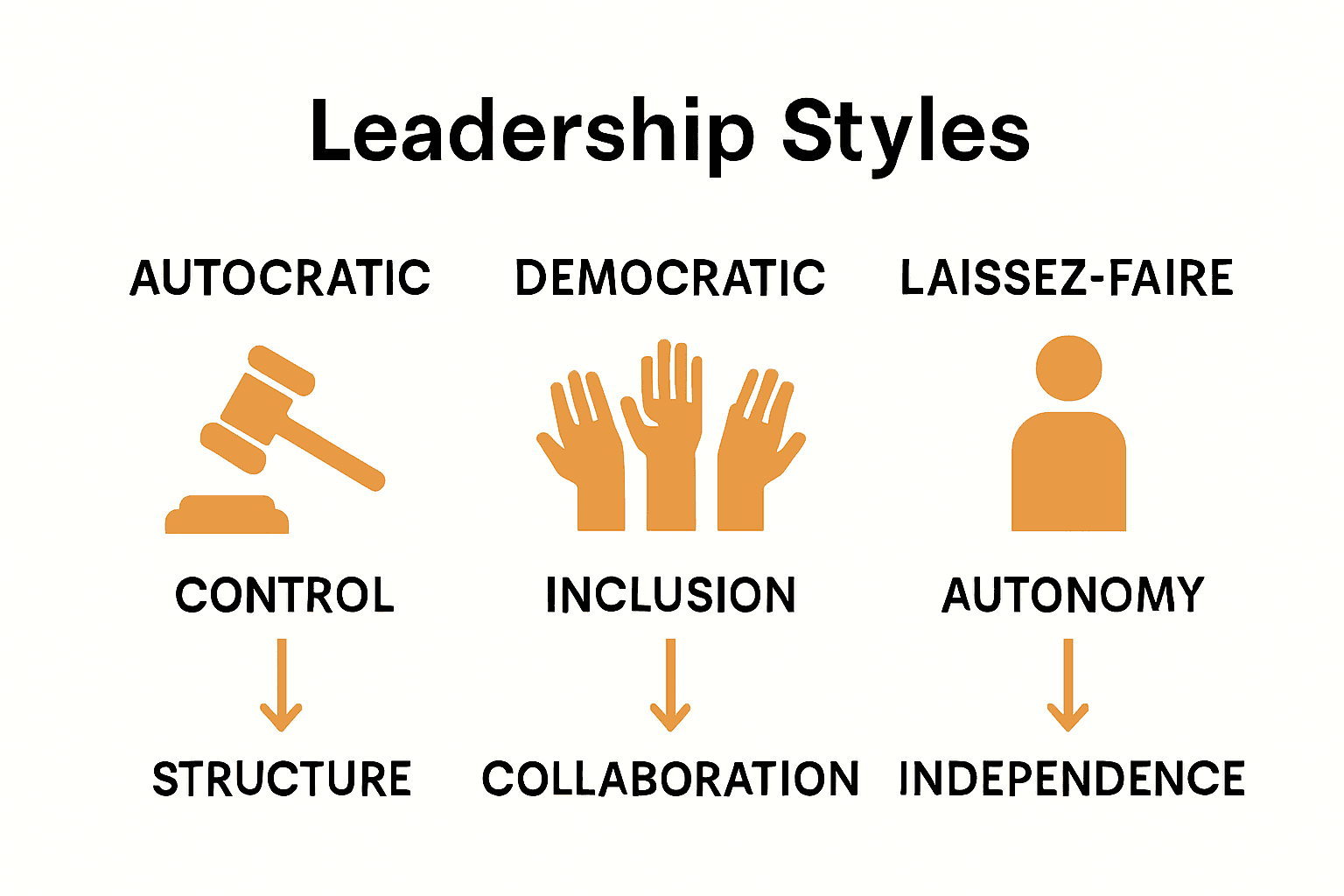
The landscape of leadership styles reveals a complex interplay between personal values and organizational approaches. Research from iaeme.com highlights three primary leadership styles that reflect distinctive value orientations:
Autocratic Leadership: Characterized by centralized power and directive decision-making
Values: Control, efficiency, hierarchy
Emphasizes top-down communication
Democratic Leadership: Focused on collaborative decision-making and team input
Encourages open dialogue and shared responsibility
Laissez-Faire Leadership: Provides maximum freedom with minimal direct supervision
Values: Individual autonomy, trust, personal initiative
Allows team members significant independent action
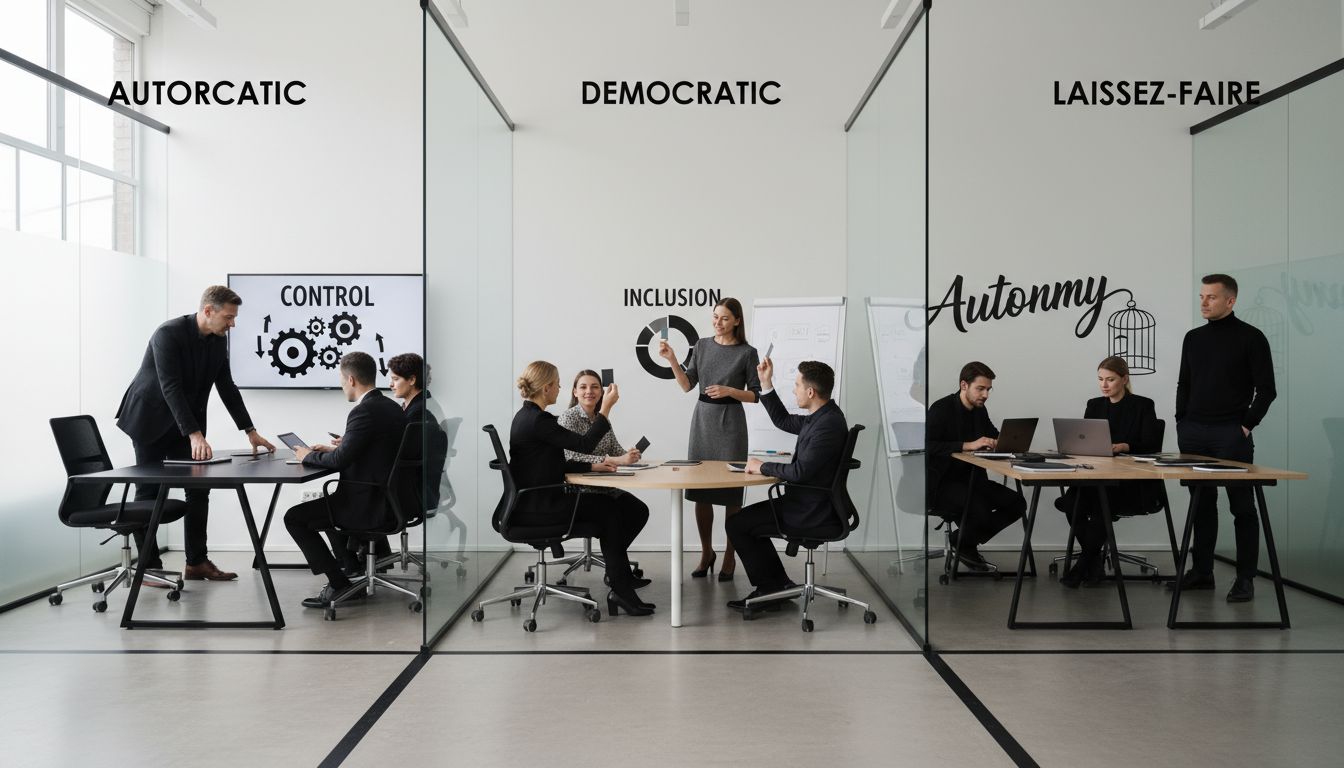
Each leadership style represents a unique value proposition, influencing organizational culture, employee engagement, and performance dynamics. Explore our guide on collaborative leadership approaches to understand how different value systems translate into practical leadership strategies.
Here’s a summary of how different leadership styles reflect core values:
Leadership Style
Core Values Emphasized
Key Characteristics
Autocratic
Control
Efficiency
Hierarchy
Centralized power
Top-down decisions
Democratic
Inclusion
Participation
Collective wisdom
Collaborative input
Shared responsibility
Laissez-Faire
Autonomy
Trust
Personal initiative
Minimal supervision
Independent action
Ultimately, the most effective leaders recognize that leadership styles are not rigid constructs but fluid frameworks that can be adapted based on contextual needs, team dynamics, and evolving organizational challenges. The key lies in understanding how core values inform leadership behaviour and creating a flexible approach that inspires, motivates, and drives collective success.
How Values Shape Decision-Making and Culture
Organizational values are the invisible architects of workplace dynamics, silently guiding every strategic choice and cultural interaction. Research from francis-press.com reveals that organizational values profoundly influence decision-making processes, creating complex patterns of behaviour that extend far beyond simple policy implementation. According to link.springer.com, leadership perspectives emerge from three fundamental value orientations, each dramatically impacting organizational culture:
Traditionalist Perspective
Emphasizes stability and established protocols
Values preservation of existing systems
Prioritizes predictability and controlled growth
Reformist Perspective
Champions innovation and transformational change
Values continuous improvement and adaptability
Encourages challenging existing paradigms
Pragmatic Perspective
Balances tradition with progressive thinking
Values practical, context-driven solutions
Focuses on measurable outcomes and flexible strategies
These value-driven perspectives fundamentally reshape how organizations approach challenges, make critical decisions, and nurture talent. When leaders consciously align their decision-making frameworks with core organizational values, they create a powerful mechanism for consistent, principled performance. Discover the role of leadership in cultural development through our comprehensive guide on organizational culture.
Ultimately, values are not abstract concepts but living, breathing frameworks that transform theoretical principles into tangible organizational behaviours. They represent the DNA of leadership, invisible yet profoundly influential in determining an organization’s trajectory, employee engagement, and long-term sustainability.
Integrating Values Into Team Dynamics
Team dynamics encompass the complex emotional and professional interactions that significantly influence organizational success. According to en.wikipedia.org’s Three Levels of Leadership model, effective integration of personal values into leadership practices is crucial for creating cohesive and high-performing teams. The Michigan Leadership Studies highlight a critical insight: employee-oriented leadership that genuinely values team members’ contributions transforms workplace interactions. This approach involves several strategic dimensions:
Transparent Communication
Share organizational values explicitly
Create safe spaces for dialogue
Encourage vulnerability and authenticity
Consistent Behavioural Alignment
Model desired values through personal actions
Demonstrate integrity in decision-making
Hold everyone accountable to shared principles
Collaborative Value Development
Involve team members in defining core values
Create collective ownership of organizational ethos
Regularly review and refine value statements
Team values are not static documents but living frameworks that evolve through continuous dialogue and collective commitment. Explore our insights on building trust as the foundation of team success to understand how intentional value integration drives organizational performance.
Successful value integration requires leaders to move beyond theoretical concepts, transforming abstract principles into tangible behaviours that inspire, connect, and motivate diverse teams toward shared objectives. It’s about creating a culture where individual contributions are recognized, collective potential is celebrated, and organizational values serve as a compelling navigational compass.
Common Pitfalls and Value Misalignments
Value misalignment represents one of the most insidious challenges in organizational leadership, silently eroding team cohesion and performance. Research from francis-press.com reveals that misalignment between leadership styles and organizational values can dramatically decrease employee morale and productivity, creating a toxic workplace environment. According to lszapi.com, value misalignments often manifest through several critical indicators:
Metrics that incentivize individual competition over teamwork
Communication Breakdowns
Lack of transparent dialogue about core principles
Siloed decision-making processes
Minimal feedback mechanisms for cultural improvement
Navigating these challenges requires a deliberate, honest approach to organizational introspection. Learn how metrics can be effectively used to diagnose organizational health and identify potential value misalignments before they become systemic problems.
Successful organizations recognize that value misalignment is not a static problem but a dynamic process requiring continuous attention, open communication, and a genuine commitment to creating an environment where principles are not just stated, but lived and breathed by every team member.
Unlock True Leadership by Living Your Values
Struggling to align your leadership values and organizational culture can erode trust and hinder growth. This article highlights the key challenges leaders face, including value misalignment, inconsistent decision-making, and weakened team dynamics. You want to lead with integrity, empathy, and accountability that inspire sustainable success and transform culture. At Berriault & Associates, we specialize in helping leaders like you bridge the gap between core values and leadership actions through customized programs that drive meaningful behavioural change. Discover how adaptive leadership and tailored solutions can accelerate your impact. Ready to enhance your leadership style and build high-performing teams rooted in shared values? Use our proven frameworks, such as Five Behaviors™ and Everything DiSC™, integrated within a people-centred approach. Discover how we support value-driven leadership and organizational agility by visiting our website. Take the next step today and schedule a personalized discovery call to start transforming your leadership culture now.
Frequently Asked Questions
What are the core values essential for modern leadership?
Core values essential for modern leadership include integrity, respect, accountability, empathy, and courage. These values guide leaders in their interactions and decision-making processes.
How do values influence different leadership styles?
Values significantly influence leadership styles by shaping leaders’ approaches to decision-making and team interaction. For example, autocratic leaders may emphasize control and efficiency, while democratic leaders focus on collaboration and inclusion.
What are the consequences of value misalignment in organizations?
Value misalignment can lead to cognitive dissonance, performance disconnects, and communication breakdowns, ultimately harming employee morale, productivity, and trust within the organization.
How can leaders effectively integrate values into their teams?
Leaders can effectively integrate values by promoting transparent communication, ensuring consistent behavioural alignment, and involving team members in developing and refining core values.


 Explore our guide on collaborative leadership approaches to understand how different value systems translate into practical leadership strategies.
Here’s a summary of how different leadership styles reflect core values: