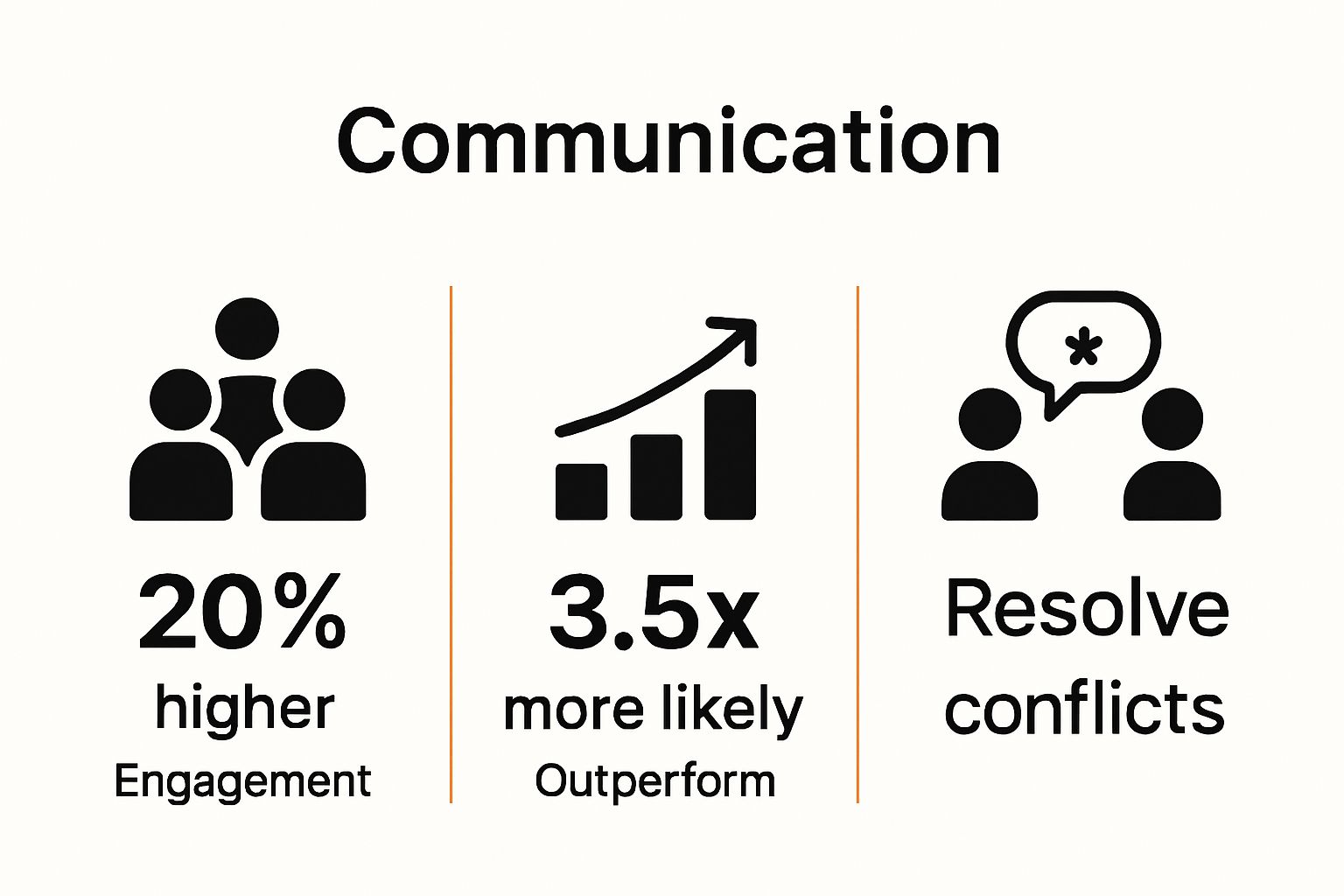
Communication skills shape every conversation, whether you are leading a project or just chatting with coworkers. Surprising, right? Teams that master communication report up to 20 percent higher productivity compared to those that struggle. Most people think that communicating means just talkin,g but real impact comes from how well you listen, adapt, and connect in the moment.
Strong communication boosts teamwork, leadership, and overall organizational performance.
Invest in improving communication
Enhancing these skills leads to greater efficiency, engagement, and a competitive edge.
Trust is built through transparent communication
Consistent and open dialogue fosters psychological safety, enabling collaboration and innovation.
Conflict resolution requires strong communication
Effective communication helps teams navigate disagreements constructively, promoting understanding and solutions.
Adaptability in communication is crucial
Tailoring communication styles to different contexts enhances effectiveness and audience connection.
What Are Communication Skills and Their Importance?
Communication skills are complex abilities that enable individuals to exchange information effectively, understand messages accurately, and interact successfully with others across various personal and professional contexts. These skills go far beyond simple verbal expression and encompass a sophisticated range of verbal, nonverbal, and interpersonal competencies that shape how we connect and collaborate.
Core Components of Communication Skills
At their foundation, communication skills include multiple interconnected elements:
Verbal Communication: The ability to articulate thoughts and ideas clearly through spoken language
Nonverbal Communication: Understanding and utilizing body language, facial expressions, and gestures
Active Listening: Comprehending and processing information shared by others with genuine engagement
Written Communication: Expressing ideas effectively through written mediums like emails, reports, and messages
These skills work synergistically to create meaningful interactions.
The following table summarizes the foundational components of communication skills, offering concise definitions to help readers distinguish between these interconnected concepts.
Component
Definition
Verbal Communication
Expressing ideas clearly through spoken language.
Nonverbal Communication
Using body language, facial expressions, and gestures to support or clarify messages.
Active Listening
Fully understanding and processing information with genuine engagement.
Written Communication
Conveying ideas effectively in written formats such as emails, reports, and messages.
Why Communication Skills Matter Professionally
Professional environments demand robust communication skills as they directly impact team performance, leadership effectiveness, and organizational success. According to research from MIT Sloan Management Review, organizations with strong communication practices experience 20% higher employee engagement and productivity levels.
Effective communicators can articulate complex ideas, resolve conflicts, build trust, and create collaborative work environments. They translate strategic vision into actionable plans, facilitate smoother team interactions, and drive organizational agility. Communication skills are not just a nice-to-have professional attribute but a critical competency that distinguishes exceptional leaders and high-performing teams.
Why Improving Communication Skills Benefits Organizations
Improving communication skills represents a strategic investment that drives organizational performance, cultural transformation, and competitive advantage. Far from being a soft skill, effective communication is a critical operational mechanism that enables teams to function more efficiently, align, and develop collective intelligence.
Impact on Organizational Performance
Organizations with robust communication infrastructures consistently outperform their competitors. Research from McKinsey Global Institute indicates that companies with highly effective communication practices are 3.5 times more likely to significantly outperform their industry peers.
Key performance benefits include:
This table presents a comparison of key organizational benefits arising from improved communication skills, based on the research insights in the article.
Benefit
Description
Research/Data Source
Higher Productivity
Teams with strong communication achieve up to 20% higher productivity.
MIT Sloan Management Review
Enhanced Employee Engagement
Organizations see a 20% increase in engagement through effective communication.
MIT Sloan Management Review
Increased Organizational Success
Effective communication leads to better team performance and overall success.
MIT Sloan Management Review
Industry Outperformance
Companies with top communication practices are 3.5x more likely to be successful.
McKinsey Global Institute
Improved Employee Retention
Better communication reduces turnover and boosts retention.
McKinsey Global Institute (performance benefits noted)
Accelerated decision-making processes
Reduced misunderstandings and operational errors
Enhanced cross-functional collaboration
Improved employee engagement and retention
Cultural and Strategic Advantages
Communication skills are a foundational element in building organizational culture. They create transparency, trust, and psychological safety, which are necessary for innovation and adaptability. Our approach to building practical communication skills in teams emphasizes creating environments where open dialogue becomes a core organizational value.
Moreover, strong communication capabilities enable organizations to navigate complex challenges more effectively. By developing communication competencies, leaders can articulate vision, manage change, and create alignment across diverse teams and stakeholders. The ability to communicate clearly becomes a strategic differentiator in increasingly complex and rapidly evolving business landscapes.
How Effective Communication Enhances Team Dynamics
Team dynamics represent the complex network of interactions, relationships, and communication patterns that define how groups work together. Effective communication acts as the critical infrastructure that enables teams to function smoothly, resolve conflicts, and achieve collective goals with greater precision and shared understanding.
Building Trust Through Transparent Communication
Trust emerges as the foundational element of high-performing teams. When communication channels remain open, transparent, and consistent, team members develop psychological safety, which encourages vulnerability, honest feedback, and collaborative problem-solving. Our comprehensive guide to improving team communication highlights the transformative power of creating communication environments that prioritize mutual respect and genuine dialogue.
Key elements of communication that build team trust include:
Consistent and predictable communication patterns
Willingness to share both successes and challenges
Active listening and empathetic responses
Transparent decision-making processes
Resolving Conflicts and Enhancing Collaboration
According to research from the National Institutes of Health, teams with robust communication skills are significantly more effective at managing interpersonal conflicts and maintaining productive working relationships. Effective communicators can navigate disagreements by focusing on shared objectives, understanding different perspectives, and finding collaborative solutions.
Strong communication skills enable teams to transform potential conflicts into opportunities for innovation, learning, and deeper mutual understanding. By creating environments where diverse viewpoints are respected and constructively integrated, organizations can unlock higher levels of team performance and creative potential.
Key Concepts in Developing Effective Communication Skills
Developing practical communication skills requires a strategic and holistic approach that encompasses multiple dimensions of interpersonal interaction. These skills are not innate talents but learnable competencies that can be systematically cultivated through intentional practice, self-awareness, and continuous improvement.
Foundational Communication Competencies
Successful communication development centers on understanding and mastering core competencies that underpin meaningful interactions. These fundamental skills create a robust framework for more advanced communication strategies.
Key foundational competencies include:
Emotional Intelligence: Understanding and managing personal and others’ emotions
Active Listening: Fully concentrating on, understanding, and responding to communication
Empathy: Capacity to understand and share the perspectives of others
Clarity and Precision: Articulating thoughts and ideas with concision and accuracy
Context and Adaptability in Communication
Research from Harvard Business Review emphasizes that effective communicators are not just skilled in technique but also excel at adapting their communication style to specific contexts and audiences. This adaptability involves recognizing nuanced social and professional dynamics and modifying communication approaches accordingly.
Successful communication requires understanding that different scenarios demand different communication strategies. Leaders and professionals must develop flexibility in their communication approach, recognizing that what works in one context might be ineffective in another. This adaptive capacity separates exceptional communicators from merely competent ones.
Examples of Impactful Communication
The following scenarios demonstrate the profound impact of strategic communication across diverse professional and personal contexts. These practical examples illustrate how nuanced communication skills can transform challenges into opportunities, resolve complex conflicts, and drive meaningful outcomes at the organizational and interpersonal levels.
Healthcare Communication Transformation
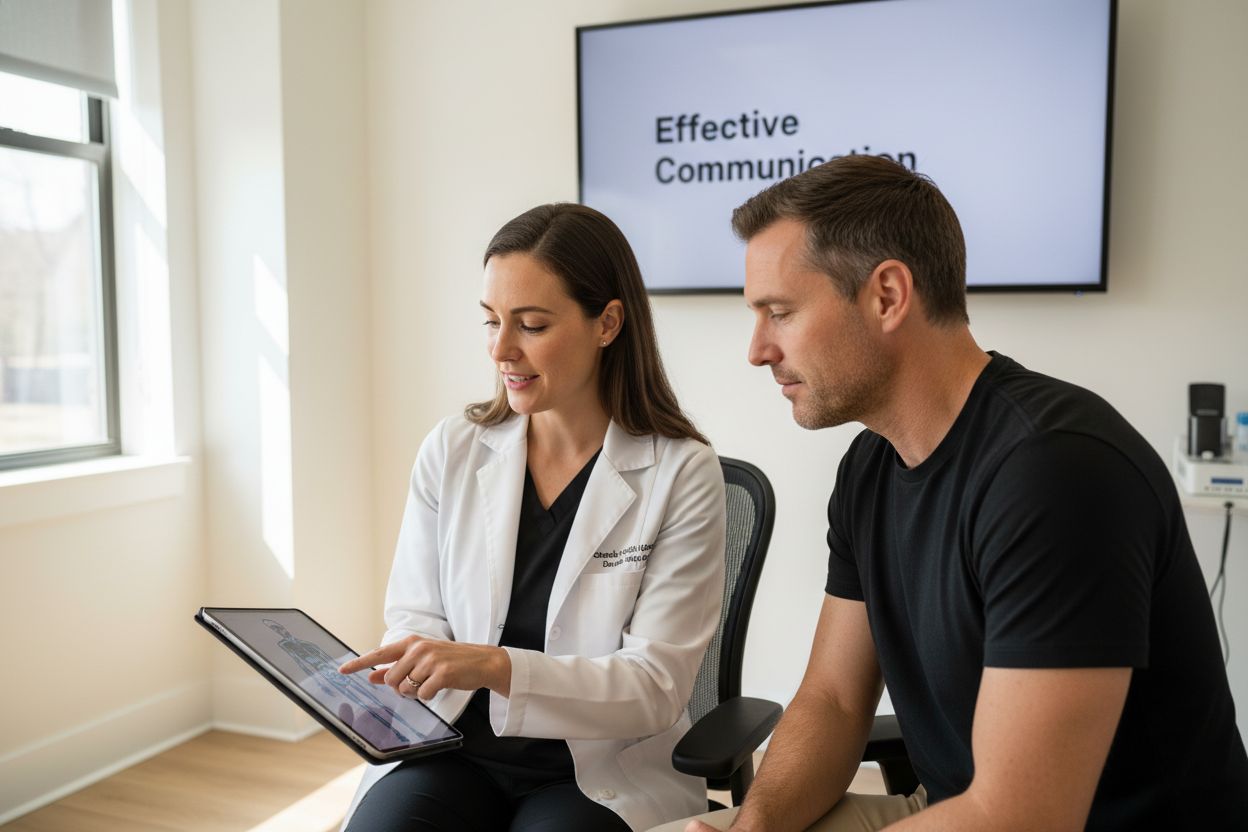
Research from the National Institutes of Health reveals that effective provider-patient communication dramatically improves treatment adherence and health outcomes. Medical professionals who communicate with empathy, clarity, and precision create environments of trust that encourage patients to engage more actively in their healthcare journey.
Communication breakthroughs in healthcare settings often involve:
Explaining complex medical information in an accessible language
Demonstrating genuine emotional understanding
Providing clear treatment instructions
Creating safe spaces for patient questions and concerns
Corporate Leadership and Strategic Communication
In corporate environments, communication skills distinguish exceptional leaders. Companies like Google and Microsoft have consistently demonstrated that leaders who communicate transparently and authentically generate higher employee engagement and organizational performance.
Successful corporate communication strategies include creating feedback mechanisms, hosting regular town halls, using storytelling to articulate vision, and developing communication platforms that encourage cross-functional dialogue. These approaches transform communication from a transactional process into a strategic organizational capability that drives innovation, alignment, and collective intelligence.
Transform Your Communication Skills into Measurable Team Impact
Are breakdowns in team communication holding back your organization’s progress? This article revealed how poor communication leads to missed opportunities, wasted time, and stalled growth. Our programs at Berriault & Associates are built for leaders and teams who want more than just theory—they want real behaviour change. By harnessing proven strategies such as the Five Behaviors™ and Everything DiSC™, we turn communication gaps into genuine competitive advantages. Discover how building practical communication skills in your team can unlock trust, clarity, and innovation across your workforce.
Your chance to shift from conversation breakdowns to seamless collaboration starts today. Take the next step where education meets action. Book a discovery call or explore how we can help your teams thrive in any work environment—remote, onsite, or hybrid. Stronger communication skills fuel lasting results. Why wait?
Frequently Asked Questions
Why is it important to improve communication skills in the workplace?
Improving workplace communication skills enhances employee engagement, productivity, and collaboration. To effectively cultivate these skills, focus on actionable techniques such as practicing active listening and fostering open dialogue within your team.
How can I assess my current communication skills?
You can assess your communication skills by seeking feedback from colleagues or completing self-reflection exercises focused on clarity, listening, and engagement. Start this process by designating a week for self-observation and reaching out to at least three coworkers for constructive feedback.
What are some effective strategies for improving communication skills?
Practical strategies for improving communication skills include public speaking, practicing active listening, and participating in group discussions. Take immediate action by joining a local speaking club or scheduling regular team meetings to enhance these skills over the next few months.
How does improving communication skills affect team dynamics?
Improving communication skills fosters trust and collaboration among team members, which leads to better problem-solving and innovation. Begin by creating an action plan that includes weekly check-ins to promote transparency and feedback among the team.
Can enhancing communication skills lead to career advancement?
Yes, enhancing communication skills can significantly boost career advancement by making you a more effective leader and collaborator. Focus on developing specific skills, such as clarity and empathy, that you can practice and refine in your day-to-day interactions to see career outcomes within 6-12 months.
What role does emotional intelligence play in communication?
Emotional intelligence is crucial in communication, as it helps you understand and manage your own and others' emotions, leading to more effective interactions. Work on developing your emotional intelligence by taking time each week to reflect on your emotional responses and practice empathy in daily conversations.