Did you know that organizations led by values-based leaders report up to 40 percent higher employee engagement levels? This style of leadership matters because it shapes not only how teams perform, but also how they feel about their work, each other, and the company's long-term mission. Understanding the core principles behind values-based leadership reveals a path to cultures rooted in trust, ethical decision-making, and genuine professional growth.
Key Takeaways
Point
Details
Values-Based Leadership Principle
Anchors leadership practices in ethical principles, aligning personal values with organizational missions for holistic success.
Core Traits of Leaders
Key competencies include emotional intelligence, integrity, and a collaborative mindset, all of which are essential for effective team engagement.
Implementation Strategies
Requires adaptive education programs, cultural integration, and performance metrics aligned with values to foster authentic leadership.
Organizational Benefits
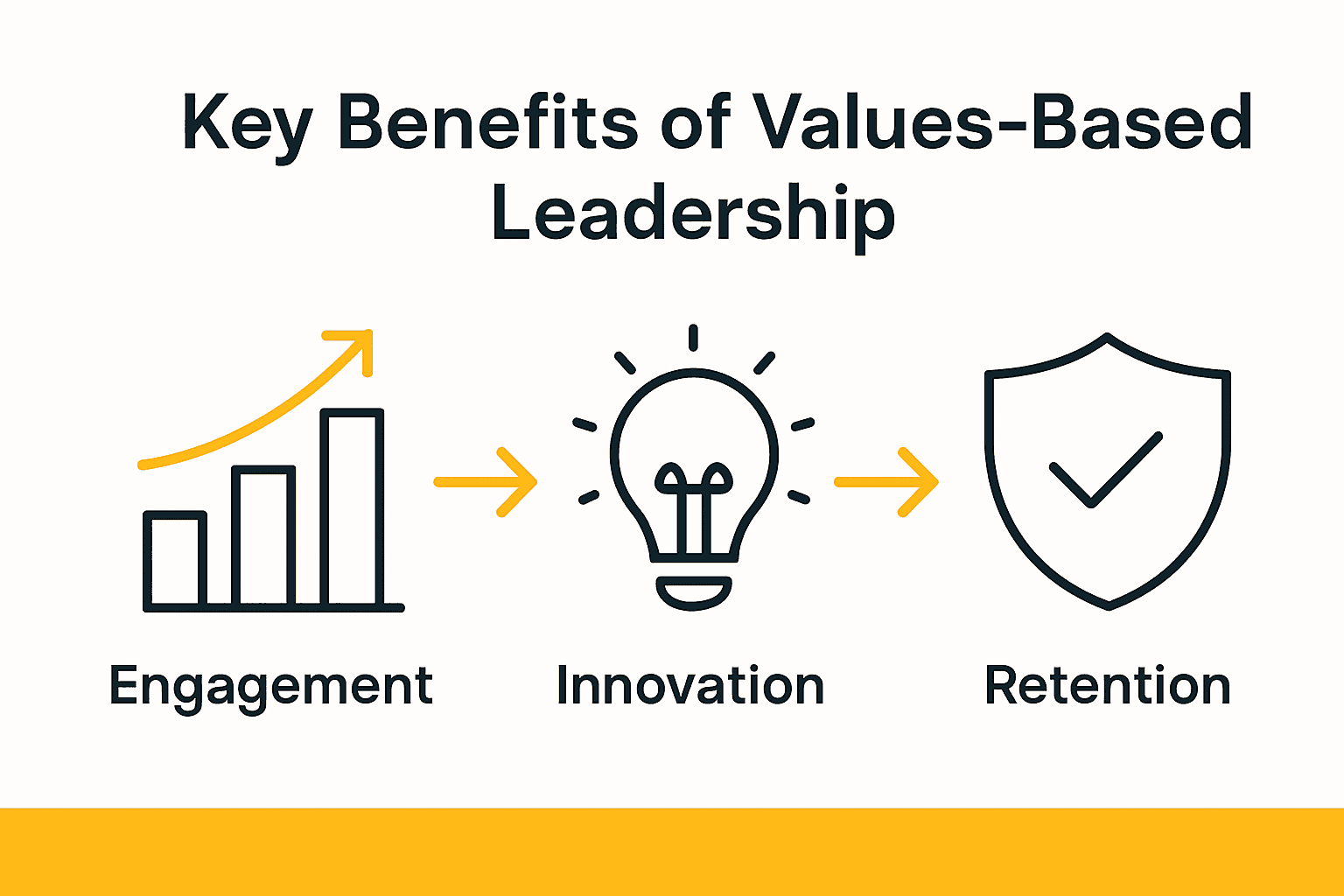
Increases employee engagement, innovation, and retention, ultimately driving sustainable performance and resilience.
Values-based leadership transforms traditional management approaches by anchoring leadership practices in genuine, ethical principles that go far beyond quarterly performance metrics. According to a literature review on leadership studies, this leadership model is fundamentally grounded in moral, authentic, and transformational constructs that prioritize alignment between personal values, organizational mission, and stakeholder expectations.
At its core, values-based leadership centers on several key principles:
Demonstrating personal integrity consistently
Creating transparent communication channels
Prioritizing team member development
Fostering an environment of mutual respect
Aligning organizational actions with stated values
Research from a 2022 academic medical study highlights that effective values-driven leaders prioritize critical elements, such as empathy, collaboration, and diversity. These leaders understand that their role extends beyond managing tasks to creating meaningful workplace environments where individuals feel genuinely valued and connected to a larger organizational purpose.
The most powerful aspect of values-based leadership is its transformative potential. By making values the compass for decision-making, leaders can build trust, inspire genuine commitment, and create sustainable organizational cultures that adapt and thrive. It’s not just about what you achieve, but how you achieve it - with integrity, compassion, and a genuine commitment to collective growth. Read more about how leadership styles evolve in our comprehensive guide.
Core Traits of Values-Driven Leaders
Values-driven leaders stand out not just by their professional achievements but by their profound commitment to ethical principles and human-centred leadership. According to a recent academic study, these exceptional leaders possess a unique set of competencies that transcend traditional management approaches, emphasizing emotional intelligence, deep listening skills, and an unwavering commitment to collaborative consensus-building.
The core traits of these remarkable leaders include:
Emotional Intelligence: The ability to understand and manage personal and team emotions
Active Listening: Genuinely hearing and understanding team perspectives
Integrity: Maintaining consistent alignment between stated values and actions
Collaborative Mindset: Prioritizing collective success over individual achievements
Mission-Driven Focus: Keeping organizational purpose at the center of decision-making
Emotional intelligence emerges as a cornerstone trait. These leaders don’t just manage tasks; they create environments where team members feel genuinely understood, respected, and empowered. By demonstrating authentic vulnerability and showing that they value both human connections and professional outcomes, they inspire trust and commitment.
Ultimately, values-driven leaders recognize that authentic leadership is about transformation, not just of organizational metrics, but of human potential as well. Explore how leadership styles have evolved to prioritize human-centric approaches and understand why these traits are no longer optional, but essential in today’s complex workplace ecosystems.
Implementation Methods in Modern Organizations
Values-based leadership implementation is not a one-size-fits-all approach; rather, it is a nuanced strategy that requires a deep organizational commitment and systematic transformation. According to a comprehensive literature review, successful implementation involves embedding values into authentic, ethical leadership practices that foster genuine congruence between individual leaders and the broader organizational mission.
Key implementation methods include:
Developing targeted leadership education programs
Creating structured value alignment workshops
Implementing robust feedback mechanisms
Designing performance metrics that reward value-driven behaviours
Establishing mentorship and coaching programs focused on ethical leadership
Research from recent mixed-methods studies suggests that effective implementation requires a multi-dimensional approach. Organizations must invest in comprehensive leadership curriculum development that goes beyond traditional training, incorporating real leader experiences, interviews, and survey data to create meaningful, contextualized learning experiences.
The transformation isn’t just about training - it’s about creating a cultural ecosystem that consistently reinforces values-driven behaviours. This means integrating values into recruitment, onboarding, performance evaluations, and leadership development pathways. Learn more about breaking traditional leadership paradigms and understand how modern organizations are reimagining leadership development from the ground up.
Benefits for Team and Organizational Success
Values-based leadership transforms organizational dynamics by creating profound, sustainable advantages that extend far beyond traditional performance metrics. According to research findings, embedding values-driven approaches in leadership training programs significantly enhances overall organizational effectiveness by reinforcing mission-driven alignment and core leadership competencies.
Key benefits for teams and organizations include:
Increased employee engagement and motivation
Enhanced trust and psychological safety
More innovative and adaptive workplace cultures
Stronger talent retention and recruitment capabilities
Improved decision-making processes
Greater resilience during organizational challenges
The tangible impact goes beyond soft metrics. When leaders consistently demonstrate authentic values alignment, they create environments where team members feel genuinely connected to organizational purpose. This connection translates into measurable outcomes: higher productivity, more creative problem-solving, and a workplace culture that attracts top talent who are seeking meaningful professional experiences. Ultimately, values-based leadership is about creating sustainable human ecosystems where collective potential can flourish. Explore how well-being and empathy drive organizational success, understanding that true organizational excellence emerges when human potential is genuinely respected and systematically cultivated.
Challenges and Solutions in Application
Implementing values-based leadership is not without significant complexity. According to a comprehensive literature review, organizations face substantial theoretical challenges in consistently defining leadership constructs, with notable divergence around authentic, ethical, and transformational leadership approaches.
Key challenges and strategic solutions include:
Conceptual Ambiguity: Developing clear, shared definitions of values-driven leadership
Curriculum Design: Creating adaptive training programs that translate values into actionable competencies
Organizational Resistance: Overcoming traditional hierarchical leadership paradigms
Measurement Complexity: Establishing meaningful metrics for values-based performance
Cultural Integration: Embedding values consistently across diverse organizational contexts
Research in healthcare leadership education provides compelling insights into addressing these challenges. By utilizing mixed-methods curriculum design and actively incorporating leader-identified values and competencies, organizations can bridge critical translation gaps between theoretical concepts and practical implementation.
Successful navigation requires a nuanced, patient approach. Leaders must recognize that values transformation is not a quick fix but a sustained cultural journey. Explore real-world case studies that illuminate practical implementation strategies, understanding that meaningful change emerges through consistent, intentional effort and genuine organizational commitment.
Here’s a comparison of key challenges and solutions in values-based leadership:
Challenge
Description
Solution
Conceptual Ambiguity
Lack of clear definitions
Develop shared language and standards
Curriculum Design
Difficulty translating values to skills
Create adaptive and practical programs
Organizational Resistance
Pushback from traditional hierarchies
Foster cultural change and engagement
Measurement Complexity
Hard to assess values-based performance
Build meaningful, actionable metrics
Cultural Integration
Inconsistent values adoption organization-wide
Embed values in every HR process
Take the Next Step Toward True Values-Based Leadership
Are you struggling to turn values-based leadership principles into everyday practice? Many organizations struggle to align personal and organizational values, foster trust, and drive genuine team engagement, especially when traditional leadership behaviours hinder team progress. The article explores how challenges such as conceptual ambiguity, inconsistent value adoption, and curriculum design often stand in the way of real transformation. At Berriault & Associates, we understand these pain points and have developed solutions that move theory into action for lasting cultural change.
Ready to close the gap between leadership ideals and real-world impact? Now is the ideal time to explore our custom leadership development and team solutions, which place values at the heart of your organization. Discover how our tailored assessments and workshops help you build integrity, trust, and sustainable behavioural change throughout your entire company. Visit Berriault & Associates today and start building the leadership culture your teams deserve.
Frequently Asked Questions
What are the key principles of values-based leadership?
Values-based leadership is grounded in principles such as personal integrity, transparent communication, prioritizing team member development, mutual respect, and aligning organizational actions with stated values.
How can organizations effectively implement values-based leadership?
Values-driven leaders typically possess traits such as emotional intelligence, active listening, integrity, a collaborative mindset, and a mission-driven focus that emphasizes collective success over individual achievements.
What are the benefits of adopting values-based leadership in an organization?
Adopting values-based leadership can lead to increased employee engagement, enhanced trust and psychological safety, a more innovative workplace culture, stronger talent retention, improved decision-making, and greater resilience in the face of challenges.


 Learn more about breaking traditional leadership paradigms and understand how modern organizations are reimagining leadership development from the ground up.
 Ultimately, values-based leadership is about creating sustainable human ecosystems where collective potential can flourish. Explore how well-being and empathy drive organizational success, understanding that true organizational excellence emerges when human potential is genuinely respected and systematically cultivated.