Over 80 percent of American organizations report that minor, steady improvements can drive major competitive gains. Yet building a culture of ongoing progress is rarely straightforward. Facing constant pressure to do more with less, companies seek ways to improve efficiency and performance while staying flexible. This guide breaks down what continuous improvement really means, the proven models that support lasting results, and how anyone in an American business can help create lasting value through practical, everyday changes.
Organizations should view continuous improvement as a perpetual journey rather than a one-time effort, fostering a culture of consistent enhancement.
Data-Driven Decision Making
Effective continuous improvement relies on systematic assessment and metrics to inform decisions and guide enhancements.
Leadership Involvement Is Crucial
Active support from leadership is essential for fostering a culture of continuous improvement and ensuring organizational alignment.
Empower Employees
Encouraging input from all team members can drive innovation and facilitate incremental improvements across the organization.
Defining Continuous Improvement Processes
Continuous improvement is a strategic approach in which organizations systematically seek to enhance their processes, performance, and outcomes through incremental and breakthrough changes. At its core, this methodology focuses on identifying inefficiencies, eliminating waste, and creating more streamlined operational pathways.
The fundamental philosophy of continuous improvement is a cultural commitment to perpetual growth and optimization. Organizations embracing this approach recognize that no process is ever truly perfect and that there’s always room for refinement. By implementing continuous learning strategies, teams can develop a proactive mindset that views challenges as opportunities for innovation and advancement.
Key characteristics of continuous improvement processes include:
Ongoing, systematic assessment of current workflows
Data-driven decision making
Cross-functional collaboration
Incremental and strategic modifications
Measurement of performance metrics
Scalable and adaptable improvement techniques
From a practical standpoint, continuous improvement isn’t a one-time event but a perpetual journey. Organizations committed to this approach create structured frameworks that encourage employees at every level to identify potential enhancements. By breaking down traditional silos and promoting a culture of transparency and feedback, businesses can transform incremental improvements into significant competitive advantages.
Popular Models and Approaches Explained
Continuous improvement encompasses several renowned methodological frameworks that organizations leverage to drive systematic transformation. The Toyota Way stands out as a pioneering approach, offering 14 fundamental principles that revolutionize organizational performance and strategic thinking.
One of the most influential models is Toyota Kata, which introduces two critical routines: the Improvement Kata and Coaching Kata. These innovative techniques focus on moving organizations from their current state to desired future states through structured, creative problem-solving. The approach emphasizes iterative learning, adaptation, and a disciplined method for generating breakthrough improvements.
Popular continuous improvement models include:
Lean Management: Focuses on eliminating waste and maximizing value
Six Sigma: Emphasizes statistical analysis and process optimization
Kaizen: Promotes incremental changes and employee engagement
Total Quality Management (TQM): Integrates continuous improvement across all organizational levels
Each model offers unique strategies for driving organizational change. While they differ in specific methodologies, they share core principles of systematic assessment, data-driven decision-making, and a culture of ongoing learning and adaptation. The key is selecting an approach that aligns with your organization’s specific goals, culture, and operational challenges.
Key Characteristics for Organizations
Operational excellence emerges as a critical framework for organizations committed to continuous improvement. The systematic implementation of principles and tools enables businesses to enhance performance and foster a culture dedicated to delivering exceptional value to customers. This approach goes beyond simple process optimization, transforming how organizations fundamentally approach growth and innovation. Successful continuous improvement requires a multifaceted organizational approach. Appreciative Inquiry models highlight the importance of engaging stakeholders by identifying and building upon existing organizational strengths. This perspective shifts the focus from problem-solving to strength-amplification, encouraging teams to view challenges as opportunities for creative development.
Key organizational characteristics of effective continuous improvement include:
Leadership commitment: Active support from top management
Cultural alignment: Embedding an improvement mindset across all levels
Employee empowerment: Encouraging input and innovation from every team member
Data-driven decision making: Using metrics and analytics to guide improvements
Adaptive learning systems: Creating mechanisms for rapid knowledge transfer
Flexible infrastructure: Supporting quick implementation of identified improvements
By understanding the role of leadership in organizational change, companies can create environments where continuous improvement becomes more than a strategy — it becomes a fundamental organizational capability. The most successful organizations treat improvement not as a periodic event, but as an ongoing, integrated approach to business evolution.
Best Practices for Implementation Success
Continuous improvement demands a structured yet flexible approach. The PDCA cycle provides a powerful framework for organizations seeking systematic transformation, breaking down improvement efforts into four critical stages: Plan, Do, Check, and Act. This methodology ensures that improvements are not just random attempts, but carefully designed, implemented, and evaluated strategies. Successful implementation requires more than just a theoretical framework. Organizations must create an environment that actively supports and rewards continuous improvement efforts. Agile transformation strategies play a crucial role in embedding a culture of ongoing learning and adaptation across all organizational levels.
Key best practices for successful continuous improvement implementation include:
Leadership Commitment: Ensure top-down support and resource allocation
Employee Engagement: Create channels for bottom-up innovation
Metrics and Tracking: Develop robust systems for measuring progress
Regular Review Processes: Conduct periodic assessments of improvement initiatives
Continuous Learning: Invest in training and skill development
The most effective continuous improvement approaches recognize that implementation is not a one-time event, but an ongoing journey of organizational growth. By creating flexible systems that encourage experimentation, learning, and adaptation, businesses can transform continuous improvement from a theoretical concept into a tangible competitive advantage.
Common Challenges and Solutions
Implementing continuous improvement strategies poses significant organizational challenges, particularly when scaling processes across large, complex environments. The most critical obstacles emerge from resistance to change, limited leadership support, and deeply entrenched organizational habits that can derail transformation efforts.
Successful continuous improvement requires a nuanced approach that goes beyond theoretical frameworks. Advanced modelling and simulation techniques demonstrate that organizations can optimize their processes by systematically analyzing and identifying critical improvement factors. This data-driven strategy helps overcome traditional barriers by providing concrete, measurable insights into potential organizational enhancements.
Common challenges in continuous improvement implementation include:
Cultural Resistance: Overcoming institutional inertia and change fatigue
Resource Constraints: Balancing improvement initiatives with existing operational demands
Rethinking leadership challenges becomes crucial in navigating these obstacles. The most effective organizations treat continuous improvement not as a top-down mandate, but as a collaborative, adaptive process that empowers employees at every level to contribute to organizational growth.
Unlock Lasting Growth with Expert Continuous Improvement Support
Continuous improvement is more than just a process; it requires committed leadership, a culture aligned with change, and empowered teams ready to innovate. If you are facing challenges such as resistance to change, measurement complexity, or maintaining momentum, you are not alone. Our tailored programs at Berriault & Associates focus on developing adaptive leadership and building agile, high-performing teams, using proven tools such as Five Behaviors™ and Everything DiSC™. These solutions drive behavioural change and embed continuous improvement deeply into your organizational culture.
Experience how a people-centred, framework-agnostic approach can transform your continuous improvement efforts into sustainable success. Take the next step by exploring how we help teams overcome obstacles like skill gaps and communication barriers through flexible training and coaching. Visit our site now to book a discovery call and start turning your continuous improvement challenges into a competitive advantage.
Frequently Asked Questions
What is continuous improvement?
Continuous improvement is a strategic approach where organizations systematically enhance their processes, performance, and outcomes through incremental and breakthrough changes. It focuses on identifying inefficiencies and optimizing operational pathways.
What are the key characteristics of continuous improvement processes?
Key characteristics include ongoing workflow assessment, data-driven decision-making, cross-functional collaboration, incremental modifications, performance measurement, and scalable improvement techniques.
What are some popular models used in continuous improvement?
Popular models include Lean Management, Six Sigma, Kaizen, and Total Quality Management (TQM), each offering unique strategies for driving systematic organizational change.
What challenges are commonly faced when implementing continuous improvement?
Common challenges include cultural resistance, resource constraints, measurement complexity, skill gaps, communication barriers, and maintaining the sustainability of improvement efforts.


 Successful continuous improvement requires a multifaceted organizational approach. Appreciative Inquiry models highlight the importance of engaging stakeholders by identifying and building upon existing organizational strengths. This perspective shifts the focus from problem-solving to strength-amplification, encouraging teams to view challenges as opportunities for creative development.
Key organizational characteristics of effective continuous improvement include:
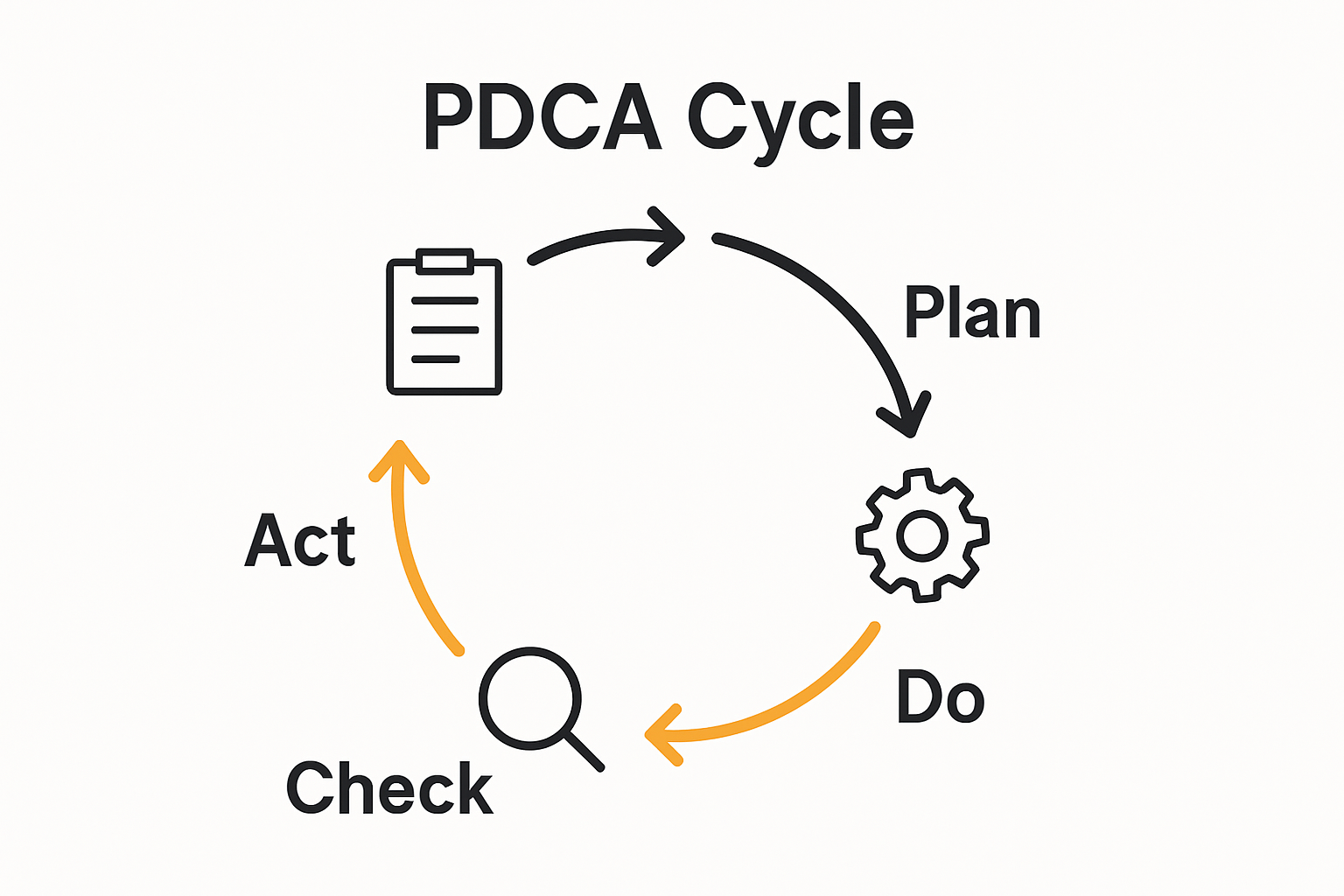 Successful implementation requires more than just a theoretical framework. Organizations must create an environment that actively supports and rewards continuous improvement efforts. Agile transformation strategies play a crucial role in embedding a culture of ongoing learning and adaptation across all organizational levels.
Key best practices for successful continuous improvement implementation include: