Over 60 percent of American workplaces now include employees from diverse cultures and backgrounds. That shift affects everything from team dynamics to company performance. Understanding cultural awareness can make the difference between a team that thrives and one that struggles with miscommunication or low morale. This article explores what cultural awareness truly means in American organizations and reveals how mastering it unlocks stronger collaboration, better innovation, and a more inclusive work environment.
Understanding and respecting cultural differences is critical for successful organizational operations and team dynamics.
Strategies for Implementation
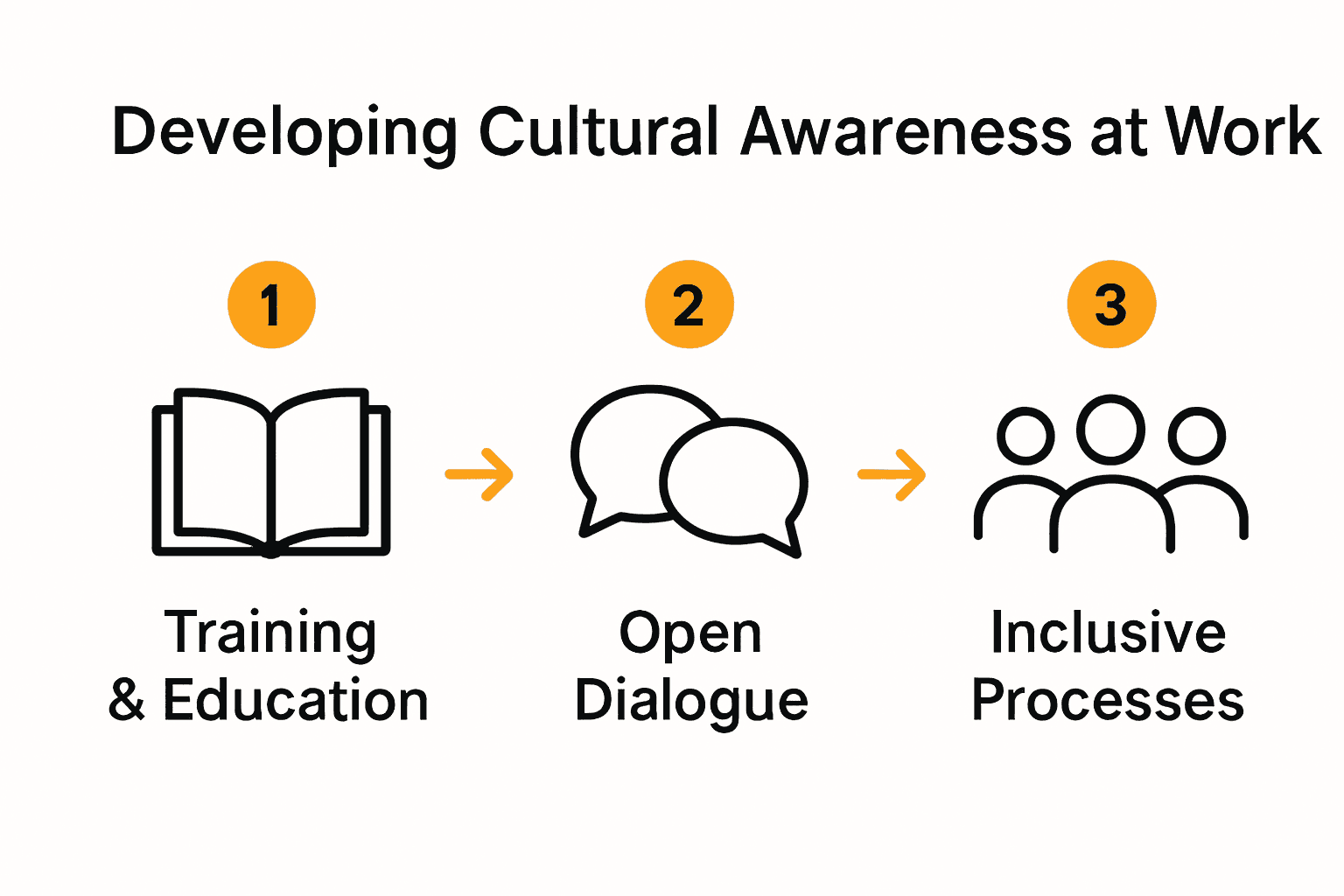
Develop comprehensive training, encourage open dialogue, and foster a culture of curiosity about diverse perspectives.
Impact on Team Performance
Enhanced cultural awareness leads to improved communication, innovation, and collaboration within teams.
Overcoming Challenges
Address ingrained biases and create a supportive environment for cultural transformation through committed leadership.
Defining Cultural Awareness and Its Importance
Cultural awareness isn’t just another corporate buzzword - it’s the fundamental skill that separates successful organizations from those stuck in outdated operational models. At its core, cultural awareness means understanding, recognizing, and respecting the unique differences and similarities among diverse groups in your workplace and broader professional ecosystem. According to the National Center for Cultural Competence, it represents being “cognizant, observant, and conscious of similarities and differences among and between cultural groups”.
Effective cultural awareness goes far beyond surface-level diversity training. It requires genuine commitment to understanding how different cultural backgrounds, communication styles, and perspectives shape workplace interactions. The Centers for Disease Control emphasizes that cultural competence involves “delivering services that are respectful of and responsive to… cultural and linguistic needs of diverse patients” - a principle equally applicable to organizational settings.
Organizations that prioritize cultural awareness unlock substantial competitive advantages. Consider these critical benefits:
Enhanced team communication and collaboration
Reduced interpersonal conflicts
Improved employee engagement and retention
More innovative problem-solving approaches
Greater adaptability in global business environments
By developing genuine cultural intelligence, leaders create environments where diverse perspectives are not just tolerated but actively celebrated and leveraged. This isn’t about political correctness - it’s about building high-performing teams that can navigate complex, multicultural professional landscapes with empathy, respect, and strategic insight. Our guide on leadership’s role in culture provides deeper strategies for implementing meaningful cultural awareness practices.
Understanding cultural awareness isn’t a destination. It’s an ongoing journey of learning, listening, and adapting. The most successful organizations recognize that cultural competence isn’t a checkbox; it’s a dynamic, evolving commitment to human understanding.
Types of Cultural Awareness in Organizations
Understanding cultural awareness isn’t a monolithic concept; it’s a nuanced framework with multiple interconnected dimensions that shape organizational effectiveness. According to Stevenson University, cultural awareness involves recognizing different beliefs, values, and customs, and understanding how these differences fundamentally impact communication and collaboration. The Pennsylvania Child Welfare Resource Center identifies several critical types of cultural awareness that organizations must develop:
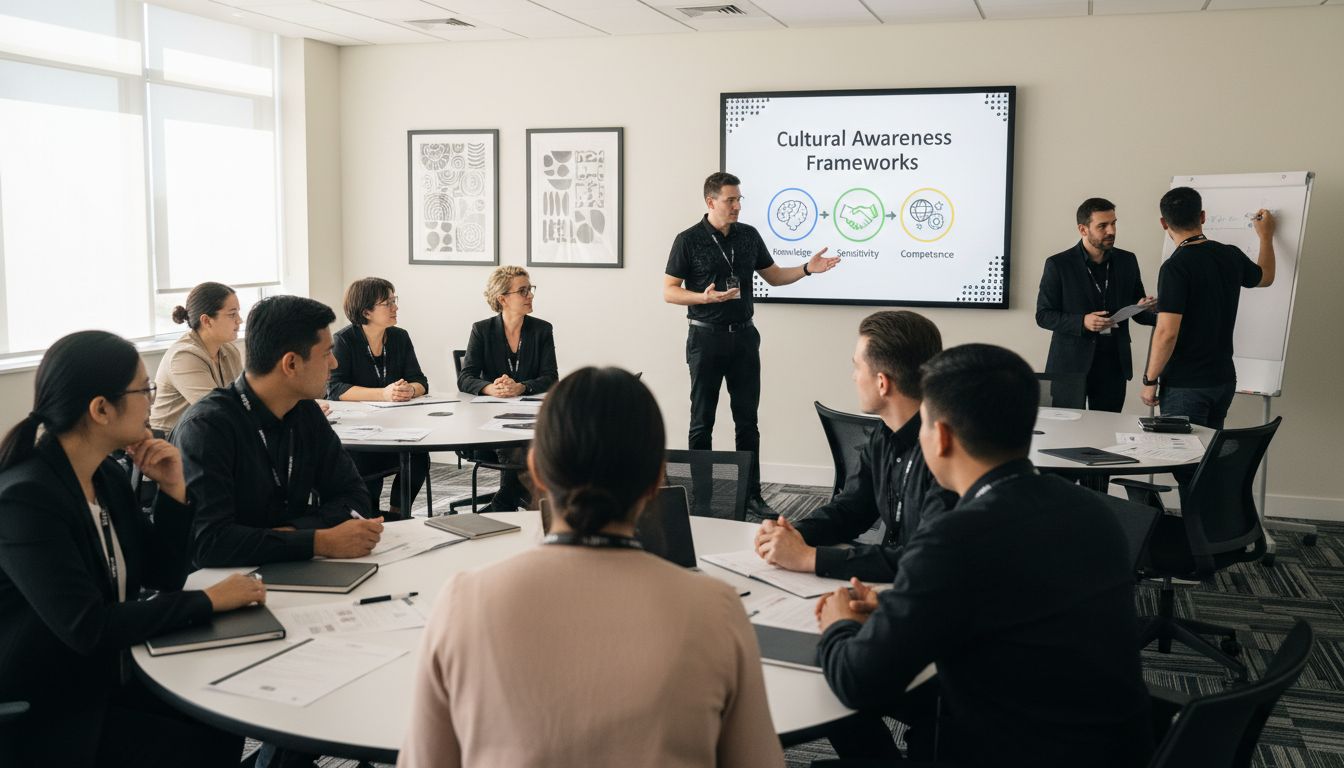
Cultural Knowledge: Understanding specific cultural practices, traditions, and historical contexts
Cultural Sensitivity: Recognizing and respecting differences without judgment
Cultural Competence: Actively developing skills to interact effectively across cultural boundaries
Intercultural Communication: Ability to communicate effectively with people from diverse backgrounds
Adaptive Cultural Intelligence: Flexibly adjusting behaviours and communication styles
These types of cultural awareness aren’t theoretical concepts - they’re practical tools for building high-performance, inclusive teams. Organizations that systematically develop these skills create environments where diverse perspectives are not just tolerated, but actively valued and integrated. Our guide on cultural awareness and leadership growth provides deeper insights into implementing these strategies.
Successful cultural awareness isn’t about memorizing differences. It’s about cultivating genuine curiosity, empathy, and a commitment to continuous learning. Leaders who master these dimensions can transform potential cultural barriers into powerful opportunities for innovation, collaboration, and organizational growth.
How Cultural Awareness Impacts Team Performance
Team performance is no longer just about individual skills; it’s about how effectively diverse professionals collaborate and communicate across cultural boundaries. According to the CDC, cultural competence fundamentally enhances communication and collaboration by ensuring services and interactions remain respectful of diverse cultural and linguistic needs.
Stevenson University emphasizes that cultural awareness directly impacts team dynamics through several critical mechanisms:
Reducing communication misunderstandings
Preventing unconscious bias
Creating more inclusive decision-making processes
Improving conflict resolution strategies
Enhancing overall team psychological safety
These impacts translate into measurable performance improvements. Teams with high cultural awareness demonstrate significantly better adaptability, innovation, and problem-solving capabilities. When team members feel genuinely understood and respected, they’re more likely to contribute boldly, share unique perspectives, and collaborate authentically. Our comprehensive guide to team performance success provides deeper strategies for leveraging cultural awareness.
Ultimately, cultural awareness isn’t a soft skill; it’s a strategic competitive advantage. Organizations that treat cultural differences as opportunities for growth, rather than obstacles to overcome, create resilient, high-performing teams capable of navigating complex global challenges with unprecedented agility and empathy.
Strategies for Developing Cultural Awareness at Work
Cultural awareness isn’t something organizations can achieve overnight - it requires intentional, systematic approaches that challenge existing mindsets and behaviours. The National Center for Cultural Competence recommends a multifaceted strategy focused on continuous self-assessment, ongoing education, and meaningful interactions across diverse cultural groups.
The Pennsylvania Child Welfare Resource Center suggests implementing practical strategies that organizations can adopt immediately:
Develop comprehensive cultural competence training programs
Create safe spaces for open, honest dialogue about cultural differences
Encourage employees to reflect on personal biases
Implement mentorship programs across diverse teams
Design inclusive recruitment and advancement processes
Successful cultural awareness development requires more than checkbox training. It demands genuine commitment from leadership to create an environment where diversity isn’t just tolerated, but actively celebrated and leveraged as a strategic advantage. Our insights on breaking down team cultural barriers provide deeper strategies for transforming organizational culture.
The most powerful cultural awareness strategy? Cultivating genuine curiosity about different perspectives. Organizations that approach cultural differences with humility, respect, and a learning mindset will thrive by turning potential obstacles into opportunities for innovation and growth.
Common Challenges and Solutions in Building Awareness
Cultural awareness transformation is rarely a smooth journey. The Centers for Disease Control identify critical challenges organizations face, including deeply ingrained personal biases and complex language barriers that can derail even the most well-intentioned cultural competency efforts.
The National Center for Cultural Competence highlights the most significant obstacles organizations encounter:
Resistance to organizational change
Limited resources for comprehensive training
Deeply entrenched unconscious biases
Lack of leadership commitment
Insufficient understanding of diversity’s strategic value
Overcoming these challenges requires a strategic, multifaceted approach. Organizations must move beyond surface-level diversity training to create systemic, sustainable cultural transformation. This means embedding cultural awareness into core organizational policies, recruiting practices, and leadership development programs. Our guide to challenging cognitive biases at work offers actionable insights for overcoming these organizational barriers.
The most potent solution? Cultivating genuine organizational humility. Successful cultural awareness isn’t about being perfect - it’s about being committed to continuous learning, acknowledging mistakes, and creating psychological safety where employees feel empowered to share their unique perspectives without fear of judgment or retribution.
Unlock True Organizational Success Through Cultural Awareness
Understanding and embracing cultural awareness is essential to overcoming communication barriers and building inclusive, high-performing teams. Your organization may be facing challenges such as unconscious bias, resistance to change, or ineffective intercultural communication. These obstacles can stall growth and limit innovation. Imagine leading a workplace where diverse perspectives fuel creativity and collaboration rather than conflict. That is the power of integrating cultural competence into your leadership and team dynamics.
At Berriault & Associates, we specialize in transforming these challenges into strategic advantages through tailored leadership development and team performance programs. Our people-centred, flexible approach uses proven tools like Five Behaviors™ and Everything DiSC™ to foster genuine cultural awareness and adaptive behaviours that drive sustainable results.
Take the first step to elevate your organizational culture with insights from our guide on leadership’s role in culture and explore how to break down hidden biases in teams through our strategic cultural insights.
Ready to build a resilient, agile organization where every team member thrives? Visit Berriault & Associates now to book a discovery call and begin your transformation journey today.
Frequently Asked Questions
What is cultural awareness?
Cultural awareness refers to understanding, recognizing, and respecting the unique differences and similarities among diverse groups of people within a workplace and professional ecosystem. It involves being conscious of cultural identities and their impact on interactions.
Why is cultural awareness critical for organizations?
Cultural awareness is crucial for organizations as it enhances communication, reduces conflicts, improves employee engagement, fosters innovation, and increases adaptability in global business environments. It ultimately contributes to a more inclusive and high-performing workplace.
How can organizations develop cultural awareness?
Organizations can develop cultural awareness by implementing comprehensive training programs, creating safe spaces for dialogue, encouraging reflection on personal biases, establishing mentorship across diverse teams, and designing inclusive recruitment and advancement processes.
What challenges do organizations face in building cultural awareness?
Organizations may encounter challenges such as resistance to change, deep-seated biases, limited training resources, a lack of leadership commitment, and insufficient understanding of the strategic value of diversity. Overcoming these requires a systemic approach to cultural transformation.


 Organizations that systematically develop these skills create environments where diverse perspectives are not just tolerated, but actively valued and integrated. Our guide on cultural awareness and leadership growth provides deeper insights into implementing these strategies.
Successful cultural awareness isn’t about memorizing differences. It’s about cultivating genuine curiosity, empathy, and a commitment to continuous learning. Leaders who master these dimensions can transform potential cultural barriers into powerful opportunities for innovation, collaboration, and organizational growth.