More than 60 percent of American workers say they feel left out of key decisions at work. This gap matters because businesses that foster a sense of belonging see greater creativity, better teamwork, and stronger results. Understanding the core principles of inclusive leadership can help any American organization move beyond simple diversity efforts to create workplaces where every voice matters and every perspective shapes real outcomes.
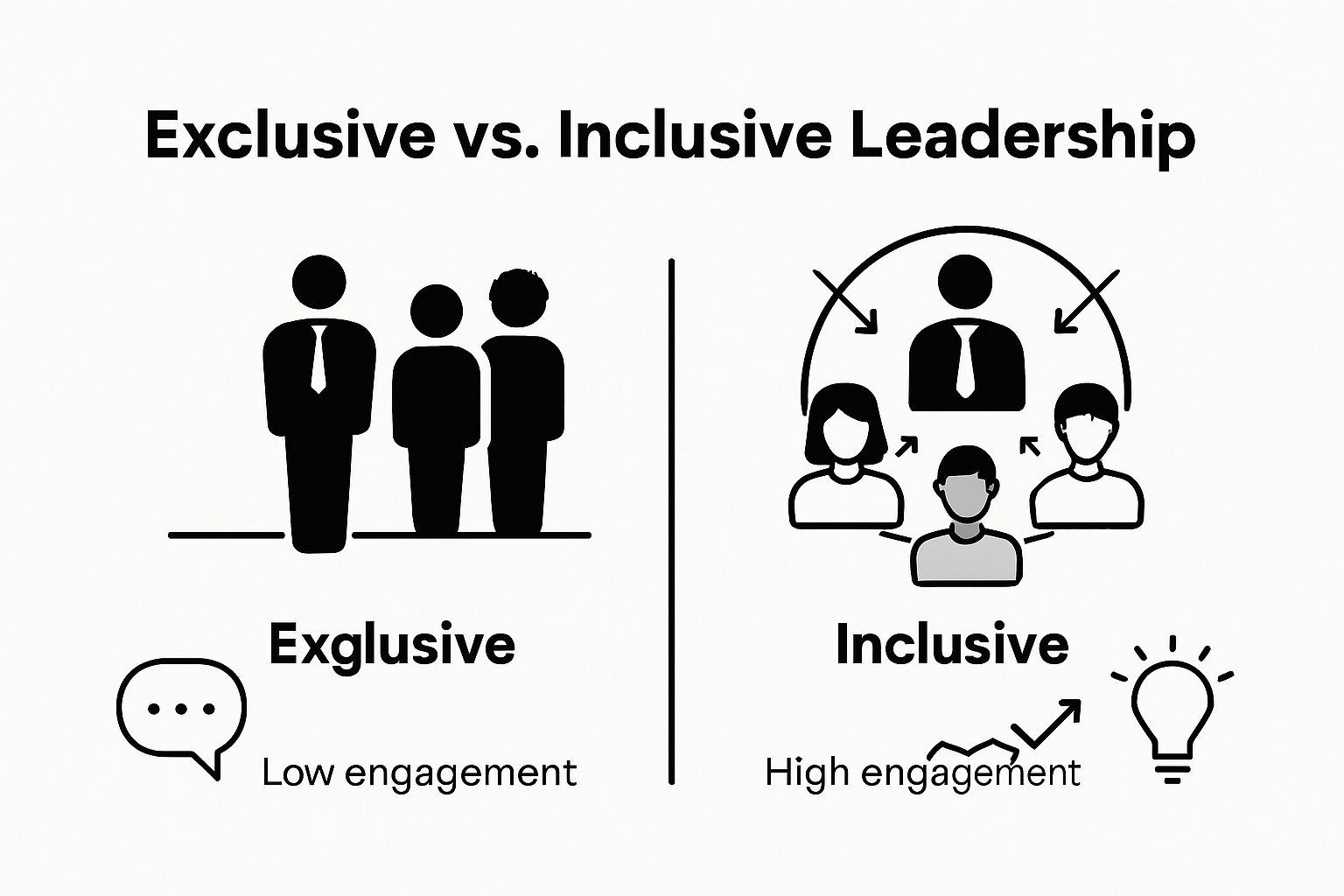
Inclusive leadership is essential for creating environments where diverse perspectives are actively sought and integrated into decision-making.
Cultivate Psychological Safety
Leaders must create spaces where team members feel safe to express themselves authentically, fostering innovation and collaboration.
Recognize and Mitigate Bias
Acknowledging personal and systemic biases is crucial to unlocking the potential of all team members and driving collective success.
Implement Strategic Practices
Organizations should establish structured dialogues, mentorship programs, and accountability metrics to continually enhance inclusivity and engagement.
Core Concepts of Inclusive Leadership
Inclusive leadership represents a transformative approach to organizational management that goes far beyond traditional leadership models. At its core, inclusive leadership centers on creating an environment where every team member feels genuinely valued, heard, and empowered to contribute their unique perspectives. Values-based leadership approaches underscore the critical importance of recognizing and celebrating individual differences.
Leaders practicing inclusive leadership actively work to dismantle barriers that historically marginalized groups encounter in professional settings. This means deliberately creating spaces where diverse perspectives are not just tolerated, but actively sought and integrated into decision-making processes. Research demonstrates that inclusive leadership behaviors promote a profound sense of belonging among team members, encouraging psychological safety and collaborative innovation.
The key components of inclusive leadership include:
Psychological Safety: Creating an environment where team members feel safe expressing their authentic selves
Active Listening: Genuinely hearing and valuing diverse perspectives without judgment
Cultural Intelligence: Understanding and respecting different cultural backgrounds and communication styles
Bias Recognition: Acknowledging and mitigating personal and systemic biases that limit team potential
Successful inclusive leaders understand that diversity is not just about representation, but about creating meaningful opportunities for everyone to contribute and thrive. By embracing these principles, organizations can unlock unprecedented levels of creativity, engagement, and collective problem-solving.
Essential Traits and Behaviours
Inclusive leadership demands a sophisticated set of personal characteristics and behavioural skills that go well beyond traditional management approaches. Servant and transformational leadership styles provide crucial context for understanding the deeper psychological dynamics of effective inclusive leadership. Emotional intelligence emerges as a foundational trait, encompassing self-awareness, empathy, and the ability to navigate complex interpersonal dynamics. Research indicates that leaders with high emotional intelligence can create environments of psychological safety, where team members feel genuinely respected and understood. These leaders demonstrate remarkable skills in recognizing and mitigating personal biases while simultaneously fostering an atmosphere of genuine curiosity and mutual respect.
The core traits of inclusive leadership include:
Courage: Willingness to challenge existing systemic barriers and organizational norms
Cultural Intelligence: Deep understanding and genuine appreciation of diverse perspectives
Empathy: Ability to understand and validate different lived experiences
Self-Awareness: Continuous reflection on personal biases and potential blind spots
Active Listening: Creating space for marginalized voices and truly hearing their experiences
Successful inclusive leaders understand that these traits are not static qualities but dynamic skills requiring constant cultivation and refinement. By consistently practicing these behaviours, leaders can transform organizational cultures, creating environments where diversity is not just celebrated but becomes a fundamental source of innovation, creativity, and collective excellence.
Key Practices in Diverse Workplaces
Creating truly inclusive workplaces requires intentional, strategic approaches that go beyond surface-level diversity initiatives. Cultural awareness plays a critical role in developing meaningful organizational transformation, demanding leaders move from passive acknowledgment to active engagement with diverse perspectives. Organizational citizenship behavior emerges as a key indicator of inclusive workplace success. Research demonstrates that when leaders create environments of genuine psychological safety, employees are more likely to contribute discretionary effort, collaborate across differences, and develop a sense of collective ownership.
Key practices for building inclusive workplaces include:
Structured Dialogue: Implementing regular forums where diverse perspectives are actively solicited and respected
Transparent Decision Making: Ensuring selection, promotion, and resource allocation processes are clear and equitable
Mentorship Programs: Developing targeted support systems for underrepresented professionals
Continuous Learning: Creating ongoing educational opportunities about diversity, equity, and inclusion
Accountability Metrics: Establishing measurable goals that track genuine progress in workplace inclusivity
Successful inclusive workplaces recognize that diversity is not a destination but a continuous journey of learning, adaptation, and mutual understanding. By embedding these practices into organizational culture, leaders can transform workplace dynamics, unlocking the extraordinary potential of truly diverse and empowered teams.
Driving Engagement and Team Performance
Inclusive leadership transforms traditional performance management by creating environments where team members feel genuinely empowered and motivated. Team performance strategies must move beyond mechanical metrics to understand the complex human dynamics that drive exceptional collective achievement. Innovative work behavior emerges as a critical outcome of inclusive leadership. Research demonstrates that when leaders create supportive climates characterized by psychological safety, employees are more likely to take creative risks, propose breakthrough solutions, and contribute discretionary effort beyond basic job requirements.
Key strategies for driving engagement and performance include:
Psychological Empowerment: Creating environments where team members feel they have genuine agency and meaningful impact
Continuous Feedback: Implementing real-time, constructive dialogue that supports individual and collective growth
Recognition Systems: Developing transparent mechanisms that celebrate diverse contributions
Collaborative Goal Setting: Involving team members in defining shared objectives and success metrics
Personal Development Pathways: Creating individualized growth opportunities that align with team and organizational objectives
Successful inclusive leaders understand that engagement is not a one-size-fits-all proposition. By recognizing each team member’s unique strengths, motivations, and potential, organizations can unlock extraordinary levels of collective performance, transforming individual potential into remarkable team achievements.
Common Pitfalls and How to Avoid Them
Inclusive leadership is a nuanced practice fraught with potential missteps that can inadvertently undermine organizational efforts. Team dynamics research highlights the complexity of creating truly inclusive environments that go beyond superficial diversity initiatives.
Balancing belongingness with individual uniqueness emerges as a critical challenge for leaders. Research indicates that many organizations struggle to create spaces where team members simultaneously feel they belong while also having their distinct identities and perspectives genuinely recognized and valued.
Common pitfalls in inclusive leadership include:
Performative Inclusion: Treating diversity as a checkbox rather than a genuine commitment
Unconscious Bias Blindness: Failing to recognize and actively work on personal biases
One-Size-Fits-All Approach: Assuming identical strategies work for all diverse groups
Tokenistic Representation: Promoting diversity in optics without meaningful empowerment
Lack of Accountability: Not establishing clear metrics and consequences for inclusive behaviours
Successful inclusive leaders recognize that avoiding these pitfalls requires continuous learning, humility, and a genuine commitment to understanding the complex human dynamics of diversity. By developing self-awareness, creating transparent systems, and maintaining an attitude of curiosity and respect, organizations can transform potential obstacles into opportunities for genuine connection and collective growth.
Unlock the Power of Inclusive Leadership in Your Organization
Inclusive leadership is essential for creating workplaces where every voice matters and diverse perspectives drive innovation. If your team struggles with psychological safety, unconscious bias, or superficial diversity efforts, you are not alone. This article highlights the critical need for leaders who practice empathy, cultural intelligence, and active listening to cultivate genuine belonging and unlock peak team performance.
At Berriault & Associates, we understand these challenges deeply. Our tailored leadership development programs leverage proven tools such as Five Behaviors™ and Everything DiSC™ to build emotional intelligence, challenge biases, and embed accountability in your culture. Whether your organization is remote, onsite, or hybrid, our flexible coaching and training help leaders foster inclusive workplaces that not only embrace differences but thrive on them. Discover how our approach to team performance and values-based leadership equips you to drive sustained behavioural change.
Take the first step toward transforming your organizational culture today.
Ready to lead inclusively and empower every team member to succeed. Visit Berriault & Associates now to book your discovery call and start building a workplace where diversity fuels innovation and engagement.
Frequently Asked Questions
What is inclusive leadership?
Inclusive leadership is a management approach that aims to create an environment in which every team member feels valued, heard, and empowered to contribute their unique perspective. It emphasizes the importance of recognizing and celebrating individual differences.
Why is inclusive leadership important?
Inclusive leadership is vital because it promotes diversity, enhances team performance, and fosters innovation. By creating a supportive environment, inclusive leaders can improve psychological safety, encourage collaboration, and unlock the potential of diverse teams.
What are the key traits of inclusive leaders?
The key traits of inclusive leaders include courage, cultural intelligence, empathy, self-awareness, and active listening. These traits help leaders challenge systemic barriers and cultivate an environment of respect and understanding among team members.
How can organizations implement inclusive leadership practices?
Organizations can implement inclusive leadership practices by creating structured dialogue forums, ensuring transparent decision-making, establishing mentorship programs, providing continuous learning opportunities, and setting accountability metrics to track progress in workplace inclusivity.


 Emotional intelligence emerges as a foundational trait, encompassing self-awareness, empathy, and the ability to navigate complex interpersonal dynamics. Research indicates that leaders with high emotional intelligence can create environments of psychological safety, where team members feel genuinely respected and understood. These leaders demonstrate remarkable skills in recognizing and mitigating personal biases while simultaneously fostering an atmosphere of genuine curiosity and mutual respect.
The core traits of inclusive leadership include:
 Organizational citizenship behavior emerges as a key indicator of inclusive workplace success. Research demonstrates that when leaders create environments of genuine psychological safety, employees are more likely to contribute discretionary effort, collaborate across differences, and develop a sense of collective ownership.
Key practices for building inclusive workplaces include: