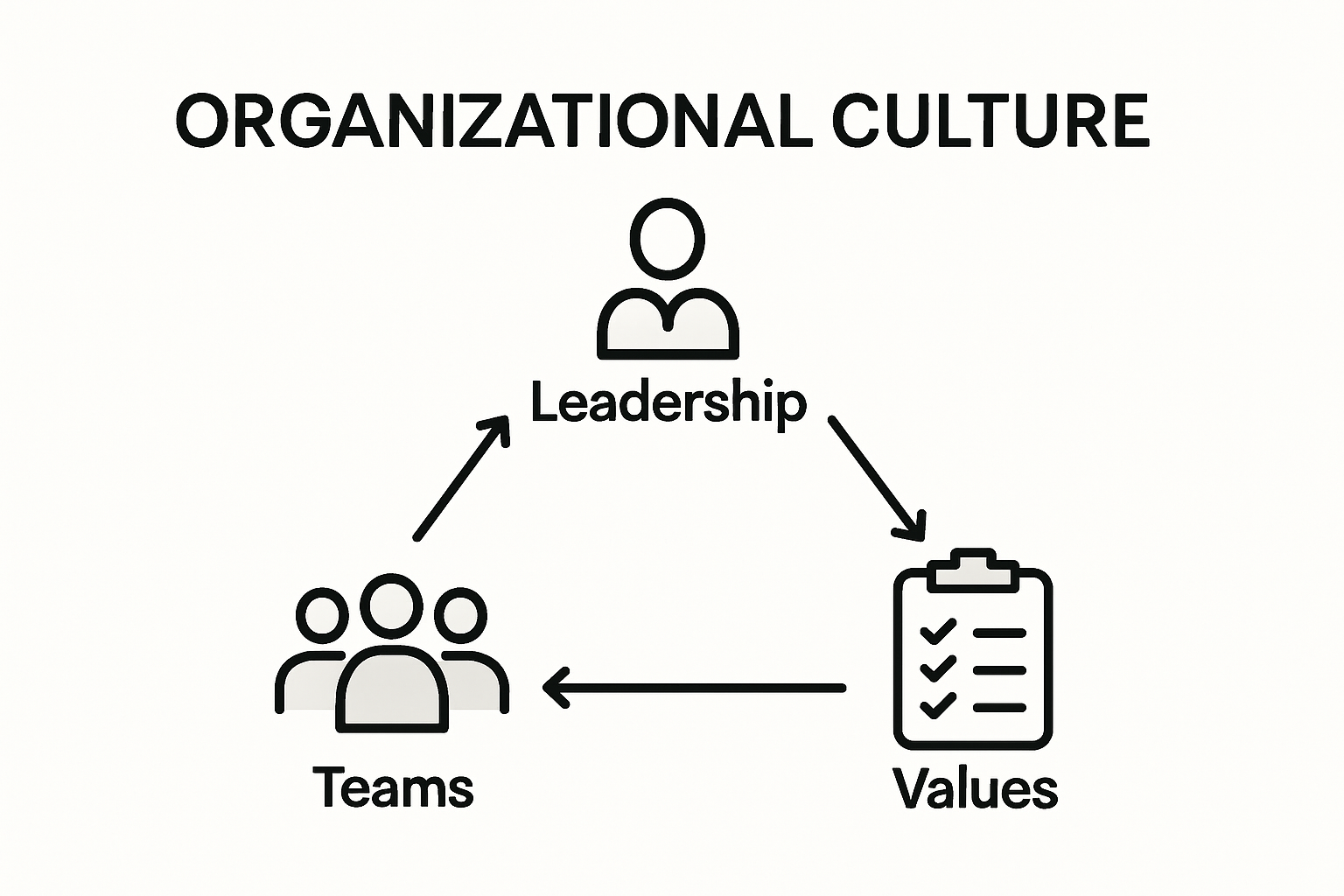
More than half of American workers report that company culture strongly influences their job satisfaction. Every workplace relies on its unique culture to shape daily interactions, guide decision-making, and define success across the organization. Understanding the full purpose of organizational culture gives leaders the insight needed to foster productive teams and drive long-term growth. This article sheds light on what truly drives culture and why it matters for every American business.
It defines how individuals interact, work, and make decisions within the organization, serving as a framework for collective identity and norms.
Types of culture influence performance
The Competing Values Framework identifies four culture types, Clan, Adhocracy, Hierarchy, and Market, each affecting team dynamics and strategic alignment differently.
Culture impacts engagement and productivity
A strong organizational culture fosters motivation, enhances communication, and facilitates collaboration, leading to measurable improvements in team performance.
Cultural transformation faces challenges
Leaders must navigate resistance to change, align leadership actions, and establish clear visions to successfully transform and nurture organizational culture.
Defining Organizational Culture and Its Purpose
Organizational culture represents the invisible yet powerful framework that defines how people interact, work, and make decisions within a company. At its core, organizational culture encompasses the shared beliefs, expectations, and unwritten rules that shape an organization’s identity and operational dynamics. Research from the National Center for Biotechnology Information shows that organizational culture comprises the beliefs and expectations shared by members of an organization, fundamentally shaping its collective perspective and behavioural norms.
Think of organizational culture like the DNA of a company; it determines how teams communicate, solve problems, and respond to challenges. Some cultures prioritize innovation and risk-taking, while others emphasize stability and precision. Leaders’ role in culture is critical to establishing, maintaining, and evolving foundational behavioural patterns that ultimately drive performance and employee engagement.
The purpose of organizational culture extends far beyond superficial workplace interactions. It serves as a strategic asset that can either propel an organization forward or hold it back. Effective cultures create alignment, motivate employees, attract top talent, and provide a consistent framework for decision-making. By understanding and intentionally shaping their culture, leaders can transform their organizations from mere collections of individuals into cohesive, high-performing teams that share common goals and values.
Major Types of Organizational Culture Models
Organizational culture models help leaders understand and map the complex dynamics of workplace interactions and behavioural patterns. The Competing Values Framework provides a foundational model that identifies four distinct organizational culture types, each with unique characteristics and implications for team performance and strategic alignment.
These four primary culture models include:
Clan Culture: Characterized by collaboration, teamwork, and a family-like environment where mentorship and mutual support are prioritized
Adhocracy Culture: Focused on innovation, creativity, and adaptability, encouraging employees to take risks and generate groundbreaking ideas
Hierarchy Culture: Emphasizes stability, structured processes, and clear organizational roles with well-defined reporting lines and systematic decision-making
Market Culture: Driven by competition, results, and external achievements, prioritizing productivity, performance metrics, and strategic outcomes
Research by Cameron and Quinn reinforces these culture classifications, highlighting how each model represents a unique approach to organizational dynamics. The key is understanding that no single culture model is inherently superior - each has strengths and potential limitations depending on the organization’s goals, industry, and strategic objectives. Successful leaders recognize that culture is not static but a dynamic ecosystem that requires continuous attention, adaptation, and intentional cultivation.
Core Behaviours and Values Shaping Culture
Organizational culture emerges from a complex interplay of core behaviours and values that define how people interact, make decisions, and pursue collective goals. Organizational research reveals that these core behaviours serve critical functions, including creating collective identity, fostering team commitment, and establishing social system stability.
The fundamental behaviours and values that shape organizational culture can be categorized into several key dimensions:
Shared Purpose: Alignment around mission and strategic objectives
Communication Patterns: How information flows,s and interactions occur
Decision-making Approaches: Levels of collaboration and autonomy
Performance Expectations: Standards of accountability and achievement
Interpersonal Dynamics: Trust, respect, and mutual support
Research indicates that organizational culture is profoundly influenced by structural elements such as leadership style, organizational mission, and strategic frameworks. The role of values in leadership becomes paramount in this context, as leaders essentially serve as cultural architects who model and reinforce behavioural norms. Successful organizations recognize that culture is not a static construct but a dynamic ecosystem that requires continuous nurturing, intentional design, and adaptive strategies to remain responsive to changing internal and external environments.
Impact of Culture on Team Performance
Organizational culture is the invisible force that can make or break team performance, transforming a group of individuals into a high-functioning, synchronized unit. Research demonstrates that a strong culture enhances team performance by fostering deep commitment, providing clear decision-making frameworks, and creating a shared lens for interpreting organizational challenges.
The profound impact of culture on team performance manifests through several critical dimensions:
Motivation and Engagement: Culture directly influences employee emotional investment
Communication Efficiency: Shared values streamline information exchange
Collaboration Dynamics: Cultural alignment reduces friction and enhances teamwork
Problem-solving Approaches: Consistent cultural norms accelerate collective decision-making
Resilience and Adaptability: Strong cultures help teams navigate complex challenges
When examining team performance metrics, organizations discover that culture is not just a soft concept but a tangible driver of productivity. High-performing teams consistently demonstrate that cultural cohesion translates into measurable outcomes - increased innovation, faster problem resolution, and more robust strategic execution. Leaders who intentionally shape and nurture organizational culture create environments where team members are not just working together, but are genuinely committed to collective success and continuous improvement.
Common Pitfalls and Change Challenges
Transforming organizational culture is not for the faint of heart. Research shows that defining and measuring culture pose significant challenges due to its inherent complexity, subjective interpretations, and methodological difficulties, which can derail even the most well-intentioned change initiatives.
The most common pitfalls leaders encounter when attempting cultural transformation include:
Resistance to Change: Employees clinging to existing behavioural patterns
Misalignment of Leadership: Inconsistent messaging and modelling from management
Lack of Clear Vision: Undefined or poorly communicated cultural objectives
Insufficient Training: Inadequate support for behavioural skill development
Overlooking Systemic Barriers: Ignoring structural impediments to cultural shift
Successful cultural transformation requires more than wishful thinking. Leaders navigating change must approach cultural evolution as a strategic, nuanced process that demands patience, persistent communication, and a deep understanding of human dynamics. The most effective transformations recognize that culture is not something imposed from the top down, but a collaborative journey of collective reimagination, where every team member plays a crucial role in shaping the organization’s future identity.
Unlock the True Potential of Your Organizational Culture Today
Understanding and shaping organizational culture is the key to overcoming resistance, aligning leadership, and building high-performing teams, as highlighted in “What Is Organizational Culture and Why Leaders Care.” If your organization struggles with inconsistent leadership messaging or unclear cultural objectives, you are not alone. The challenge of transforming culture into a dynamic, motivating force requires a people-centred, strategic approach focused on lasting behavioural change.
Discover tailored solutions that leverage proven frameworks such as Five Behaviors™ and Everything DiSC™ to foster agile leadership and cohesive team dynamics. At Berriault & Associates, we specialize in empowering leaders to design and sustain a culture that drives motivation, resilience, and measurable performance improvements.
Are you ready to turn your organizational culture into a strategic advantage that moves your team forward? Visit Berriault & Associates to book a discovery call and explore customized programs that equip your leaders and teams for sustainable success. Transform your workplace culture into the powerful engine of growth it was meant to be.
Frequently Asked Questions
What is organizational culture?
Organizational culture is the underlying framework that defines how people interact, work, and make decisions within a company. It consists of shared beliefs, expectations, and unwritten rules that shape an organization’s identity and dynamics.
Why is organizational culture important for leaders?
Organizational culture serves as a strategic asset that can align teams, motivate employees, attract talent, and streamline decision-making. Leaders must understand and shape culture to transform organizations into cohesive, high-performing teams.
What are the major types of organizational culture models?
The major types of organizational culture models include Clan Culture, Adhocracy Culture, Hierarchy Culture, and Market Culture. Each model has unique characteristics and implications for team performance and strategic alignment.
How does culture impact team performance?
Culture significantly influences team performance by enhancing motivation, improving communication efficiency, fostering collaboration, and building resilience. A strong culture creates an environment where team members are committed to collective success and continuous improvement.