More than 70 percent of American professionals now work in teams that rely at least partly on remote collaboration. Trust has become a top concern as technology changes the way people connect and communicate. Without the natural flow of in-person office life, building strong relationships can feel challenging and complex. This article reveals how remote teams intentionally create trust, why it matters for performance, and what strategies pave the way for authentic connection in a digital age.
Remote trust is essential for successful virtual collaboration and requires intentional relationship-building strategies.
Challenges of Digital Communication
Virtual teams face unique obstacles, such as reduced nonverbal cues and cultural differences, that hinder trust development.
Key Drivers for Trust
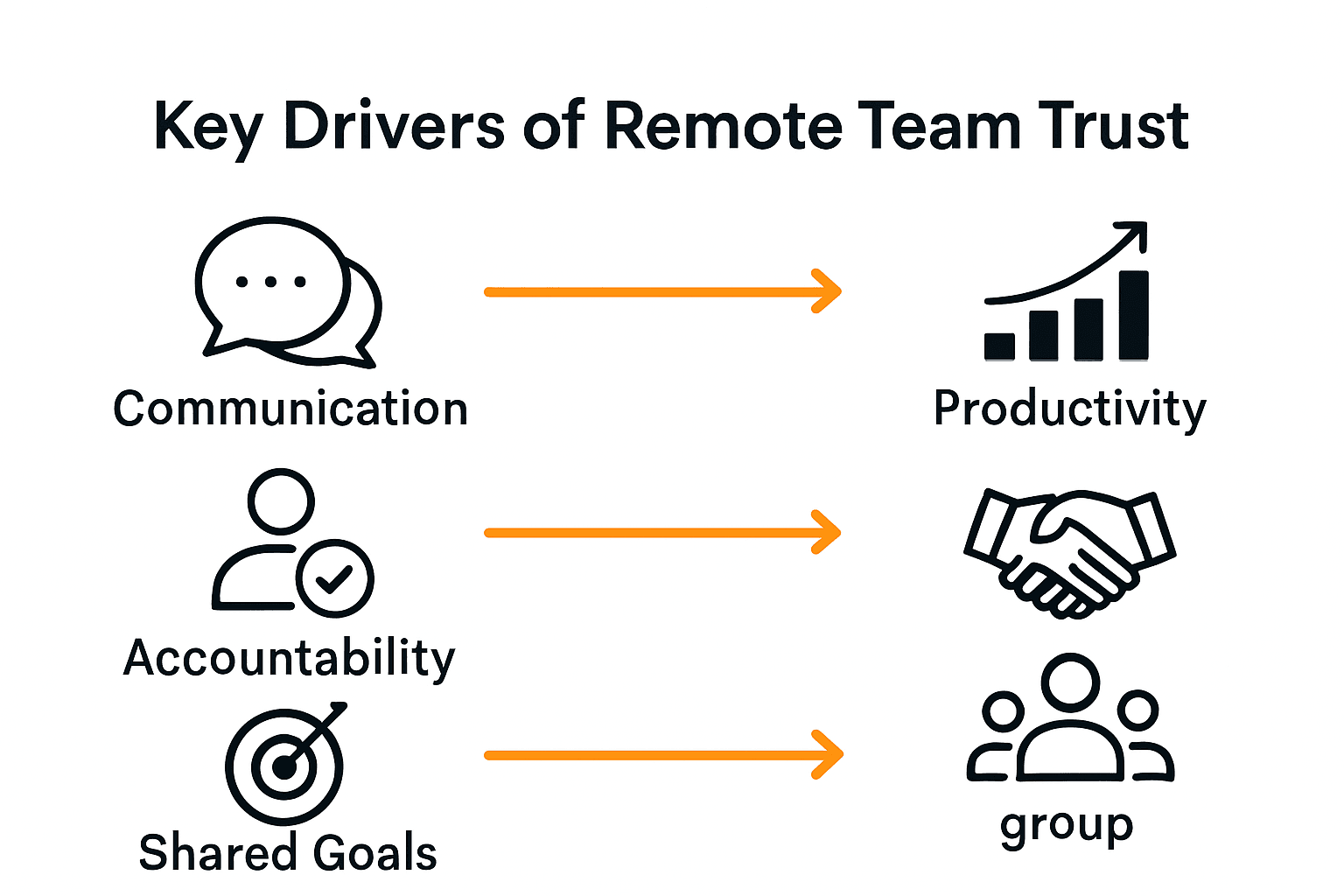
Effective communication, accountability, and shared goals are crucial for building trust in remote teams and enhancing team performance.
Strategies for Fostering Trust
Implementing structured interactions and promoting psychological safety are necessary to cultivate trust in remote teams.
Defining Remote Trust And Its Importance
Building remote trust is more complex than traditional workplace interactions. Unlike in-person environments, where subtle nonverbal cues and spontaneous interactions foster connection, remote teams must intentionally build trust through strategic communication and deliberate relationship-building.
According to research from deepblue, trust in virtual teams starts with an initial phase called “swift trust” - a rapid, provisional confidence team members extend to each other before substantive interaction. This preliminary trust serves as a foundational mechanism that enables teams to begin collaborative work, even without extensive prior personal knowledge. The research highlights that this initial trust isn’t permanent but evolves through subsequent interactions and demonstrated reliability.
The challenges of establishing remote trust are multifaceted. Insead emphasizes that global virtual teams must overcome significant communication barriers inherent in digital collaboration. These barriers include:
Reduced non-verbal communication signals
Time zone and cultural differences
Limited spontaneous interaction opportunities
Higher potential for misunderstandings
Successful remote trust-building requires proactive strategies that compensate for physical distance. Leaders must create structured opportunities for genuine connection, prioritize transparent communication, establish clear expectations, and consistently demonstrate accountability. By understanding trust as a dynamic process rather than a static condition, remote teams can develop robust, reliable working relationships that transcend geographical boundaries.
The key is recognizing that remote trust isn’t automatically granted - it’s carefully constructed through intentional, consistent interactions that build psychological safety and mutual understanding.
Core Challenges Of Building Trust Virtually
Virtual teams face unique obstacles in establishing trust that traditional co-located teams rarely encounter. The digital landscape introduces communication complexities that fundamentally transform how professionals connect and collaborate across geographical boundaries.
Research from Business highlights the intricate challenges of cultivating trust in remote environments. Global virtual teams must navigate significant hurdles that can undermine team cohesion and performance, including:
Reduced immediate nonverbal communication signals
Increased potential for misunderstandings
Limited spontaneous interaction opportunities
Complex cultural and communication style differences
Professional insights reveal that the absence of physical proximity dramatically impacts team dynamics. Without casual water cooler conversations or in-person body language cues, remote professionals must work exponentially harder to establish genuine connections and mutual understanding.
The most critical challenge lies in creating psychological safety without traditional interpersonal touchpoints. Leaders must develop intentional strategies that compensate for physical distance, such as structured video interactions, clear communication protocols, and consistent virtual team-building activities. Successful virtual trust-building demands proactive engagement, transparency, and a commitment to creating meaningful connections that transcend digital barriers.
Ultimately, trust in virtual environments isn’t spontaneous - it’s a deliberate, strategic process that requires continuous effort, emotional intelligence, and a genuine commitment to understanding team members beyond their digital personas.
Key Drivers Of Remote Team Trust
Trust in remote teams is an active, intentional process driven by specific strategic elements. While physical distance creates unique challenges, understanding and implementing key trust drivers can transform virtual collaboration from a potential obstacle into a powerful organizational strength.
According to research from Pubmed, team trust is fundamentally influenced by documentation practices and team virtuality characteristics. The meta-analysis reveals that high-performing remote teams prioritize transparency, consistent communication protocols, and clear performance tracking as critical mechanisms for building trust. These foundational elements help mitigate uncertainty and create predictable interaction patterns that foster psychological safety.
Key drivers of remote team trust include:
Consistent and transparent communication
Reliable performance and accountability
Demonstrated emotional intelligence
Proactive conflict resolution
Regular virtual team-building activities
Individual commitment to shared goals
Iese emphasizes the profound impact of shared beliefs in virtual team dynamics. When team members develop a collective confidence in their mission and mutual capabilities, they transcend geographical barriers and create a powerful collaborative ecosystem. This requires leaders to deliberately cultivate a sense of shared purpose, align individual objectives with team goals, and create meaningful opportunities for genuine connection.
Successful remote trust-building demands a holistic approach that balances structured communication, emotional attunement, and strategic alignment. Leaders must recognize that trust is not a static condition but a dynamic process requiring continuous investment, empathy, and a genuine commitment to understanding each team member’s unique perspective and potential.
Impact Of Remote Trust On Performance
Performance in remote teams isn’t just about individual skills but about the intricate web of trust that connects team members across digital landscapes. Without robust trust mechanisms, virtual teams can quickly descend into inefficiency, miscommunication, and diminished collaborative potential.
Research from Scholarworks reveals critical insights into how trust directly impacts virtual team effectiveness. The dissertation highlights that high-trust teams demonstrate exponentially better performance, characterized by:
Faster decision-making processes
More innovative problem-solving
Higher levels of psychological safety
Reduced communication friction
Enhanced individual and collective accountability
Increased employee engagement
A comprehensive meta-analysis from PubMed further substantiates these findings, demonstrating that trust is not just a soft metric but a quantifiable driver of team performance. Teams with strong trust foundations can overcome geographical barriers, neutralize potential communication challenges, and create synergistic working environments that transcend traditional organizational constraints.
The performance impact of remote trust extends beyond immediate team dynamics. High-trust virtual teams develop collective resilience, enabling them to adapt quickly, navigate complex challenges, and maintain consistent productivity even in unpredictable work environments. Leaders who intentionally cultivate trust aren’t just improving team dynamics - they’re creating a sustainable competitive advantage that can dramatically differentiate their organization in an increasingly digital workplace.
Proven Strategies To Foster Remote Trust
Trust in remote teams doesn’t materialize accidentally. It requires intentional, strategic approaches that bridge digital divides and create meaningful human connections beyond technological interfaces.
Research from AAU introduces the innovative “Fast Friends” exercise as a powerful trust-building technique. This strategy encourages team members to engage in structured, progressive personal sharing that accelerates authentic connection, helping virtual teams overcome initial psychological barriers and develop genuine interpersonal understanding.
Key strategies for fostering remote trust include:
Implementing regular video check-ins
Creating structured vulnerability opportunities
Establishing transparent communication protocols
Recognizing individual and team achievements
Developing consistent feedback mechanisms
Promoting cross-functional collaboration
Online resources emphasize that successful trust-building demands more than procedural interactions. Leaders must cultivate an environment of psychological safety where team members feel empowered to share challenges, propose innovative solutions, and take calculated risks without fear of negative repercussions.
Ultimately, remote trust is a dynamic, ongoing process. By combining intentional relationship-building practices with clear performance expectations, organizations can transform digital distance from a potential barrier into a unique opportunity for deeper, more meaningful professional connections.
Transform Remote Trust Challenges Into Team Strengths
Building trust within remote teams requires intentional effort to overcome barriers like limited nonverbal cues and reduced spontaneous interactions. The article highlights how concepts such as “swift trust,” emotional intelligence, and transparent communication are essential for creating psychological safety and boosting team performance. If your organization struggles to establish genuine connections or align shared goals across digital spaces, you are not alone.
At Berriault & Associates, we specialize in turning these remote trust challenges into opportunities for sustainable growth and adaptive leadership. Our tailored programs leverage proven tools like Five Behaviors™ and Everything DiSC™ to foster authentic communication, accountability, and team cohesion—whether your teams work remotely, onsite, or in hybrid models.
Unlock the full potential of your virtual teams with strategic behavioural insights that drive real change.
Explore how our solutions can support your leadership development and team performance needs today.
Discover the difference that intentional trust-building can make for your organization’s culture and agility.
Explore Our Solutions
Book a Discovery Call
Learn More About Leadership Development
Take the first step toward transforming your remote team dynamics now by visiting Berriault & Associates. Empower your leaders and teams with the tools they need to build lasting trust and achieve exceptional performance.
Frequently Asked Questions
What is remote trust, and why is it important?
Remote trust is a complex, intentional process of building confidence among team members in a virtual environment. It’s important because it fosters collaboration, enhances communication, and creates a cohesive team atmosphere despite geographical distances.
What are the main challenges of building trust in virtual teams?
The main challenges include reduced non-verbal communication signals, time zone and cultural differences, limited spontaneous interactions, and a higher potential for misunderstandings, all of which can hinder effective collaboration.
How can leaders effectively build remote trust within their teams?
Leaders can build remote trust by creating structured opportunities for connection, prioritizing transparent communication, establishing clear expectations, and consistently demonstrating accountability through follow-ups and feedback.
What strategies can enhance trust among remote team members?
Effective strategies include regular video check-ins, structured personal-sharing exercises, transparent communication protocols, recognition of achievements, and fostering a psychological safety environment where team members feel empowered to express themselves.


 By understanding trust as a dynamic process rather than a static condition, remote teams can develop robust, reliable working relationships that transcend geographical boundaries.
The key is recognizing that remote trust isn’t automatically granted - it’s carefully constructed through intentional, consistent interactions that build psychological safety and mutual understanding.