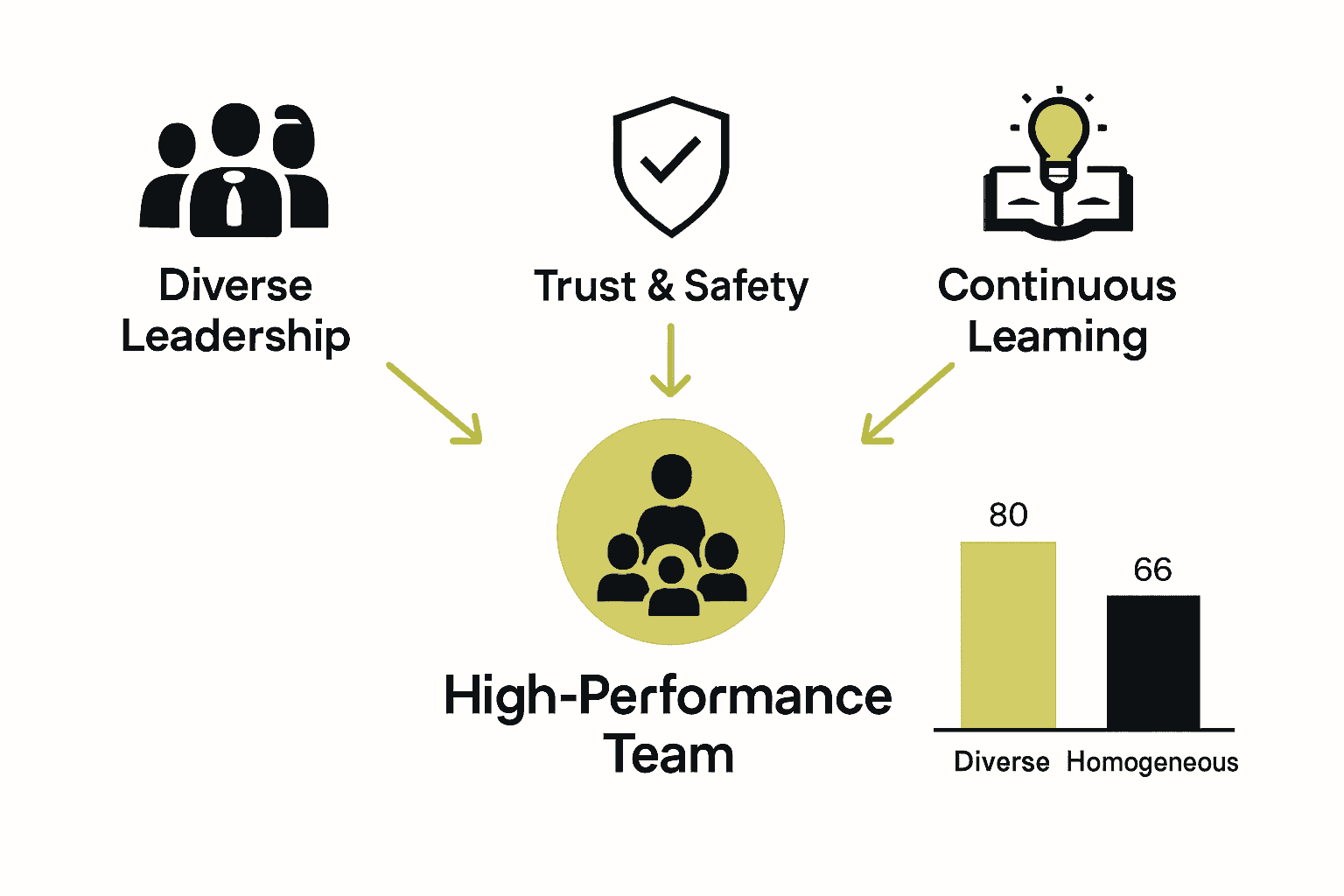
Over 80 percent of American organizations cite team dynamics as a main driver of work performance and innovation. When people come together to solve problems or reach shared goals, their interactions shape every outcome, from daily productivity to long-term successes. Understanding team dynamics is essential for any American business seeking to create stronger collaboration, build mutual trust, and unlock the full potential of its workforce.
Effective team dynamics are essential for organizational success, driven by open communication, mutual respect, and shared accountability.
Role of Diverse Leadership
Teams with heterogeneous leadership, incorporating members from different career stages, significantly outperform homogeneous groups.
Cultivating Positive Dynamics
Continuous mutual support, emotional intelligence, and adaptable communication are critical for fostering high-performing teams.
Avoiding Common Pitfalls
Regular assessment of team maturity and the implementation of diverse leadership approaches can help mitigate potential challenges in team dynamics.
Defining Team Dynamics in Organizations
Team dynamics represent the intricate psychological and behavioural interactions that shape how groups function and achieve collective goals. According to research from jier.org, these dynamics involve complex psychological factors that profoundly influence an organization’s success through open communication, constructive idea exchange, and effective dispute resolution.
At its core, team dynamics encompasses the evolving, interdependent interactions among group members working toward shared objectives. As insights from bmcmededuc.biomedcentral.com reveal, these interactions are dynamically shaped by multiple factors, including time, environment, and group cohesion.
The most sophisticated teams develop robust group metacognition, where members actively monitor, evaluate, and support each other’s cognitive strategies and emotional regulation.
Effective team dynamics are not accidental but intentionally cultivated through strategic practices. Key elements include:
Transparent communication channels
Mutual respect and psychological safety
Shared accountability for collective outcomes
Adaptable problem-solving approaches
Continuous learning and feedback mechanisms
By understanding and intentionally developing these dynamics, organizations can transform groups of individual contributors into high-performing, synergistic teams that consistently exceed expectations and drive meaningful results. Building Trust in Team Dynamics: Foundation for Success provides deeper insights into establishing the foundational trust that enables exceptional team performance.
Types of Team Dynamics and Roles
Team dynamics are far more nuanced than simple group interactions, encompassing intricate patterns of behaviour, communication, and role allocation. According to groundbreaking research by en.wikipedia.org, team roles can be systematically categorized into nine distinct behavioural clusters that collectively drive team performance: Plant, Resource Investigator, Coordinator, Shaper, Monitor Evaluator, Teamworker, Implementer, Completer Finisher, and Specialist. Cross-functional teams represent a sophisticated approach to organizational collaboration, bringing together professionals from diverse departments to tackle complex challenges. As research from en.wikipedia.org highlights, these teams typically include members from finance, marketing, operations, and human resources, functioning as self-directed units capable of generating innovative solutions through multidisciplinary expertise.
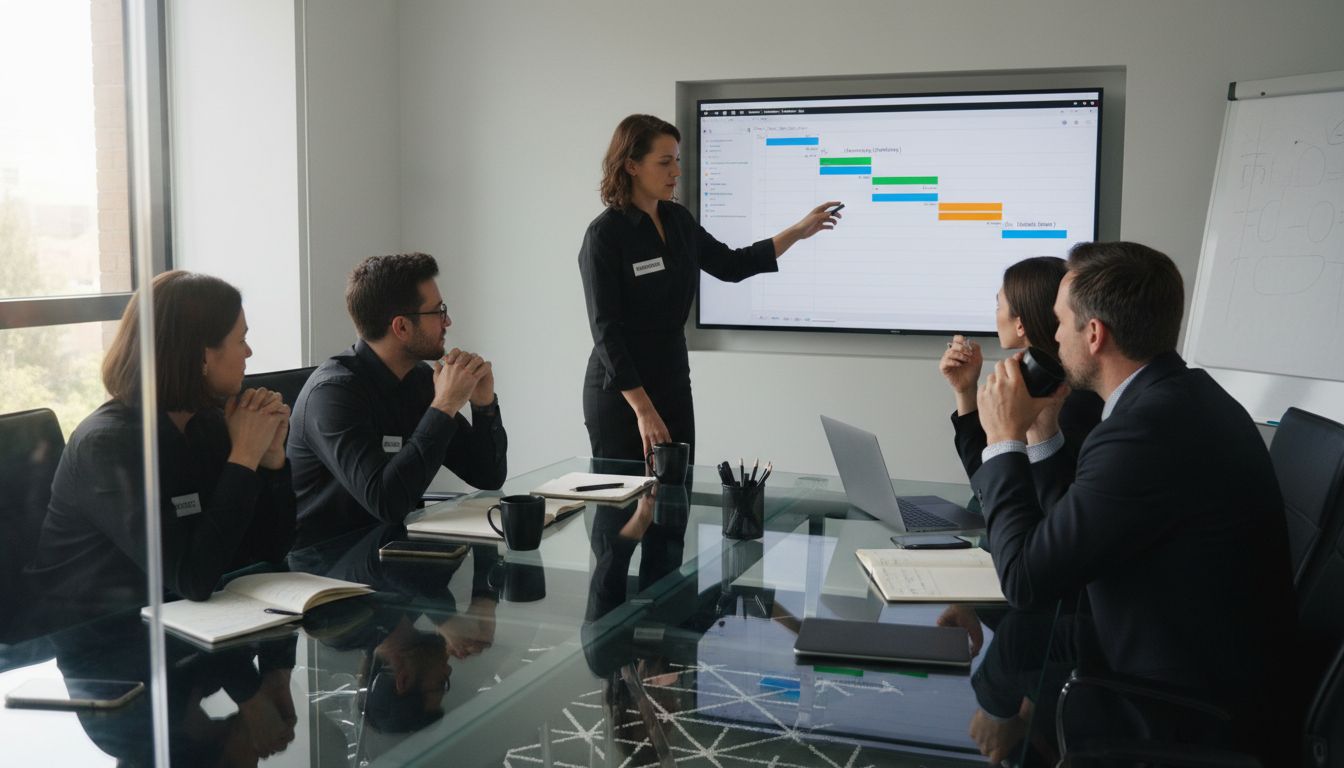
Understanding these team dynamics and roles enables organizations to strategically design high-performance teams. Key considerations include:
Balancing complementary skill sets
Recognizing individual strengths
Fostering inclusive communication
Creating psychological safety
Promoting adaptive problem-solving
Leaders seeking deeper insights into team role optimization can explore our 7 Practical Examples of Team Dynamics for Leaders, which offers comprehensive strategies for transforming group potential into exceptional collective performance.
How Team Dynamics Influence Performance
Team dynamics are critical determinants of organizational success, directly impacting performance, productivity, and innovation. Groundbreaking research from arxiv.org reveals a fascinating insight into leadership dynamics, demonstrating that teams with heterogeneous leadership, specifically those pairing leaders from different career stages, achieve significantly higher performance metrics, with notable increases in citation impact and collaborative effectiveness.
The psychological underpinnings of team performance extend far beyond traditional management approaches. According to research on agile team development from arxiv.org, there is a profound correlation between group maturity and team agility. Quantitative studies have shown that teams which invest in understanding and nurturing their psychological development demonstrate substantially improved performance, adaptability, and problem-solving capabilities.
Key factors that influence team performance through dynamics include:
Diverse leadership composition
Psychological safety and trust
Continuous learning and adaptation
Clear communication channels
Shared accountability and goals
For leaders committed to transforming team potential, our comprehensive guide to building high-performing teams offers strategic insights to create teams that not only meet but consistently exceed organizational expectations.
Key Drivers of Positive Team Dynamics
Positive team dynamics emerge from a complex interplay of psychological, environmental, and interpersonal factors that transform groups into high-performing units. According to groundbreaking research from bmcmededuc.biomedcentral.com, these dynamics are fundamentally driven by three critical elements: time, environment, and group cohesion. The most sophisticated teams develop social metacognition, a process in which team members actively monitor, evaluate, and support each other’s cognitive strategies, resulting in remarkable improvements in efficiency, motivation, and emotional regulation.
In today’s rapidly evolving digital landscape, understanding team dynamics requires a nuanced approach that goes beyond traditional collaboration models. Research from arxiv.org highlights that effective team performance is intricately linked to problem context, team composition, and the maturity of collaborative artifacts. This suggests that successful teams are not just about individual talent, but about creating an adaptive ecosystem that can respond dynamically to changing organizational challenges.
The key drivers of positive team dynamics include:
Continuous mutual support and feedback
Shared cognitive strategies
Adaptable communication frameworks
Emotional intelligence
Collaborative problem-solving skills
Leaders looking to transform their team’s potential can gain deeper insights by exploring our guide on building the foundation for success, which offers strategic approaches to cultivating high-performance team environments.
Common Pitfalls and How to Avoid Them
Navigating team dynamics requires a strategic approach that anticipates and mitigates potential organizational challenges. Research from arxiv.org reveals a critical insight: many organizations falter by neglecting the psychological developmental aspects of team building. Successful agile transitions demand more than implementing methodological frameworks—they require a nuanced understanding of team maturity and intentional cultivation of psychological readiness.
Another significant pitfall emerges in leadership composition and diversity. According to groundbreaking research from arxiv.org, teams frequently undermine their potential by maintaining homogeneous leadership structures. The study compellingly demonstrates that heterogeneous shared leadership, specifically integrating leaders from diverse career stages, can dramatically enhance team performance, innovation, and collaborative effectiveness.
Key strategies to avoid common team dynamics pitfalls include:
Regularly assess team psychological maturity
Implement diverse leadership approaches
Create transparent communication channels
Encourage cross-generational knowledge exchange
Develop adaptive learning environments
Leaders seeking to transform these potential obstacles into opportunities can explore our comprehensive 7 Ways to Build Team Trust, which provides actionable insights for creating resilient, high-performing team environments.
Unlock the Power of Effective Team Dynamics Today
The article “Why Focus on Team Dynamics: Complete Guide” highlights key challenges leaders face in building trust, fostering psychological safety, and cultivating diverse leadership within teams. These issues often lead to stalled performance, communication breakdowns, and missed opportunities for innovation. If your organization struggles with creating adaptable teams that thrive in remote or hybrid environments, you are not alone. Understanding concepts such as social metacognition and heterogeneous leadership is crucial for sustainable growth, but can be challenging to implement without expert guidance.
At Berriault & Associates, we specialize in transforming these challenges into lasting strengths. Our tailored programs leverage proven frameworks like Five Behaviors™ and Everything DiSC™ to improve team collaboration, emotional intelligence, and agile adaptability. Whether you seek to enhance leadership development or drive cultural change, our people-centred approach ensures your team thrives in today’s complex business landscape.
Ready to elevate your team dynamics to achieve consistent results and superior collaboration?
Discover practical strategies and custom solutions by visiting Berriault & Associates. Explore how our 7 Practical Examples of Team Dynamics for Leaders can guide your transformation. Take the first step toward building trust with our actionable insights at 7 Ways to Build Team Trust. Don’t wait, let us help you create high-performing teams that adapt and grow regardless of your workplace setting.
Frequently Asked Questions
What are team dynamics, and why are they important?
Team dynamics refer to the psychological and behavioural interactions among group members that influence how effectively they work together. They are essential because healthy team dynamics foster open communication, promote trust, and enhance collective performance, ultimately driving organizational success.
How can organizations improve team dynamics?
Organizations can improve team dynamics by implementing transparent communication channels, fostering mutual respect, ensuring psychological safety, and promoting shared accountability. Regular feedback and opportunities for continuous learning also play a crucial role in cultivating effective team interactions.
What role does leadership play in team dynamics?
Leadership significantly impacts team dynamics by setting the tone for communication and collaboration. Heterogeneous leadership, particularly with leaders from diverse career stages, can enhance team performance by encouraging varied perspectives, driving innovation, and fostering a culture of support and adaptability.
What are common pitfalls to avoid in team dynamics?
Common pitfalls include neglecting psychological development aspects of team building, maintaining homogeneous leadership structures, and failing to establish clear communication channels. Regular assessments of team maturity and fostering an inclusive environment can help mitigate these issues.


 Key considerations include: