Research indicates that organizations with strong coaching cultures are more than 20 percent more likely to achieve above-average business results. As leadership roles become increasingly complex, many find that traditional management strategies fall short. Understanding how coaching works within leadership can reveal new pathways for growth, personal development, and real-world impact on team performance.
Leadership coaching focuses on unlocking potential through personalized guidance, emphasizing self-discovery over direct instructions.
Diverse Approaches
Effective coaching utilizes various models, such as GROW and Situational Leadership, tailored to meet individual needs.
Collaborative Mindset
Successful integration of coaching requires a shift toward collaboration, active listening, and creating a psychologically safe environment.
Overcoming Challenges
Coaches must navigate challenges such as psychological resistance and communication barriers to create a productive coaching environment.
Defining Coaching in Leadership Contexts
Leadership coaching is a transformative process that goes beyond traditional management approaches, focusing on unlocking an individual’s potential through personalized guidance and strategic reflection. Leadership coaching isn’t about giving direct instructions; rather, it's about facilitating self-discovery and professional growth.
According to Michigan.gov, coaching supports organizational growth by “modelling and facilitating best practices to achieve desired outcomes while providing feedback.” This definition highlights the dual role of coaching, encompassing both performance improvement and personal development.
At its core, leadership coaching involves several key characteristics:
Creating a safe, non-judgmental learning environment
Leadership Coaching at Rutgers emphasizes that effective coaching “involves facilitating self-discovery and personal growth” by challenging leaders to explore their own solutions rather than prescribing predetermined answers. This approach recognizes that true leadership development emerges from within, not through external mandates. Ultimately, leadership coaching is a collaborative, forward-focused partnership designed to help individuals maximize their potential, overcome challenges, and develop more adaptive, authentic leadership practices.
Key Coaching Models and Approaches
Leadership coaching models offer structured frameworks that help transform potential into performance, providing leaders with targeted strategies for personal and professional growth. These approaches are not one-size-fits-all solutions, but rather nuanced methodologies designed to meet the unique needs of individual users. Leading Educators highlights four critical coaching approaches that can be adapted across various leadership contexts:
Co-planning: Collaborative strategy development
Modelling: Demonstrating effective behaviours and techniques
Observation and Debrief: Providing structured feedback
Artifact Analysis: Evaluating performance through tangible evidence
The Kent Success Coaching Model represents another robust framework, emphasizing a comprehensive journey from self-discovery to goal achievement. This model breaks down leadership development into strategic stages: initial self-reflection, precise goal-setting, and actionable planning.
By integrating these diverse approaches, coaches can create personalized development pathways that address individual leadership challenges.
Some popular models include:
Here’s a summary of leading coaching models and approaches:
Model/Approach
Core Focus
Key Elements
GROW Model
Goal-setting & Action
Goal
Reality
Options
Will
Situational Leadership
Adapting to readiness
Flexible coaching style
Needs assessment
Transformational Coaching
Deep personal change
Mindset shifts
Inspirational questioning
Co-planning
Collaboration on strategies
Joint planning
Shared ownership
Modeling
Demonstrating best practices
Skill demonstration
Behavior modeling
Observation & Debrief
Structured feedback
Live observation
Growth-oriented feedback
Artifact Analysis
Evaluating tangible evidence
Review of outputs
Reflective analysis
GROW Model: Goal, Reality, Options, Will
Situational Leadership: Adapting style to team’s readiness
Transformational Coaching: Focusing on deep personal change
Becoming a Super Coach: DISC Personality Coaching can provide additional insights into tailoring coaching strategies to individual personality dynamics, ensuring more effective and targeted leadership development.
Benefits of Coaching for Modern Leaders
Leadership coaching has emerged as a critical strategy for developing adaptive, emotionally intelligent leaders who can navigate complex organizational challenges. In today’s rapidly changing business landscape, traditional top-down leadership approaches are giving way to more collaborative, self-aware methodologies. Center for Creative Leadership research highlights that effective coaching helps leaders create supportive environments that foster self-awareness and collaboration. The key benefits include:
Enhanced communication skills
Improved problem-solving capabilities
Increased emotional intelligence
Greater strategic thinking
More adaptive leadership approaches
According to ERIC Educational Research, leadership coaching significantly boosts leaders’ confidence and commitment, particularly in challenging professional contexts. This transformative process extends beyond traditional training by offering personalized guidance tailored to address individual leadership challenges.
The multifaceted benefits of coaching extend across several critical leadership dimensions:
Personal Development: Deepening self-understanding
How to Develop Leadership Skills for Lasting Team Impact offers additional insights into translating coaching benefits into tangible organizational performance. By investing in coaching, modern leaders can cultivate more resilient, engaged, and high-performing teams that are better equipped to tackle complex challenges.
Integrating Coaching Into Leadership Practice
Leadership coaching is not a one-time event, but a continuous, intentional process of personal and professional transformation. Successfully integrating coaching into leadership practice requires a fundamental shift in mindset, communication, and organizational culture. Harvard Professional Development emphasizes that effective integration involves developing a coaching mindset with essential competencies that adapt to the individual needs of each team member. This approach requires leaders to move beyond traditional directive management toward a more collaborative, supportive framework.
Key strategies for integrating coaching into leadership practice include:
Cultivating active listening skills
Creating psychological safety
Asking powerful, thought-provoking questions
Providing constructive, growth-oriented feedback
Demonstrating genuine empathy
According to the Commons Library, exceptional coaching fundamentally centers on facilitating self-discovery. This means challenging existing assumptions, supporting individual growth, and helping team members unlock their inherent potential through guided reflection and strategic questioning.
Practical implementation requires consistent practice and intentional behavioural shifts. Leaders must learn to:
Replace telling with asking
Listen more than they speak
Create space for team members to develop solutions
Offer support without micromanaging
Implementing a Strategic Approach to Leadership Challenges provides additional insights into transforming traditional leadership approaches. By adopting a coaching mindset, leaders can cultivate more adaptable, resilient, and high-performing teams that are better equipped to navigate complex organizational landscapes.
Common Leadership Coaching Challenges
Leadership coaching is not a straightforward process, but a complex navigation through human dynamics, organizational barriers, and individual psychological landscapes. Despite its transformative potential, coaches encounter numerous challenges that can significantly impact the effectiveness of their interventions.
Center for Creative Leadership highlights critical challenges in creating a coaching environment that balances safety and productive challenge. Key difficulties include:
Establishing genuine trust
Maintaining boundaries
Avoiding dependency
Challenging without demotivating
Sustaining the coachee’s intrinsic motivation
According to Leading Educators, modern coaching must also address emerging challenges, such as adapting to virtual settings and tailoring approaches to diverse individual needs. The one-size-fits-all methodology is obsolete in today’s dynamic workplace.
The most persistent challenges in leadership coaching manifest in several critical domains:
Executives Do Not Want To Be Coached: They Don’t See The Value provides deeper insights into addressing skepticism and resistance at leadership levels. Successful coaching requires not just skill, but exceptional emotional intelligence and strategic communication.
Unlock Leadership Potential Through Expert Coaching Support
The challenges outlined in the Role of Coaching in Leadership: Complete Guide reveal how navigating psychological resistance and communication barriers can stall even the most promising leadership efforts. If you seek to transform these pain points into opportunities for growth with customized strategies, such as active listening and powerful questioning, Berriault & Associates offers tailored coaching solutions designed for exactly that purpose. Our approach aligns with key coaching concepts such as cultivating a coaching mindset and fostering psychological safety to build truly adaptive and resilient leaders. Experience the impact of behavioural change frameworks like Five Behaviors™ and Everything DiSC™ combined with practical leadership coaching that drives lasting results. Don’t let organizational constraints or skepticism hold your leadership back. Act now to partner with experts who specialize in fostering sustainable leadership growth and enhanced team dynamics. Visit Berriault & Associates to book a discovery call and discover how to apply coaching theory to achieve real-world leadership excellence. Discover insights on developing leadership skills for lasting team impact and strategies for implementing a strategic approach to leadership challenges.
Frequently Asked Questions
What is leadership coaching?
Leadership coaching is a transformative process that unlocks an individual’s potential through personalized guidance and strategic reflection, focusing on self-discovery and professional growth.
What are the key characteristics of effective leadership coaching?
Effective leadership coaching involves asking powerful questions, encouraging self-reflection, facilitating problem-solving, and creating a safe learning environment that fosters individual growth.
What are the standard coaching models used in leadership development?
Standard coaching models include the GROW model (Goal, Reality, Options, Will), Situational Leadership, which adapts to team readiness, and Transformational Coaching, which focuses on profound personal change.
What are the benefits of leadership coaching for modern leaders?
Benefits of leadership coaching include enhanced communication skills, improved problem-solving abilities, increased emotional intelligence, better strategic thinking, and the development of more adaptive leadership approaches.


 Ultimately, leadership coaching is a collaborative, forward-focused partnership designed to help individuals maximize their potential, overcome challenges, and develop more adaptive, authentic leadership practices.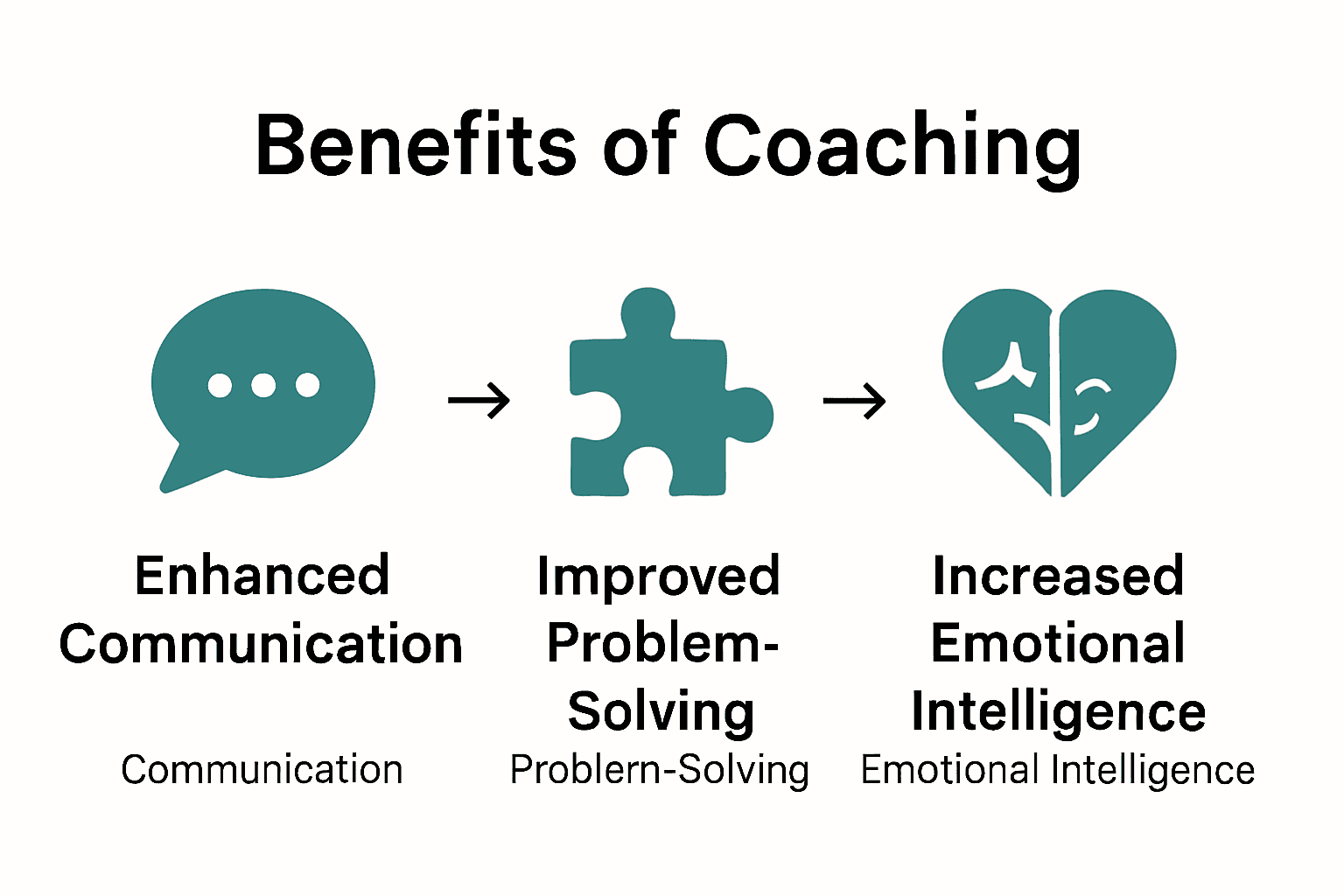
 Experience the impact of behavioural change frameworks like Five Behaviors™ and Everything DiSC™ combined with practical leadership coaching that drives lasting results. Don’t let organizational constraints or skepticism hold your leadership back. Act now to partner with experts who specialize in fostering sustainable leadership growth and enhanced team dynamics. Visit Berriault & Associates to book a discovery call and discover how to apply coaching theory to achieve real-world leadership excellence. Discover insights on developing leadership skills for lasting team impact and strategies for implementing a strategic approach to leadership challenges.