Almost eight out of ten leaders report that strong team development leads to higher productivity and better morale. Building teams that truly work together has a profound impact on everything from daily workflow to long-term business results. By understanding the real meaning of team development and what makes it effective, you set the stage for stronger collaboration, smoother communication, and lasting results across your organization.
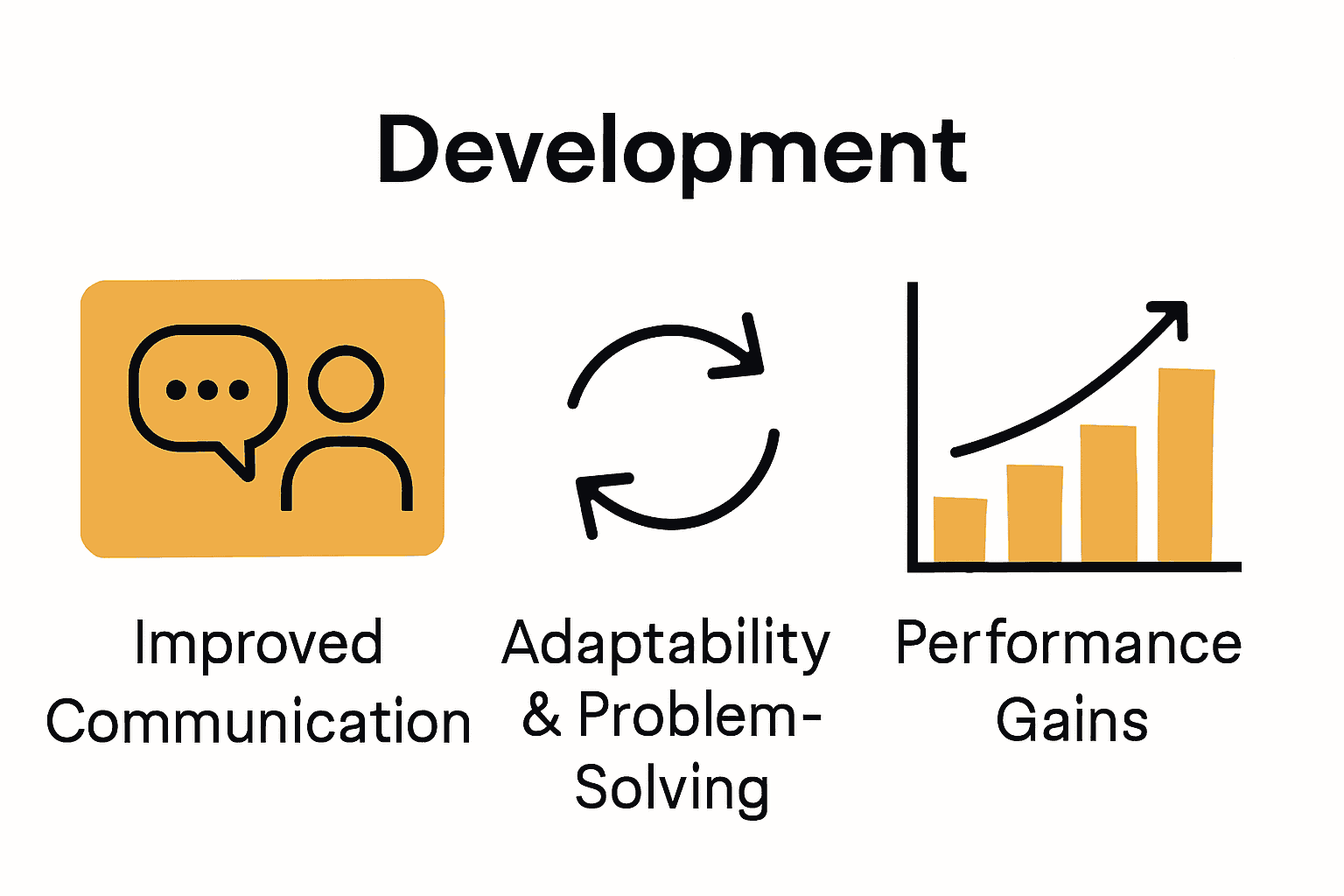
Team development enhances collaboration and performance by establishing clear goals, roles, and open communication.
Strategic Investment Benefits
Investing in team development improves communication, engagement, and organizational culture, driving sustainable growth.
Core Strategies for Growth
Effective team growth requires mentorship, effective feedback mechanisms, and fostering a psychologically safe environment among team members.
Organizational Agility and Resilience
Proactive team development significantly enhances an organization’s adaptability and problem-solving capabilities in dynamic environments.
Defining Team Development And Its Core Concepts
Team development represents a strategic approach to enhancing group performance, collaboration, and collective potential within organizational settings. According to Coursera, this process involves establishing foundational elements, such as shared team values, clear rules, defined goals, and explicit leadership structures, that enable groups to function more effectively.
At its core, team development goes beyond simple task management. It’s about creating an environment where individuals can grow, communicate openly, and contribute their unique strengths toward shared objectives. CCaps highlights that successful team development focuses on fostering ownership, accountability, and collaborative problem-solving skills.
The fundamental components of team development typically include:
Establishing clear team goals and expectations
Defining individual and collective roles
Creating channels for open communication
Building trust and psychological safety
Providing continuous learning and feedback opportunities
Recognizing and celebrating team achievements
Successful team development isn’t a one-time event but an ongoing process of nurturing human potential. When organizations invest in understanding and supporting their teams’ growth, they create adaptive, resilient groups capable of navigating complex challenges and driving innovative solutions. Want to dive deeper? Check out our guide on building high-performing teams for more insights into transforming your team’s potential.
Key Benefits Of Investing In Team Development
Investing in team development is more than a corporate buzzword—it’s a strategic imperative for organizations seeking sustainable growth and competitive advantage. According to Murdock Trust, investing in team development enhances organizational communication, leading to clearer roles, more defined goals, and significantly more effective outcomes.
Team development delivers profound benefits across multiple dimensions of organizational performance. Glenn emphasizes that professional development initiatives encourage employee retention, support leadership pipelines, and cultivate healthy work environments. By empowering employees to become more effective problem solvers and communicators, organizations create a more adaptable and resilient workforce. The key benefits of investing in team development include:
Improved communication and collaboration
Enhanced problem-solving capabilities
Increased employee engagement and motivation
Stronger organizational culture
Reduced workplace conflicts
Higher productivity and performance
These benefits translate into tangible organizational advantages. When teams are well-developed, they become more than just groups of individuals—they transform into dynamic, interconnected units capable of navigating complex challenges with agility and creativity. For strategies on fostering learning in self-organized teams, explore our guide on budget-friendly learning programs, which offers practical insights into team development approaches.
Proven Strategies For Effective Team Growth
Developing high-performing teams requires intentional and strategic approaches that go beyond traditional management techniques. CCaps highlights that effective team growth strategies fundamentally revolve around fostering ownership, accountability, and creating environments that support collaborative excellence.
According to Coursera, successful team development begins with establishing clear foundational elements. This means meticulously defining team values, establishing transparent rules, setting measurable goals, and creating an organizational structure with well-defined leadership and individual roles. The key is creating a framework that empowers team members while providing them with the necessary guidance and support.
Critical strategies for effective team growth include:
Implementing robust mentorship programs
Leveraging technology for seamless collaboration
Establishing regular feedback mechanisms
Creating opportunities for continuous learning
Recognizing and celebrating individual and team achievements
Promoting psychological safety and open communication
Navigating team growth requires a nuanced approach that strikes a balance between structure and flexibility. Leaders must remain adaptive, continuously assessing team dynamics and adjusting strategies accordingly.
For deeper insights into building practical leadership approaches, explore our guide on essential team-building tips, which offers practical techniques for transforming team potential.
Impact On Organizational Agility And Performance
Organizational agility emerges directly from strategic team development, transforming how businesses respond to complex challenges and market dynamics. Innovation at Work reveals that investing in employee development has a dramatic impact on organizational capabilities, enhancing skills, strengthening internal culture, and creating pathways for internal talent progression.
Glenn emphasizes that professional development isn’t just about individual growth—it’s a critical mechanism for building organizational resilience. By empowering employees to become more effective problem-solvers and communicators, companies create adaptive workforce ecosystems capable of navigating unprecedented complexity and change.
Key impacts of team development on organizational performance include:
Enhanced problem-solving capabilities
Increased workforce adaptability
Improved internal communication
Accelerated innovation potential
Reduced operational friction
Stronger leadership pipelines
Understanding the intricate relationship between team development and organizational performance requires a holistic perspective. Organizations that view talent development as a strategic investment rather than a cost center consistently outperform their competitors. For deeper insights into maintaining organizational agility, explore our guide on avoiding organizational agility destruction, which offers critical strategies for sustaining competitive advantage.
Cost Analysis And Common Pitfalls To Avoid
Team development is a strategic investment that requires careful financial planning and nuanced implementation. Bridgespan highlights that successful investment in team growth goes beyond monetary allocation—it’s about strategically developing leadership competencies and creating collaborative professional development frameworks that align with organizational objectives. ESA Web emphasizes that while professional development requires financial commitment, the returns significantly outweigh initial costs. The key is to create a comprehensive approach that promotes continuous learning, innovation, and skill enhancement, while remaining adaptable to emerging business trends and technological shifts.
Common pitfalls organizations must carefully navigate include:
Insufficient budget allocation
Lack of clear development objectives
One-size-fits-all training programs
Inconsistent implementation
Neglecting ongoing skill assessment
Failing to measure development impact
Effective cost management in team development demands a strategic, data-driven approach. Organizations should view these investments as critical infrastructure for long-term success, not as discretionary expenses. For a deeper understanding of how to avoid potential organizational development challenges, explore our guide on maintaining organizational agility, which provides insights into creating sustainable growth strategies.
Unlock Your Team’s True Potential with Proven Development Solutions
Investing in team development is crucial for overcoming common challenges, such as unclear goals, poor communication, and low engagement. The article emphasizes the importance of fostering ownership, accountability, and psychological safety in building adaptive and resilient teams. If your organization is struggling with these pain points or aiming to continuously improve its performance, a strategic and people-centred approach is crucial.
At Berriault & Associates, we specialize in transforming team dynamics through customized programs that incorporate trusted tools such as Five Behaviors™ and Everything DiSC™. Our framework-agnostic solutions drive sustainable growth and empower leadership to navigate change effectively in onsite, remote, or hybrid environments. Experience measurable improvements in collaboration, problem-solving, and organizational agility by partnering with experts who understand the nuances of team development.
Ready to take immediate action to enhance your team’s capabilities and secure your organization’s competitive edge?
Discover how our customized strategies can help your team achieve greater success. Visit Berriault & Associates and book your discovery call today to start transforming your team’s future with expert guidance and proven solutions.
Frequently Asked Questions
What are the key benefits of investing in team development?
Investing in team development leads to improved communication and collaboration, enhanced problem-solving capabilities, increased employee engagement and motivation, a stronger organizational culture, reduced workplace conflicts, and higher productivity and performance.
How does team development impact organizational agility?
Team development directly enhances organizational agility by improving problem-solving capabilities, increasing workforce adaptability, accelerating innovation potential, and strengthening leadership pipelines, which allows organizations to respond effectively to complex challenges and changing market dynamics.
What are some proven strategies for effective team growth?
Effective team growth strategies include implementing robust mentorship programs, leveraging technology for collaboration, establishing regular feedback mechanisms, creating continuous learning opportunities, recognizing achievements, and promoting psychological safety for open communication.
What common pitfalls should organizations avoid when investing in team development?
Organizations should avoid insufficient budget allocation, lack of clear development objectives, one-size-fits-all training programs, inconsistent implementation of strategies, neglecting ongoing skill assessments, and failing to measure the impact of development efforts.


 The key benefits of investing in team development include: